Kang Wendi, Feng Zhichao, Luo Jianwei, He Zhenhu, Liu Jun, Wu Jianzhen, Rong Pengfei
Department of Radiology, The Third Xiangya Hospital of Central South University, Changsha, China.
Molecular Imaging Research Center, Central South University, Changsha, China.
Front Immunol. 2021 Jul 29;12:689270. doi: 10.3389/fimmu.2021.689270. eCollection 2021.
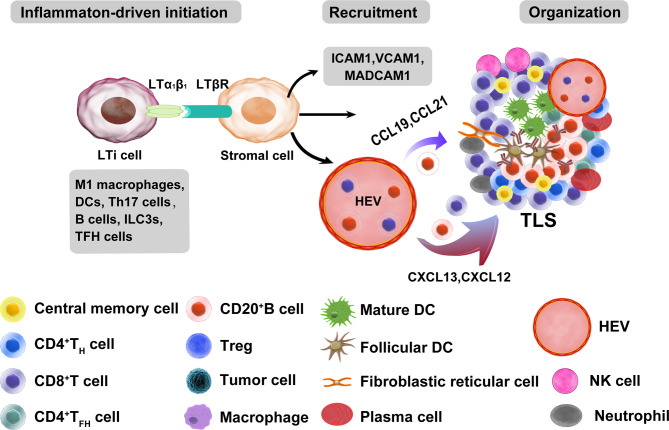
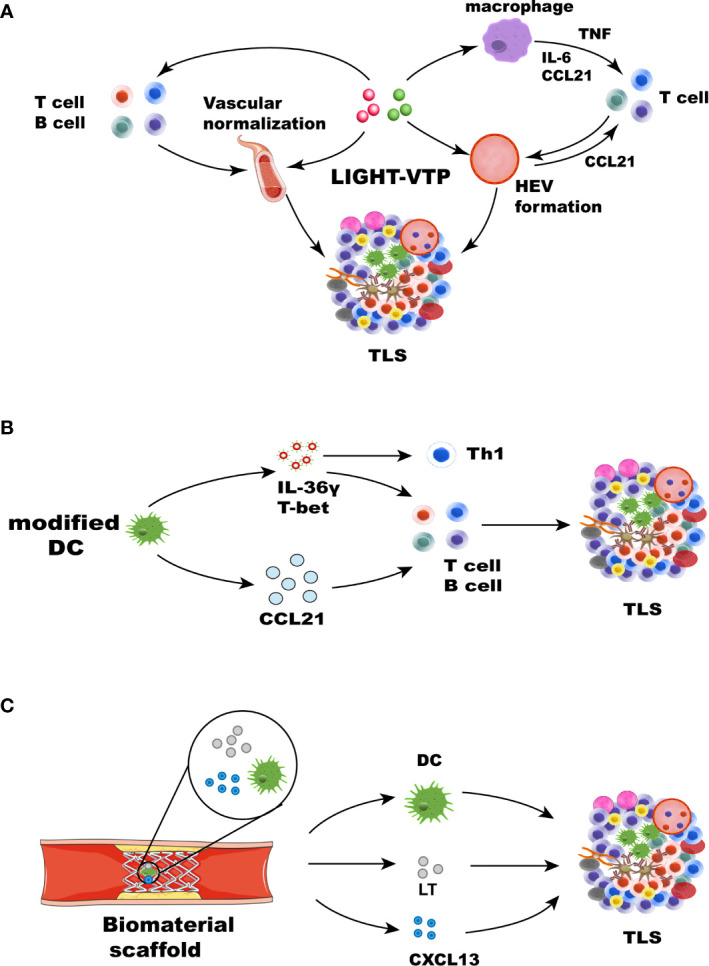
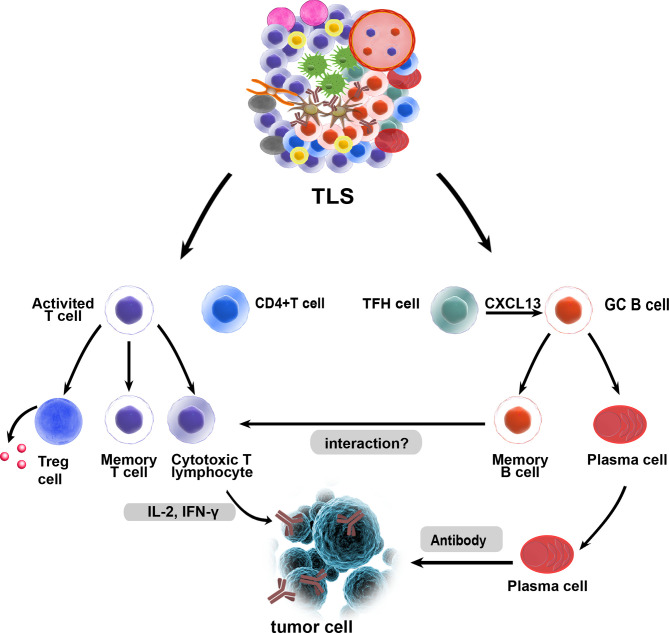
The complex tumor microenvironment (TME) plays a vital role in cancer development and dramatically determines the efficacy of immunotherapy. Tertiary lymphoid structures (TLSs) within the TME are well recognized and consist of T cell-rich areas containing dendritic cells (DCs) and B cell-rich areas containing germinal centers (GCs). Accumulating research has indicated that there is a close association between tumor-associated TLSs and favorable clinical outcomes in most types of cancers, though a minority of studies have reported an association between TLSs and a poor prognosis. Overall, the double-edged sword role of TLSs in the TME and potential mechanisms need to be further investigated, which will provide novel therapeutic perspectives for antitumor immunoregulation. In this review, we focus on discussing the main functions of TLSs in the TME and recent advances in the therapeutic manipulation of TLSs through multiple strategies to enhance local antitumor immunity.
复杂的肿瘤微环境(TME)在癌症发展中起着至关重要的作用,并极大地决定了免疫治疗的疗效。TME中的三级淋巴结构(TLSs)已得到充分认识,由富含T细胞的区域(包含树突状细胞(DCs))和富含B细胞的区域(包含生发中心(GCs))组成。越来越多的研究表明,在大多数类型的癌症中,肿瘤相关的TLSs与良好的临床结果之间存在密切关联,尽管少数研究报告了TLSs与不良预后之间的关联。总体而言,TLSs在TME中的双刃剑作用及其潜在机制需要进一步研究,这将为抗肿瘤免疫调节提供新的治疗视角。在这篇综述中,我们着重讨论TLSs在TME中的主要功能以及通过多种策略对TLSs进行治疗性调控以增强局部抗肿瘤免疫力的最新进展。