Cancer Research UK Centre, Cancer Sciences, Faculty of Medicine, University of Southampton, Southampton General Hospital, Somers Building, Southampton, SO16 6YD, UK.
School of Biological Sciences, Faculty of Environmental and Life Sciences, University of Southampton, Southampton, UK.
Cell Mol Life Sci. 2021 Sep;78(17-18):6337-6349. doi: 10.1007/s00018-021-03910-x. Epub 2021 Aug 16.
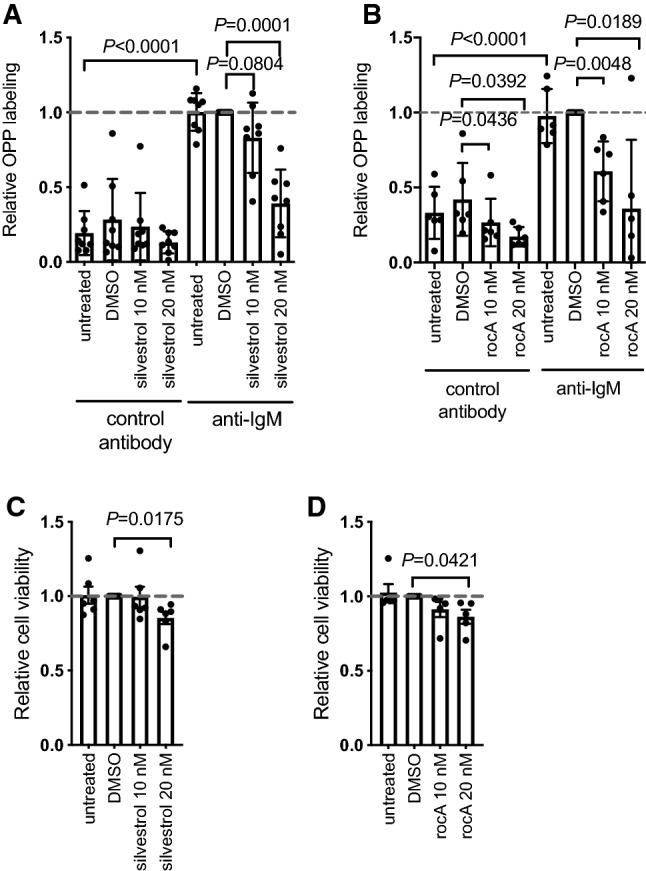
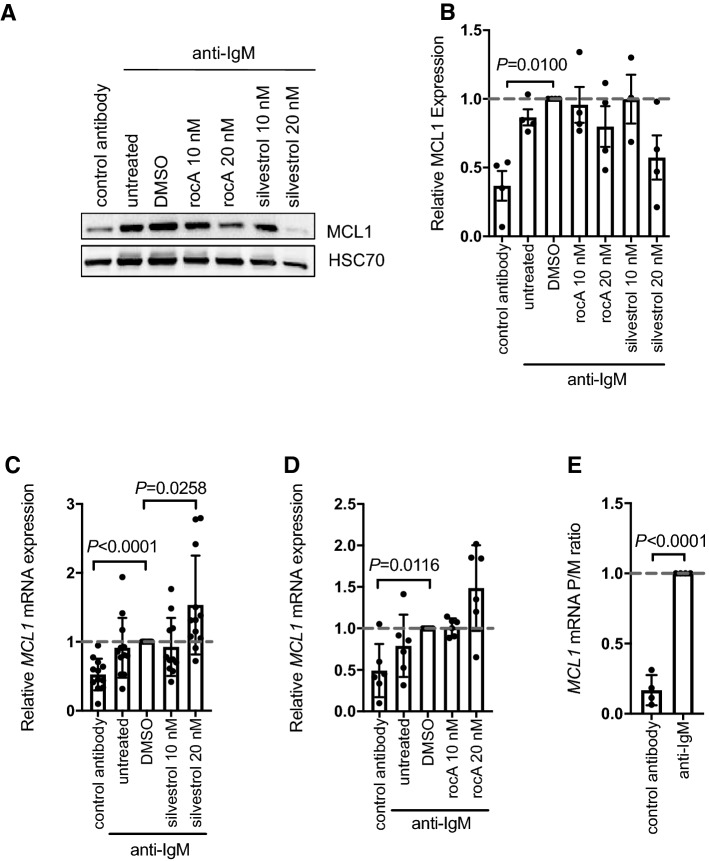
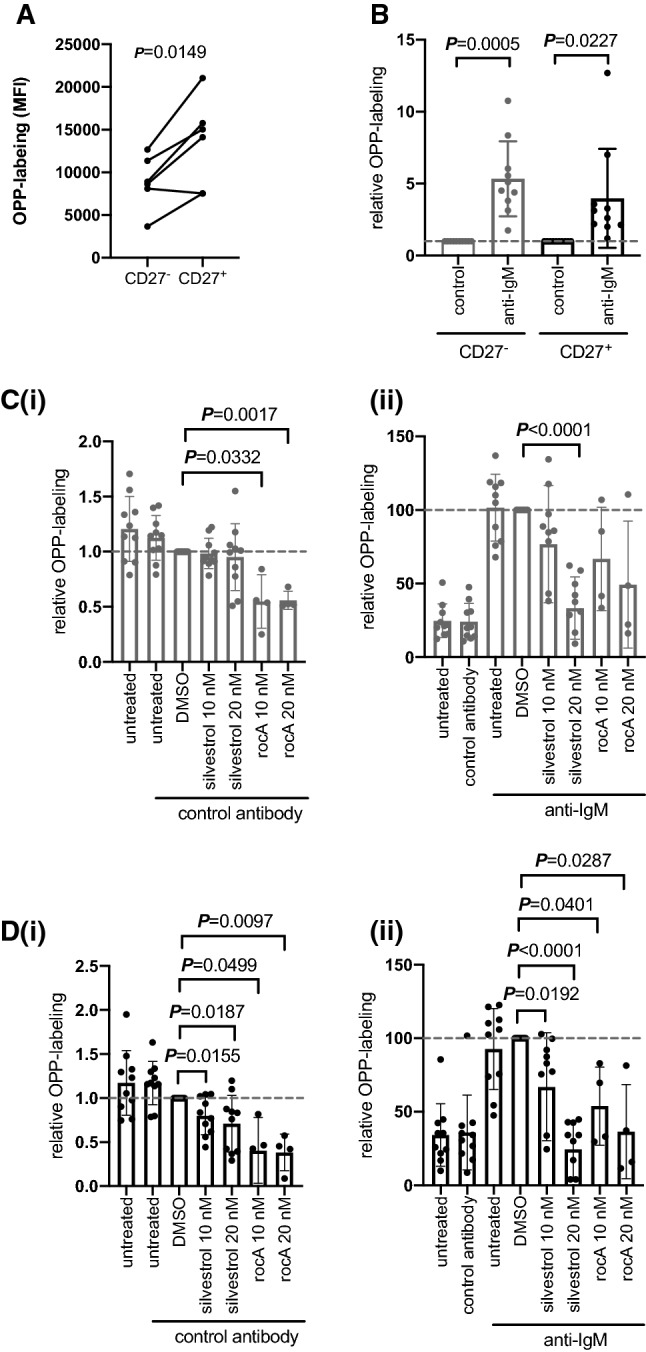
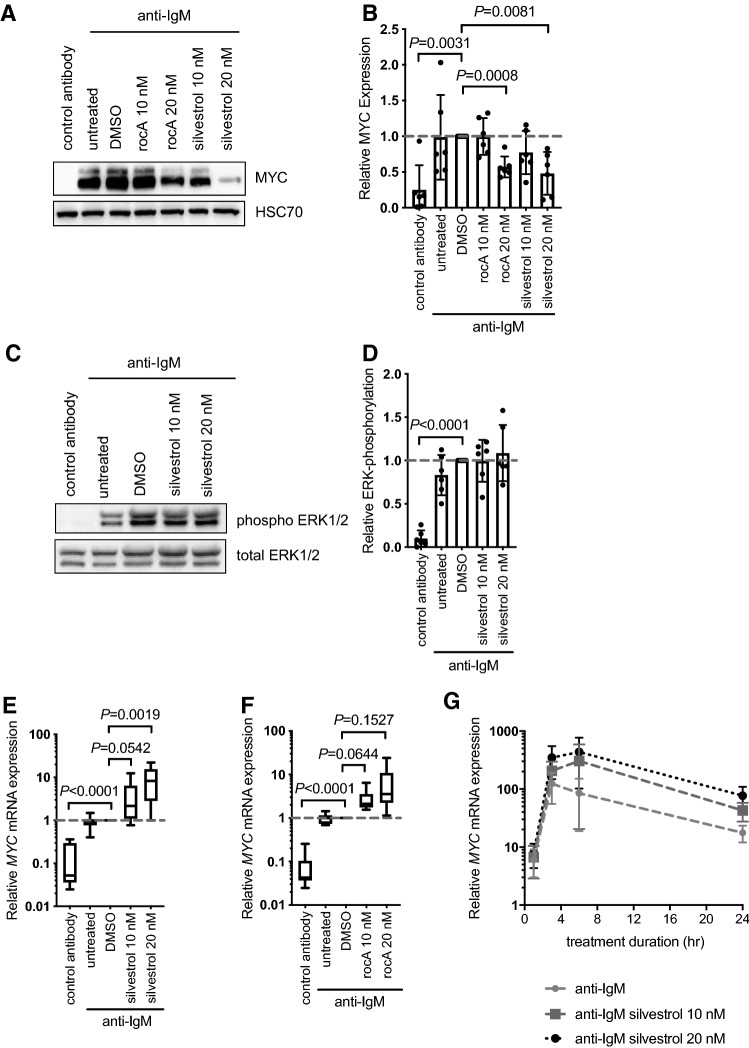
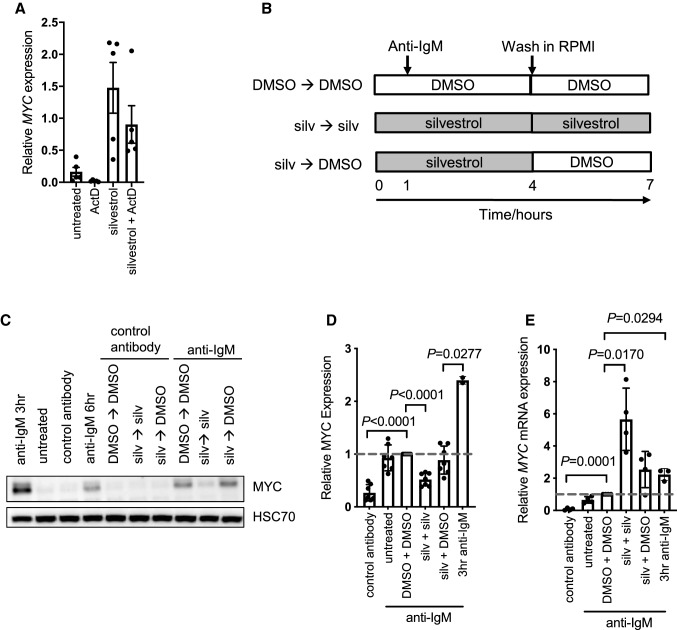
Signaling via the B-cell receptor (BCR) is a key driver and therapeutic target in chronic lymphocytic leukemia (CLL). BCR stimulation of CLL cells induces expression of eIF4A, an initiation factor important for translation of multiple oncoproteins, and reduces expression of PDCD4, a natural inhibitor of eIF4A, suggesting that eIF4A may be a critical nexus controlling protein expression downstream of the BCR in these cells. We, therefore, investigated the effect of eIF4A inhibitors (eIF4Ai) on BCR-induced responses. We demonstrated that eIF4Ai (silvestrol and rocaglamide A) reduced anti-IgM-induced global mRNA translation in CLL cells and also inhibited accumulation of MYC and MCL1, key drivers of proliferation and survival, respectively, without effects on upstream signaling responses (ERK1/2 and AKT phosphorylation). Analysis of normal naïve and non-switched memory B cells, likely counterparts of the two main subsets of CLL, demonstrated that basal RNA translation was higher in memory B cells, but was similarly increased and susceptible to eIF4Ai-mediated inhibition in both. We probed the fate of MYC mRNA in eIF4Ai-treated CLL cells and found that eIF4Ai caused a profound accumulation of MYC mRNA in anti-IgM treated cells. This was mediated by MYC mRNA stabilization and was not observed for MCL1 mRNA. Following drug wash-out, MYC mRNA levels declined but without substantial MYC protein accumulation, indicating that stabilized MYC mRNA remained blocked from translation. In conclusion, BCR-induced regulation of eIF4A may be a critical signal-dependent nexus for therapeutic attack in CLL and other B-cell malignancies, especially those dependent on MYC and/or MCL1.
BCR 信号转导是慢性淋巴细胞白血病 (CLL) 的关键驱动因素和治疗靶点。BCR 刺激 CLL 细胞诱导 eIF4A 的表达,eIF4A 是翻译多种癌蛋白的起始因子,同时降低 PDCD4 的表达,PDCD4 是 eIF4A 的天然抑制剂,这表明 eIF4A 可能是这些细胞中 BCR 下游控制蛋白表达的关键枢纽。因此,我们研究了 eIF4A 抑制剂 (eIF4Ai) 对 BCR 诱导反应的影响。我们证明 eIF4Ai(西维来司他和罗卡酰胺 A)可降低 CLL 细胞中抗 IgM 诱导的全局 mRNA 翻译,并抑制 MYC 和 MCL1 的积累,分别为增殖和存活的关键驱动因素,而对上游信号反应(ERK1/2 和 AKT 磷酸化)没有影响。对正常幼稚和非开关记忆 B 细胞(可能是 CLL 的两个主要亚群的对应物)的分析表明,记忆 B 细胞中的基础 RNA 翻译水平更高,但在两者中均被类似地增加,并易受 eIF4Ai 介导的抑制作用影响。我们探测了 eIF4Ai 处理的 CLL 细胞中 MYC mRNA 的命运,发现 eIF4Ai 在抗 IgM 处理的细胞中导致 MYC mRNA 的显著积累。这是通过 MYC mRNA 稳定介导的,在 MCL1 mRNA 中未观察到。药物洗脱后,MYC mRNA 水平下降,但 MYC 蛋白无明显积累,表明稳定的 MYC mRNA 仍无法翻译。总之,BCR 诱导的 eIF4A 调节可能是 CLL 和其他 B 细胞恶性肿瘤(尤其是依赖 MYC 和/或 MCL1 的肿瘤)治疗攻击的关键信号依赖性枢纽。