College of Control Science and Engineering, China University of Petroleum (East China), Qingdao, China.
Interdisciplinary Computing and Complex BioSystems (ICOS) research group, School of Computing, Newcastle University, Newcastle upon Tyne, United Kingdom.
Commun Biol. 2021 Aug 16;4(1):973. doi: 10.1038/s42003-021-02497-0.
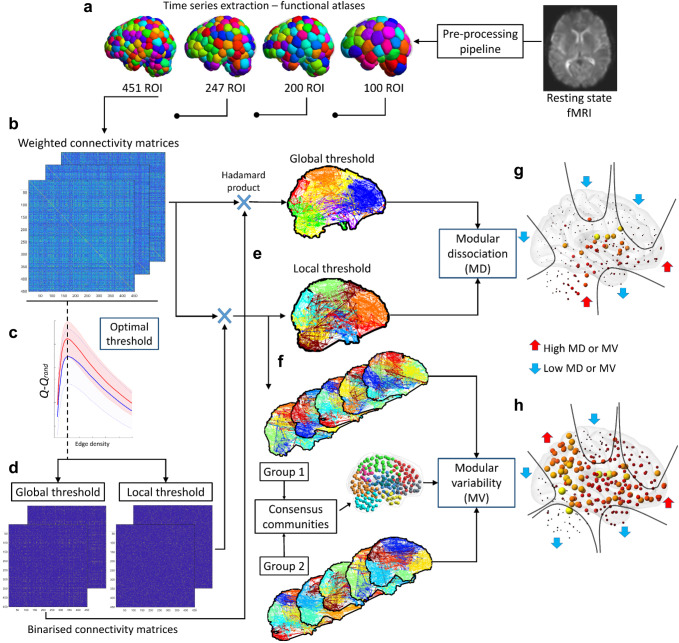
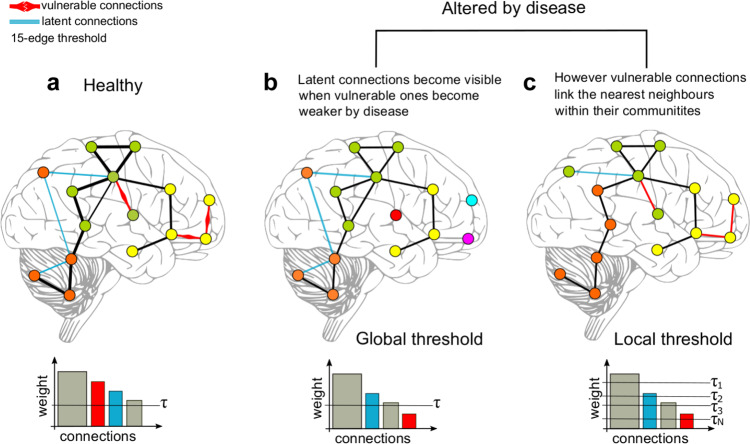
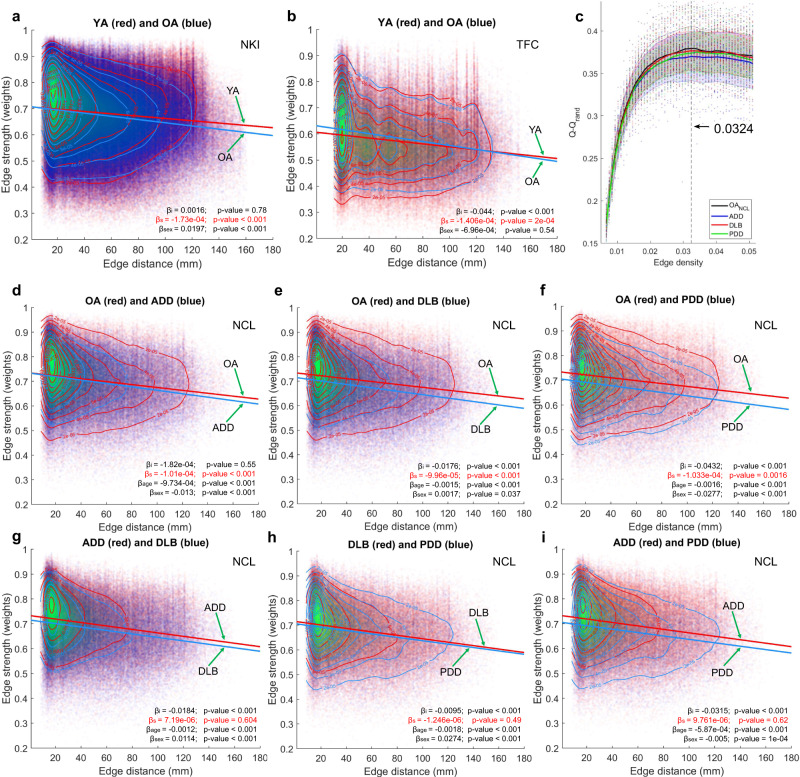
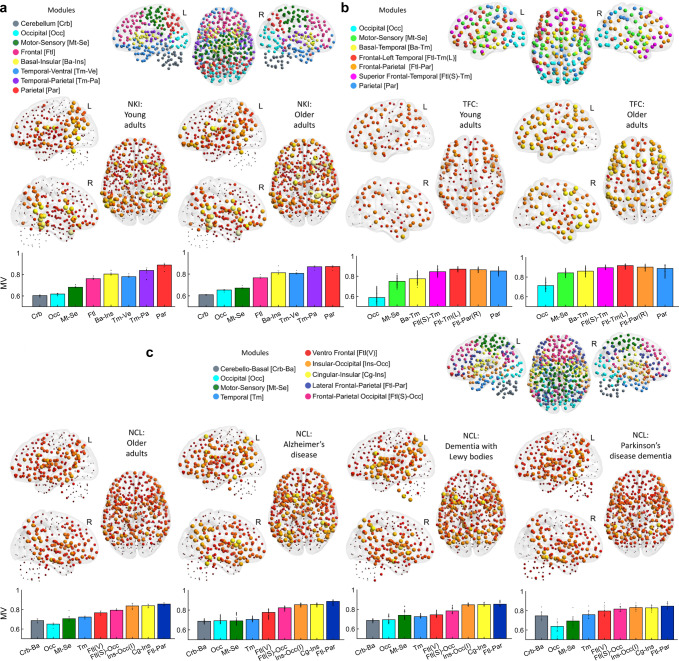
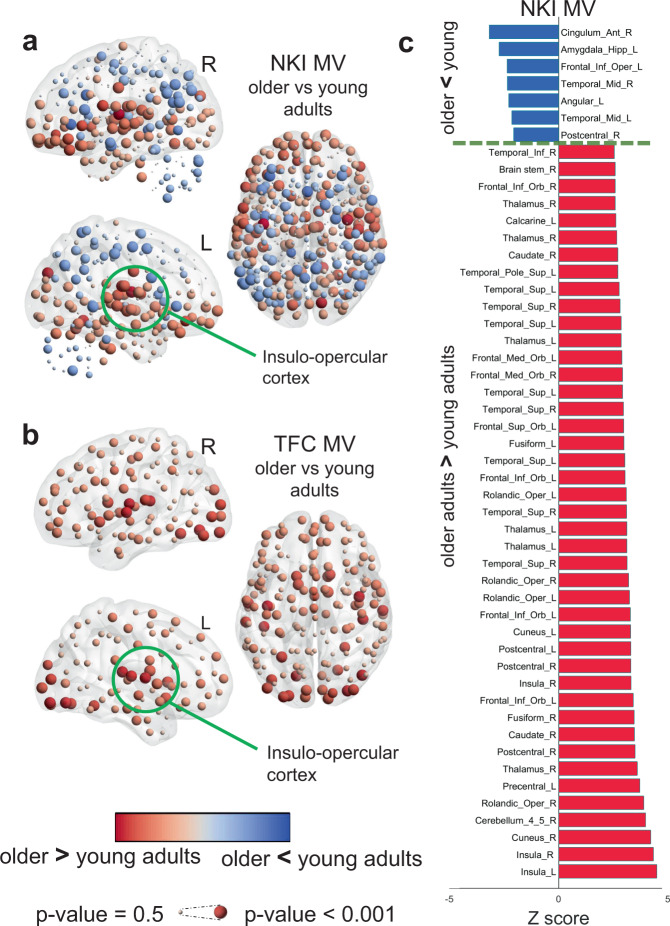
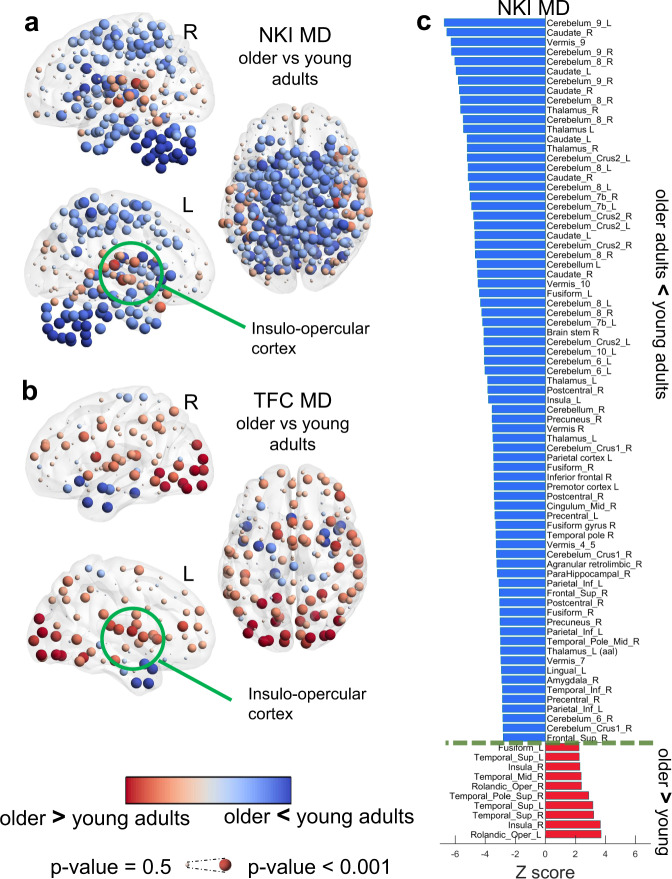
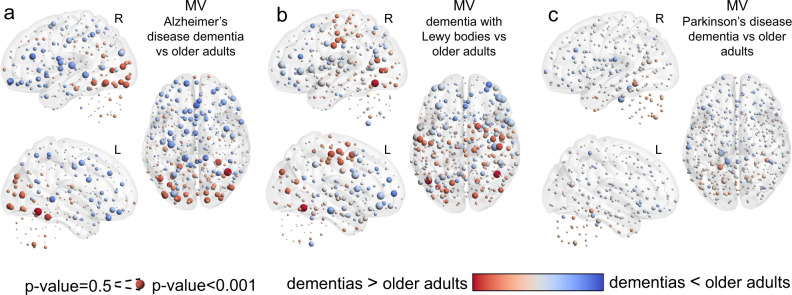
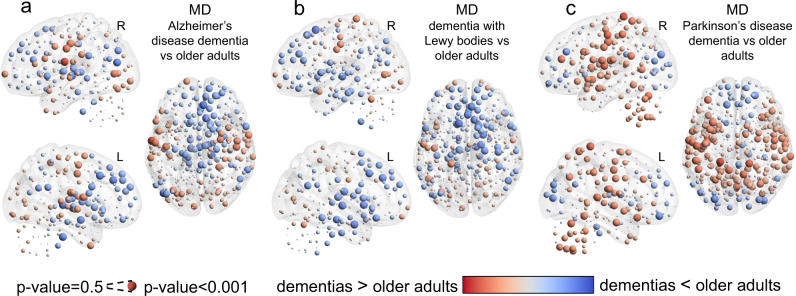
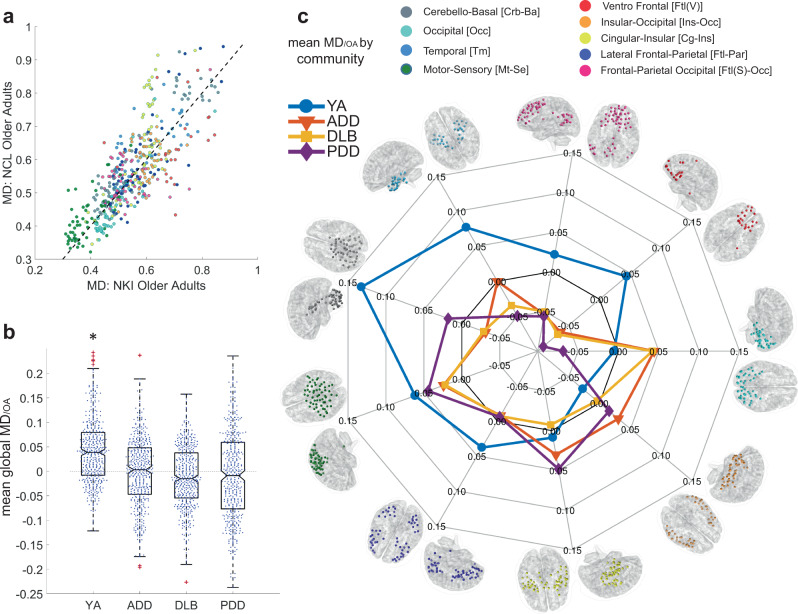
Brain's modular connectivity gives this organ resilience and adaptability. The ageing process alters the organised modularity of the brain and these changes are further accentuated by neurodegeneration, leading to disorganisation. To understand this further, we analysed modular variability-heterogeneity of modules-and modular dissociation-detachment from segregated connectivity-in two ageing cohorts and a mixed cohort of neurodegenerative diseases. Our results revealed that the brain follows a universal pattern of high modular variability in metacognitive brain regions: the association cortices. The brain in ageing moves towards a segregated modular structure despite presenting with increased modular heterogeneity-modules in older adults are not only segregated, but their shape and size are more variable than in young adults. In the presence of neurodegeneration, the brain maintains its segregated connectivity globally but not locally, and this is particularly visible in dementia with Lewy bodies and Parkinson's disease dementia; overall, the modular brain shows patterns of differentiated pathology.
大脑的模块化连接赋予了它弹性和适应性。衰老过程改变了大脑的有组织的模块化,这些变化在神经退行性变的情况下进一步加剧,导致组织混乱。为了进一步了解这一点,我们分析了两个衰老队列和一个混合的神经退行性疾病队列中的模块化可变性——模块的异质性和模块化分离——与隔离连接的分离。我们的结果表明,大脑在元认知脑区(联合皮层)中遵循着高度模块化可变性的普遍模式。衰老中的大脑尽管表现出更高的模块异质性,但朝着隔离的模块化结构发展——老年人的模块不仅是隔离的,而且它们的形状和大小比年轻人更具可变性。在神经退行性变的情况下,大脑在全局上保持其隔离连接,但不是局部,这在路易体痴呆和帕金森病痴呆中尤为明显;总的来说,模块化大脑显示出不同的病理模式。