Department of Biochemistry and Molecular Medicine, UC Davis School of Medicine, Sacramento, CA 95817, USA.
Department of Biochemistry and Molecular Medicine, UC Davis School of Medicine, Sacramento, CA 95817, USA.
Pharmacol Ther. 2022 Feb;230:107967. doi: 10.1016/j.pharmthera.2021.107967. Epub 2021 Aug 14.
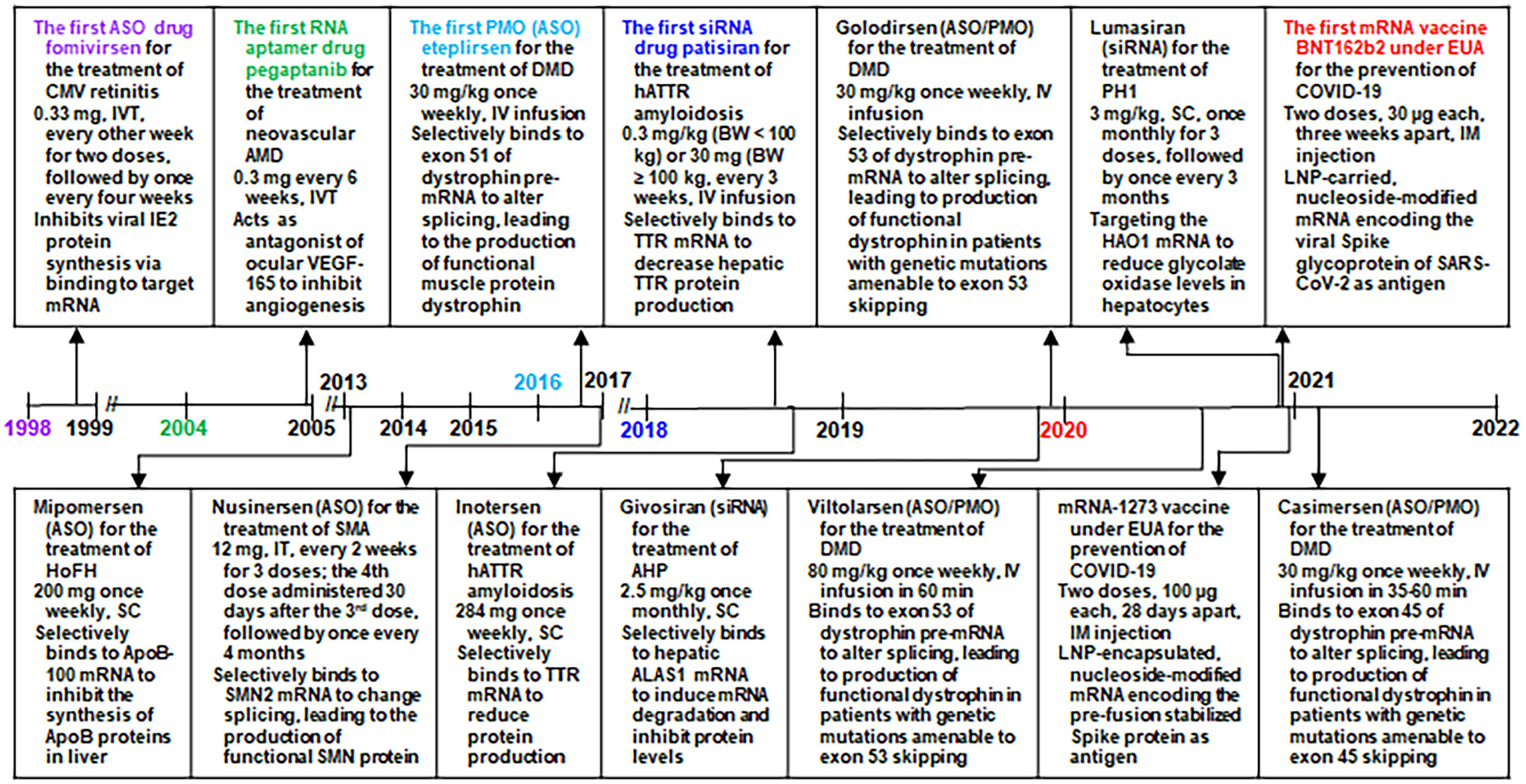
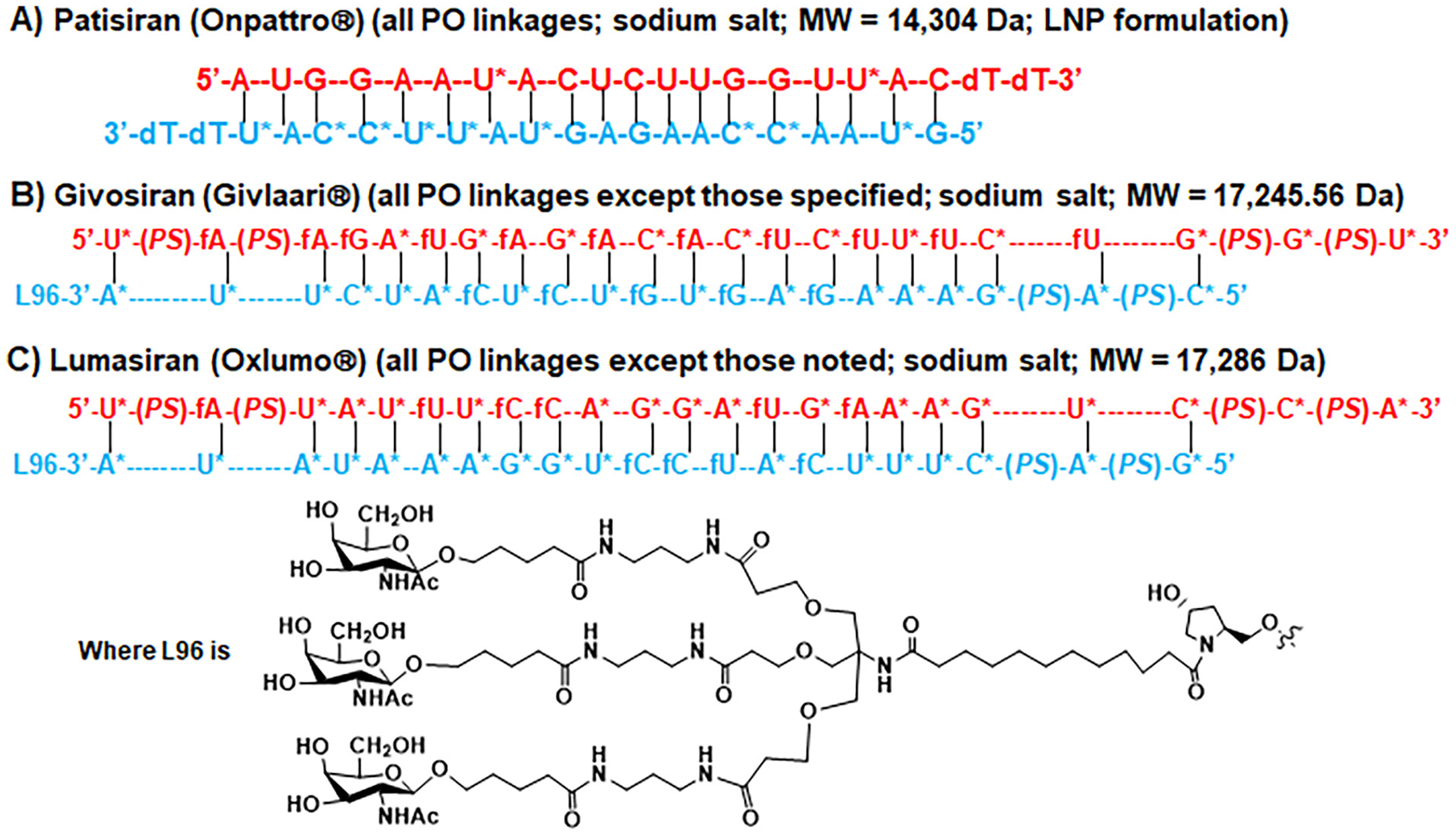
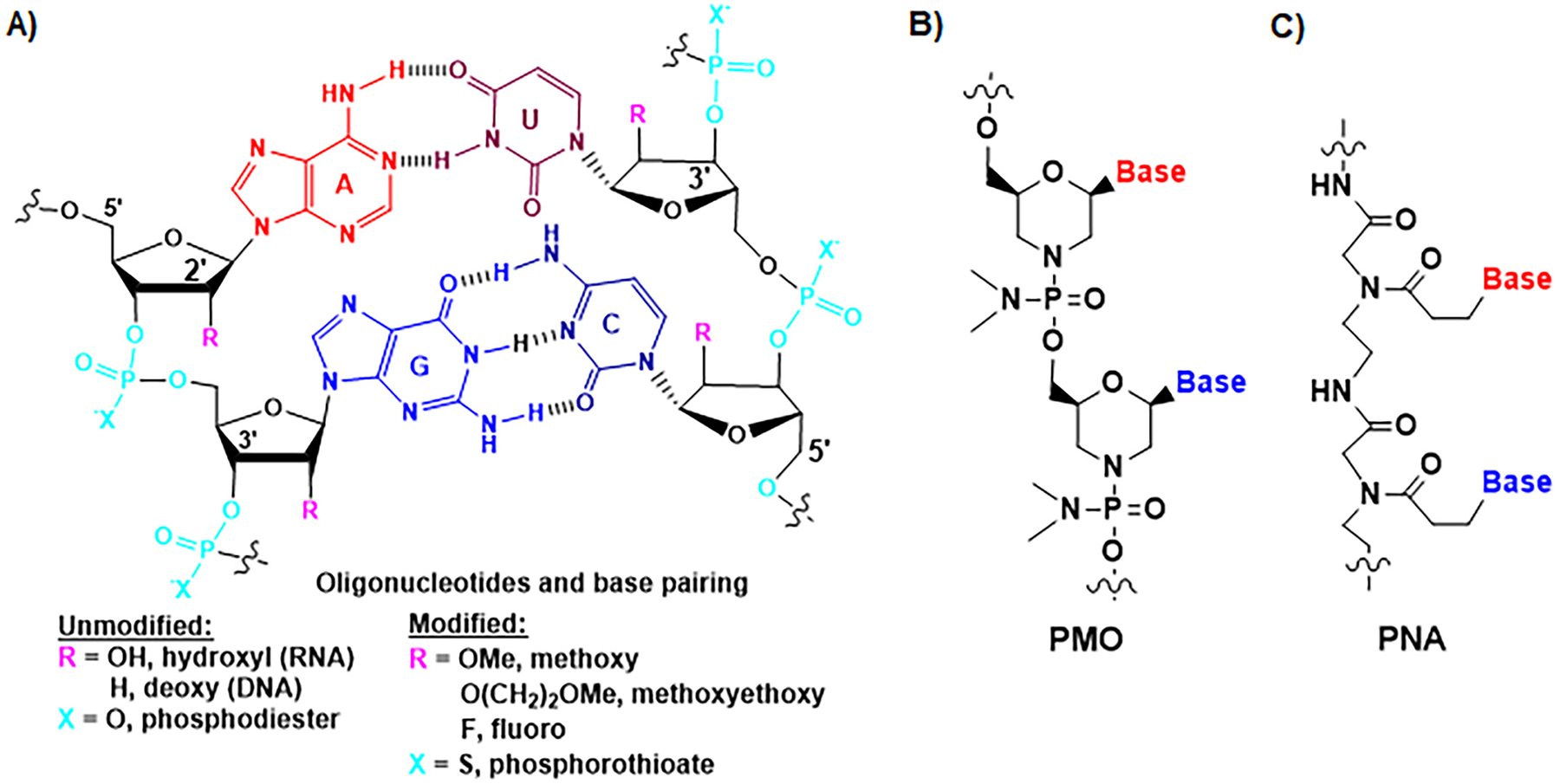
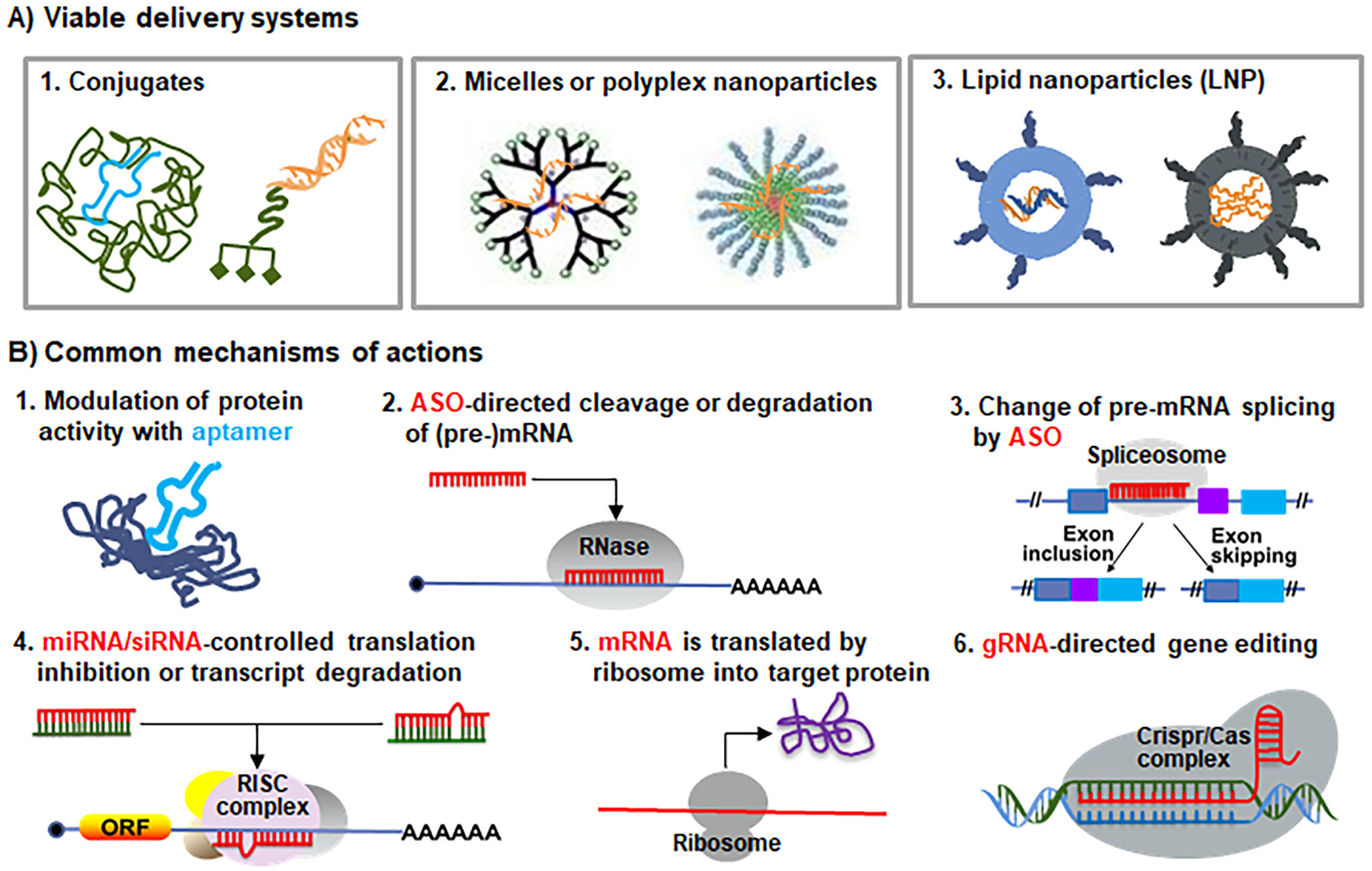
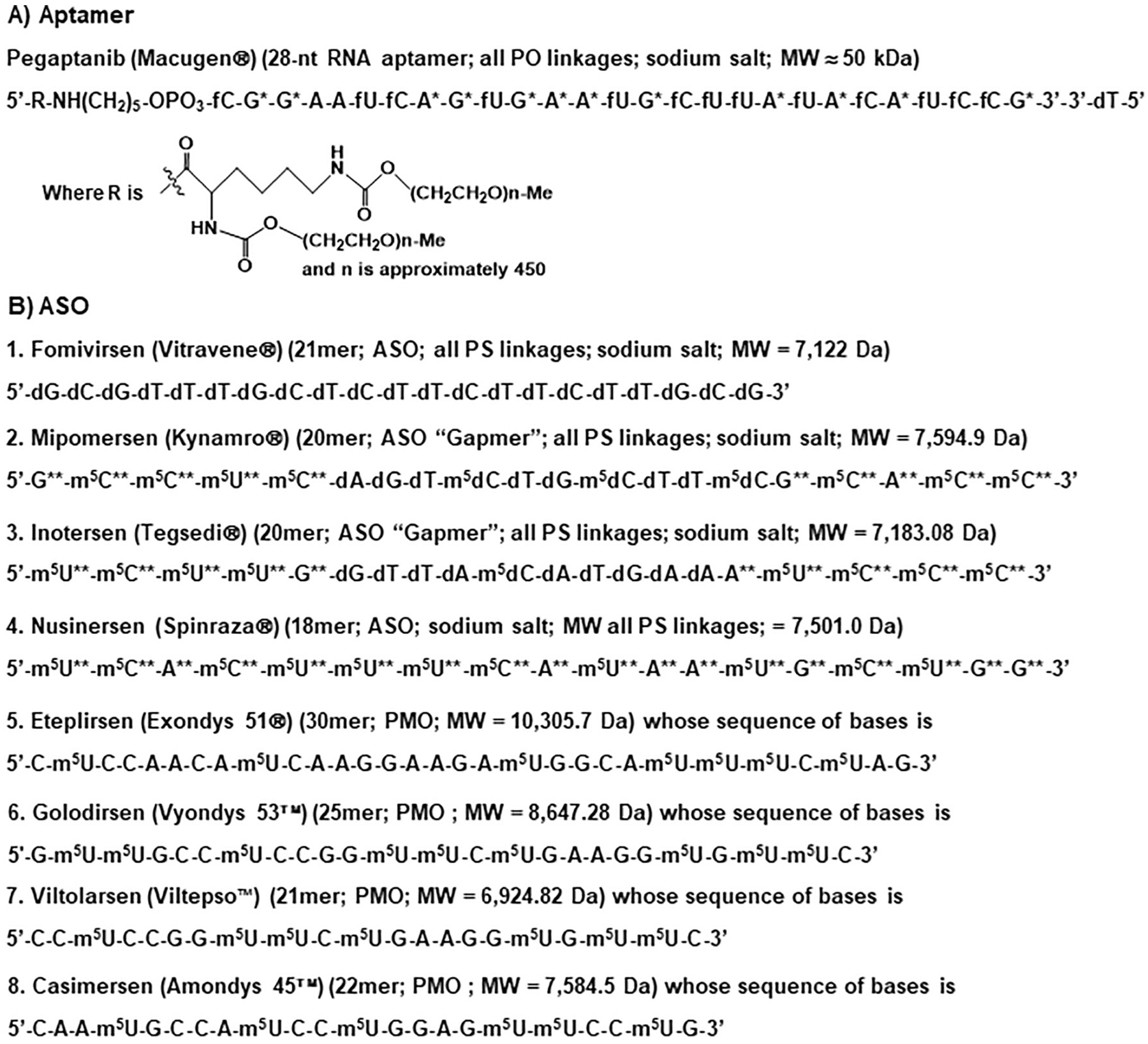
The concepts of developing RNAs as new molecular entities for therapies have arisen again and again since the discoveries of antisense RNAs, direct RNA-protein interactions, functional noncoding RNAs, and RNA-directed gene editing. The feasibility was demonstrated with the development and utilization of synthetic RNA agents to selectively control target gene expression, modulate protein functions or alter the genome to manage diseases. Rather, RNAs are labile to degradation and cannot cross cell membrane barriers, making it hard to develop RNA medications. With the development of viable RNA technologies, such as chemistry and pharmaceutics, eight antisense oligonucleotides (ASOs) (fomivirsen, mipomersen, eteplirsen, nusinersen, inotersen, golodirsen, viltolarsen and casimersen), one aptamer (pegaptanib), and three small interfering RNAs (siRNAs) (patisiran, givosiran and lumasiran) have been approved by the United States Food and Drug Administration (FDA) for therapies, and two mRNA vaccines (BNT162b2 and mRNA-1273) under Emergency Use Authorization for the prevention of COVID-19. Therefore, RNAs have become a great addition to small molecules, proteins/antibodies, and cell-based modalities to improve the public health. In this article, we first summarize the general characteristics of therapeutic RNA agents, including chemistry, common delivery strategies, mechanisms of actions, and safety. By overviewing individual RNA medications and vaccines approved by the FDA and some agents under development, we illustrate the unique compositions and pharmacological actions of RNA products. A new era of RNA research and development will likely lead to commercialization of more RNA agents for medical use, expanding the range of therapeutic targets and increasing the diversity of molecular modalities.
自反义 RNA、直接 RNA-蛋白质相互作用、功能性非编码 RNA 和 RNA 指导的基因编辑等发现以来,将 RNA 开发为治疗新分子实体的概念一再出现。通过开发和利用合成 RNA 剂来选择性控制靶基因表达、调节蛋白质功能或改变基因组来治疗疾病,证明了其可行性。然而,RNA 容易降解,不能穿过细胞膜屏障,因此难以开发 RNA 药物。随着可行的 RNA 技术的发展,如化学和药剂学,八种反义寡核苷酸 (ASO)(福米韦生、米泊美生、依特司群、那昔生、伊特莫生、戈洛达生、维特洛生和卡西米生)、一种适体(培加他滨)和三种小干扰 RNA (siRNA)(帕替沙生、吉维西仑和鲁马西仑)已被美国食品和药物管理局 (FDA) 批准用于治疗,两种 mRNA 疫苗(BNT162b2 和 mRNA-1273)已根据紧急使用授权用于预防 COVID-19。因此,RNA 已成为小分子、蛋白质/抗体和基于细胞的治疗方式的重要补充,以改善公众健康。在本文中,我们首先总结了治疗性 RNA 药物的一般特征,包括化学、常见的递送策略、作用机制和安全性。通过概述 FDA 批准的个别 RNA 药物和疫苗以及一些正在开发的药物,我们说明了 RNA 产品的独特组成和药理学作用。RNA 研究和开发的新时代可能会导致更多用于医疗用途的 RNA 药物商业化,扩大治疗靶点范围并增加分子方式的多样性。