Haji Ali Banafsheh, Shahin Mohammad Sajjad, Masoumi Sangani Mohammad Mahdi, Faghihinezhad Mohsen, Baghdadi Majid
School of Environment, College of Engineering, University of Tehran, Tehran, Iran.
J Environ Chem Eng. 2021 Oct;9(5):106201. doi: 10.1016/j.jece.2021.106201. Epub 2021 Aug 13.
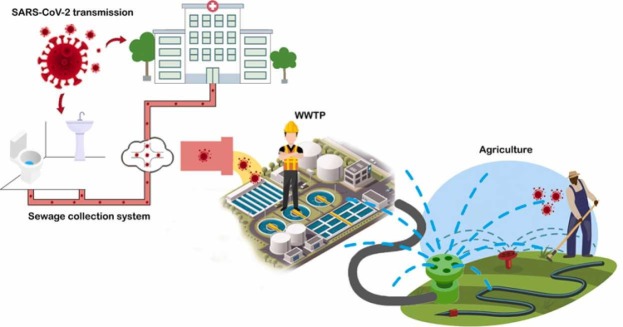
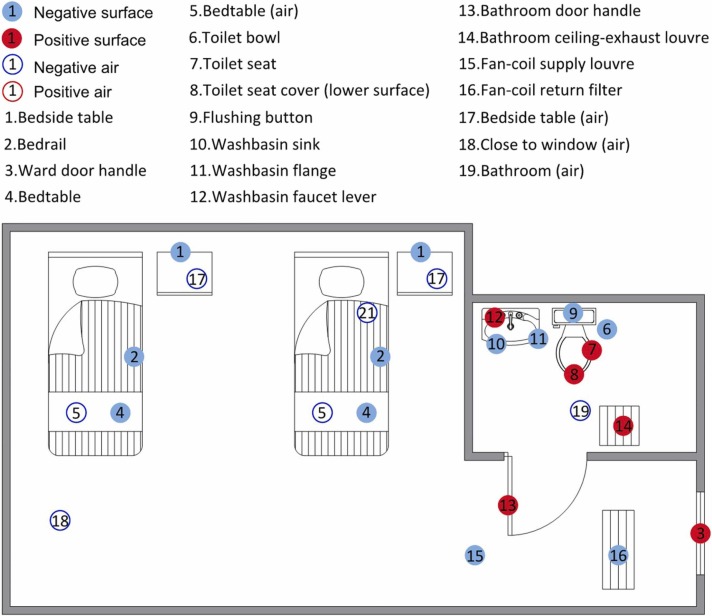
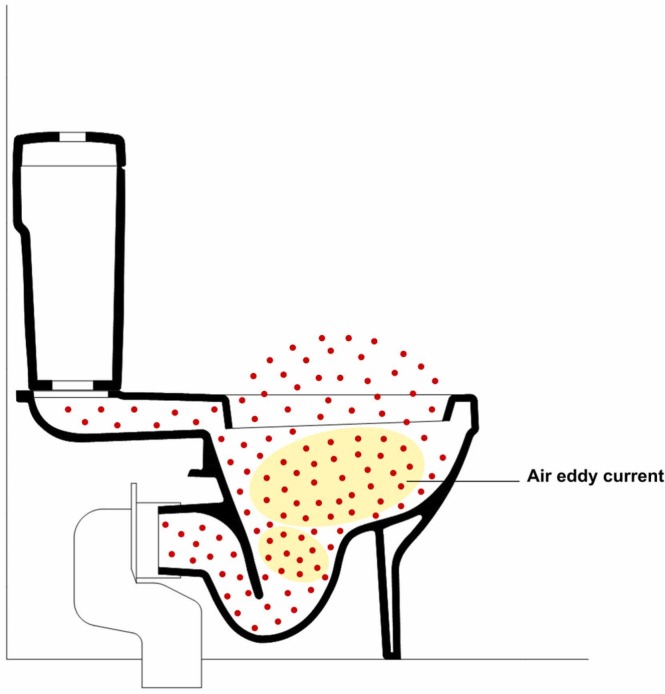
The detection of SARS-CoV-2 RNA in raw and treated wastewater can open up a fresh perspective to waterborne and aerosolized wastewater as a new transmission route of SARS-CoV-2 RNA during the current pandemic. The aim of this paper is to discuss the potential transmission of SARS-CoV-2 RNA from wastewater aerosols formed during toilet flushing, plumbing failure, wastewater treatment plants, and municipal wastewater reuse for irrigation. Moreover, how these aerosols might increase the risk of exposure to this novel coronavirus (SARS-CoV-2 RNA). This article supplies a review of the literature on the presence of SARS-CoV-2 RNA in untreated wastewater, as well as the fate and stability of SARS-CoV-2 RNA in wastewater. We also reviewed the existing literatures on generation and transmission of aerosolized wastewater through flush a toilet, house's plumbing networks, WWTPs, wastewater reuse for irrigation of agricultural areas. Finally, the article briefly studies the potential risk of infection with exposure to the fecal bioaerosols of SARS-CoV-2 RNA for the people who might be exposed through flushing toilets or faulty building plumbing systems, operators/workers in wastewater treatment plants, and workers of fields irrigated with treated wastewater - based on current knowledge. Although this review highlights the indirect transmission of SARS-CoV-2 RNA through wastewater aerosols, no research has yet clearly demonstrated the role of aerosolized wastewater in disease transmission regarding the continuation of this pandemic. Therefore, there is a need for additional studies on wastewater aerosols in transmission of COVID-19.
在未经处理和经过处理的废水中检测到严重急性呼吸综合征冠状病毒2(SARS-CoV-2)RNA,可为在当前疫情期间,将水性和气溶胶化废水作为SARS-CoV-2 RNA的一种新传播途径开辟一个全新视角。本文旨在探讨SARS-CoV-2 RNA从马桶冲水、管道故障、污水处理厂以及城市污水回用灌溉过程中形成的废水气溶胶中的潜在传播情况。此外,这些气溶胶如何可能增加接触这种新型冠状病毒(SARS-CoV-2 RNA)的风险。本文提供了关于未经处理的废水中SARS-CoV-2 RNA的存在情况,以及SARS-CoV-2 RNA在废水中的归宿和稳定性的文献综述。我们还回顾了关于通过马桶冲水、房屋管道网络、污水处理厂、农业地区废水回用灌溉产生和气溶胶化废水传播的现有文献。最后,基于目前的知识,本文简要研究了对于可能通过马桶冲水或建筑管道系统故障、污水处理厂操作人员/工人以及使用经处理废水灌溉农田的工人接触SARS-CoV-2 RNA粪便生物气溶胶而感染的潜在风险。尽管本综述强调了SARS-CoV-2 RNA通过废水气溶胶的间接传播,但尚无研究明确证明气溶胶化废水在本次疫情持续期间疾病传播中的作用。因此,有必要对新冠病毒传播中的废水气溶胶进行更多研究。