Department of Medicine I, Medical Center - University of Freiburg, Faculty of Medicine, University of Freiburg, Freiburg, Germany; Faculty of Biology, Albert-Ludwigs-University, Freiburg, Germany; German Cancer Consortium (DKTK), Partner site Freiburg; and German Cancer Research Center (DKFZ), Heidelberg.
German Cancer Consortium (DKTK), Partner site Freiburg; and German Cancer Research Center (DKFZ), Heidelberg, Germany; Institute of Medical Bioinformatics and Systems Medicine, Medical Center - University of Freiburg, Faculty of Medicine, University of Freiburg, Freiburg.
Haematologica. 2022 Jul 1;107(7):1538-1554. doi: 10.3324/haematol.2021.278387.
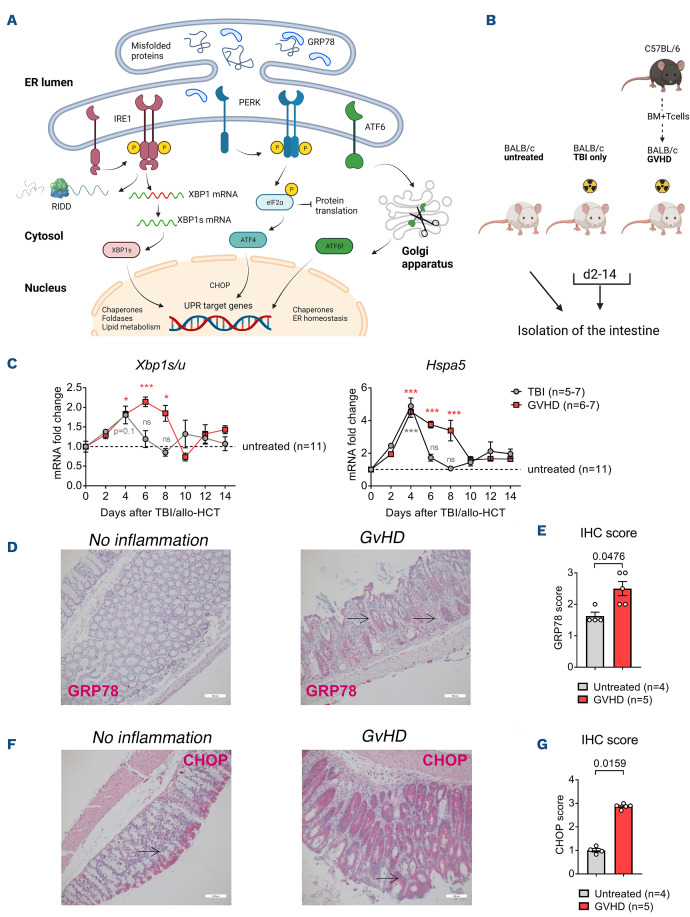
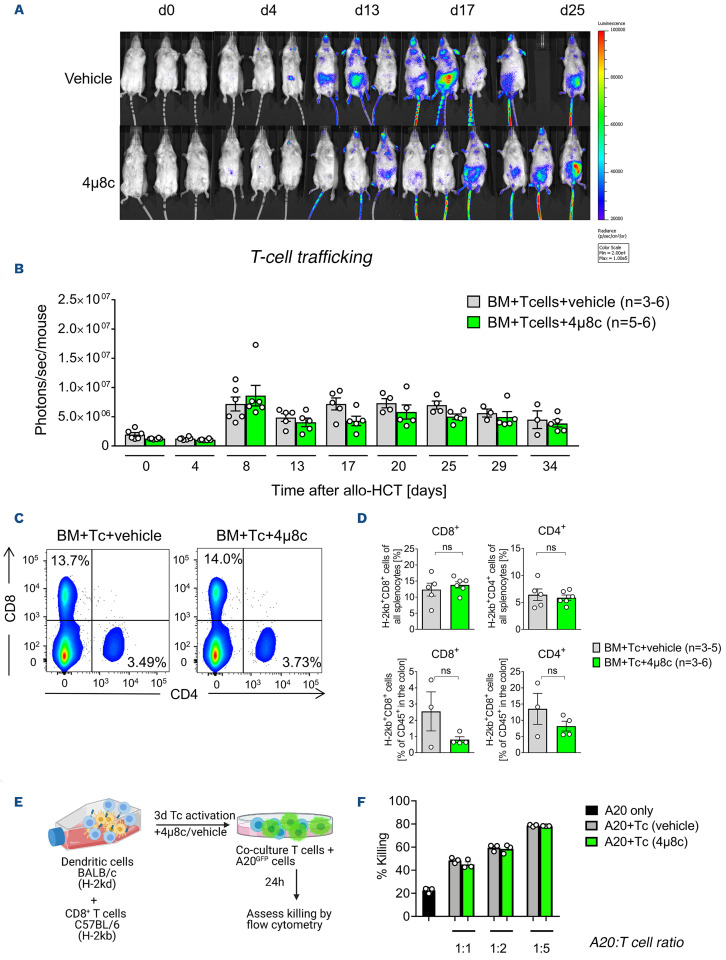
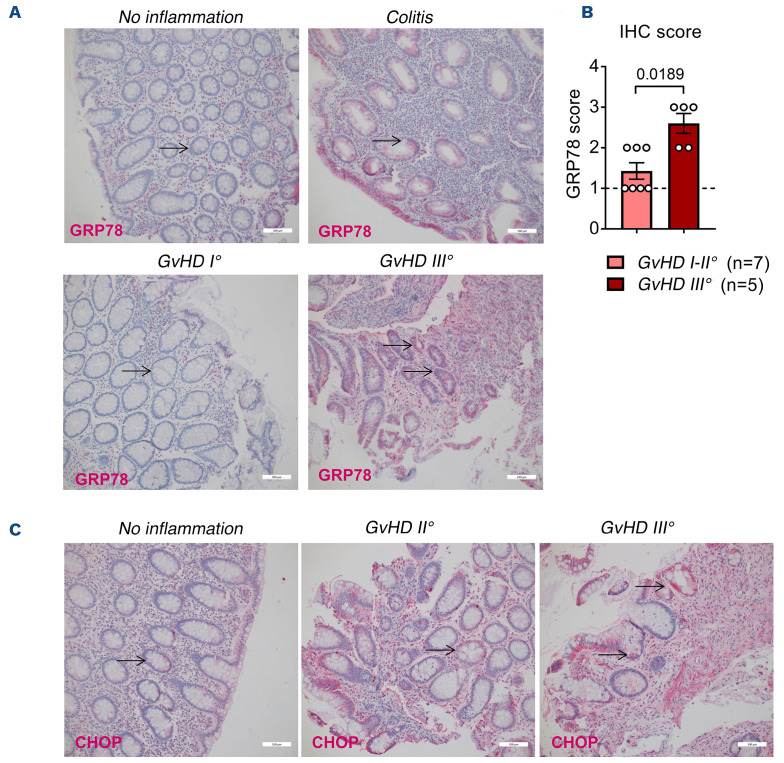
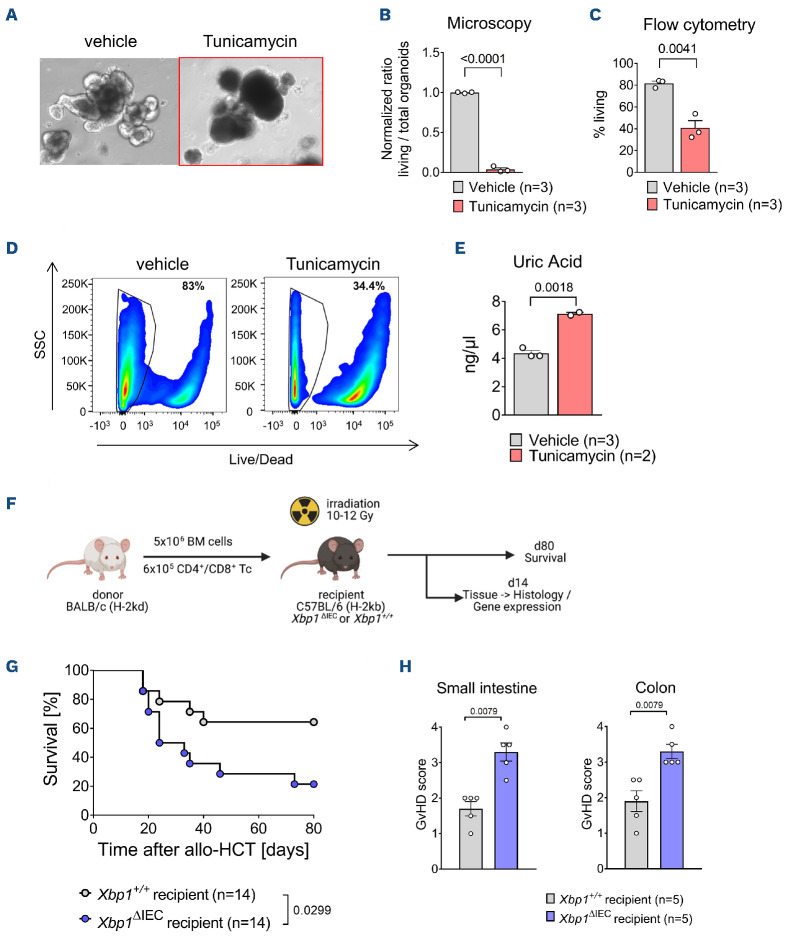
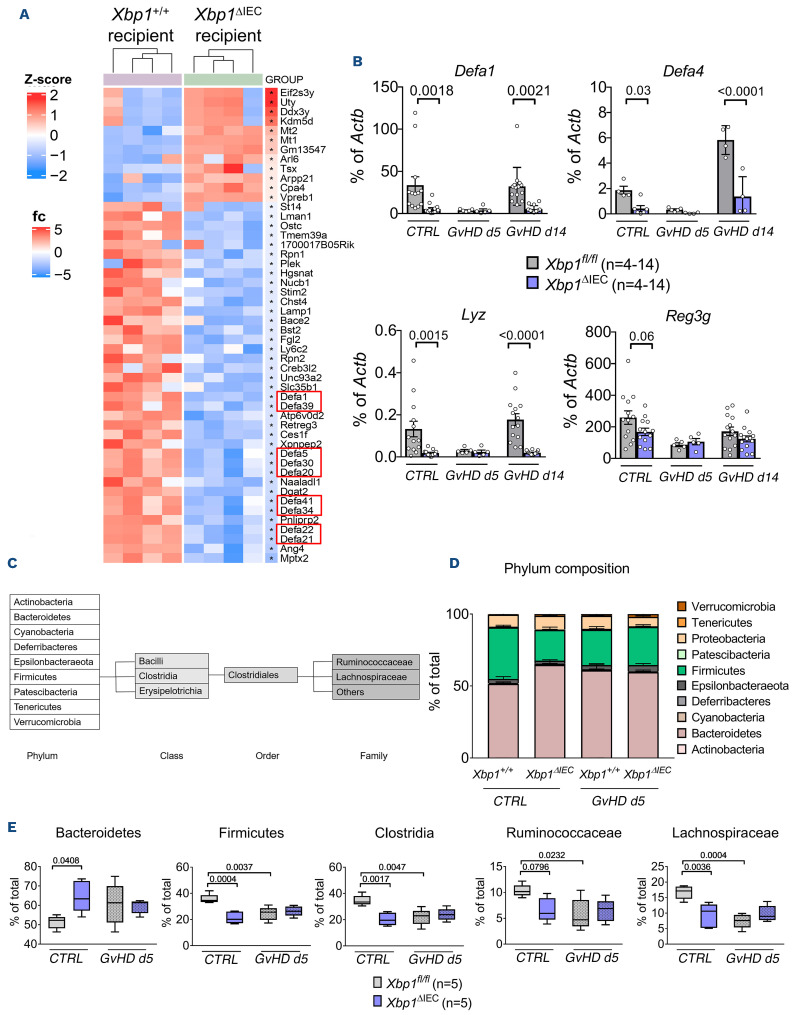
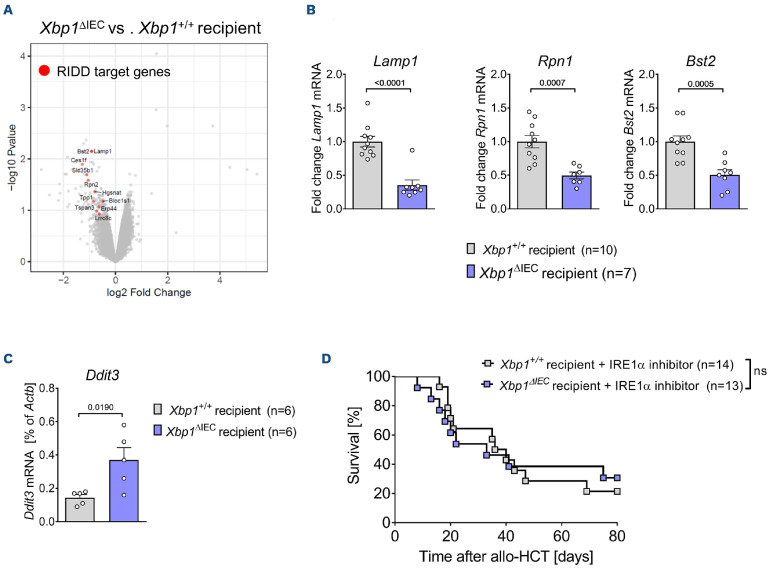
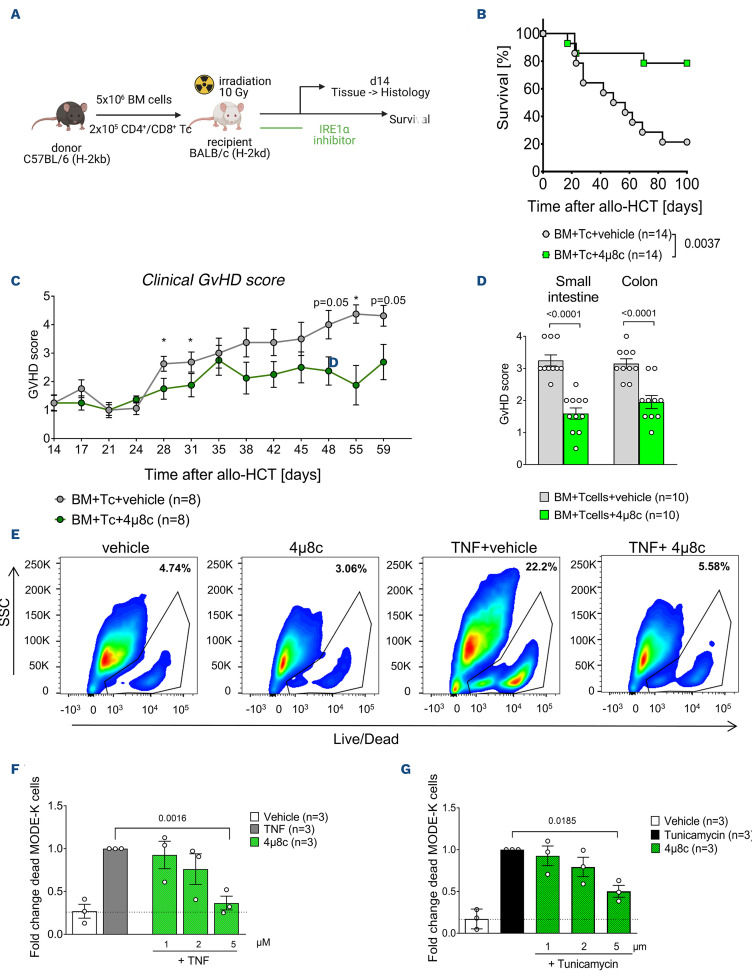
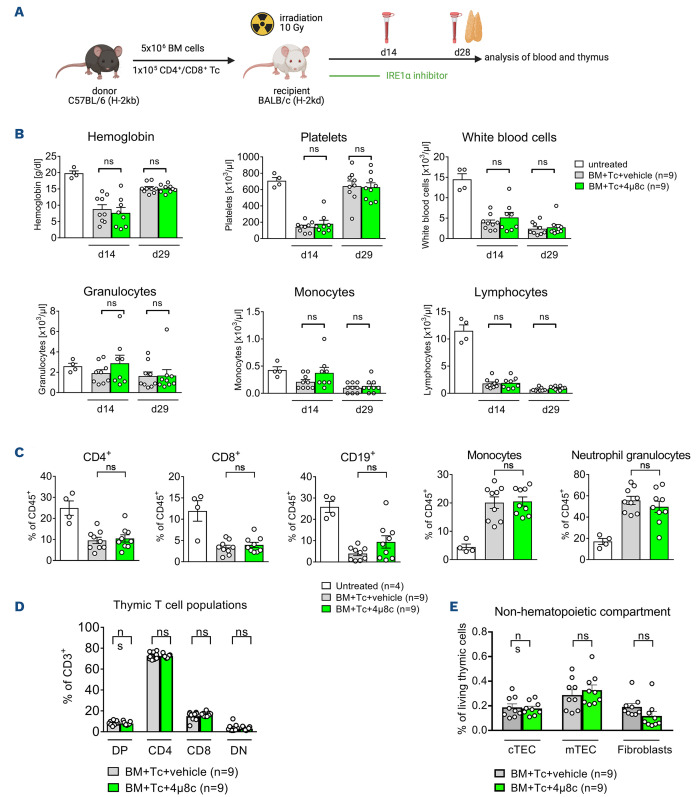
Acute graft-versus-host disease (GvHD) is a life-threatening complication of allogeneic hematopoietic cell transplantation (allo-HCT), a potentially curative treatment for leukemia. Endoplasmic reticulum (ER) stress occurs when the protein folding capacity of the ER is oversaturated. How ER stress modulates tissue homeostasis in the context of alloimmunity is not well understood. We show that ER stress contributes to intestinal tissue injury during GvHD and can be targeted pharmacologically. We observed high levels of ER stress upon GvHD onset in a murine allo- HCT model and in human biopsies. These levels correlated with GvHD severity, underscoring a novel therapeutic potential. Elevated ER stress resulted in increased cell death of intestinal organoids. In a conditional knockout model, deletion of the ER stress regulator transcription factor Xbp1 in intestinal epithelial cells induced a general ER stress signaling disruption and aggravated GvHD lethality. This phenotype was mediated by changes in the production of antimicrobial peptides and the microbiome composition as well as activation of pro-apoptotic signaling. Inhibition of inositol-requiring enzyme 1α (IRE1α), the most conserved signaling branch in ER stress, reduced GvHD development in mice. IRE1α blockade by the small molecule inhibitor 4m8c improved intestinal cell viability, without impairing hematopoietic regeneration and T-cell activity against tumor cells. Our findings in patient samples and mice indicate that excessive ER stress propagates tissue injury during GvHD. Reducing ER stress could improve the outcome of patients suffering from GvHD.
急性移植物抗宿主病(GvHD)是异基因造血细胞移植(allo-HCT)的一种危及生命的并发症,allo-HCT 是治疗白血病的一种潜在治愈方法。内质网(ER)应激发生在 ER 的蛋白折叠能力过饱和时。内质网应激如何调节同种免疫背景下的组织动态平衡还不太清楚。我们表明,内质网应激在 GvHD 期间导致肠道组织损伤,并可通过药理学方法靶向治疗。我们在小鼠 allo-HCT 模型和人类活检中观察到 GvHD 发病时 ER 应激水平升高。这些水平与 GvHD 严重程度相关,突出了一种新的治疗潜力。内质网应激导致肠道类器官的细胞死亡增加。在条件性敲除模型中,肠道上皮细胞中内质网应激调节因子 Xbp1 的缺失导致一般 ER 应激信号中断,并加重 GvHD 的致死性。这种表型是通过抗菌肽的产生变化和微生物组组成以及促凋亡信号的激活来介导的。抑制内质网应激中最保守的信号分支肌醇需求酶 1α(IRE1α)可减少小鼠 GvHD 的发生。小分子抑制剂 4m8c 抑制 IRE1α,可提高肠道细胞的存活率,而不损害造血再生和 T 细胞对肿瘤细胞的活性。我们在患者样本和小鼠中的研究结果表明,过度的内质网应激在 GvHD 期间导致组织损伤。减少内质网应激可能改善 GvHD 患者的预后。