Zhao Junshuang, Jiang Yang, Chen Lian, Ma Yue, Zhang Haiying, Zhou Jinpeng, Li Hao, Jing Zhitao
Department of Neurosurgery, The First Hospital of China Medical University, Shenyang, China.
Department of Neurosurgery, Shanghai Tenth People's Hospital, Tongji University School of Medicine, Shanghai, China.
Front Oncol. 2021 Aug 2;11:699933. doi: 10.3389/fonc.2021.699933. eCollection 2021.
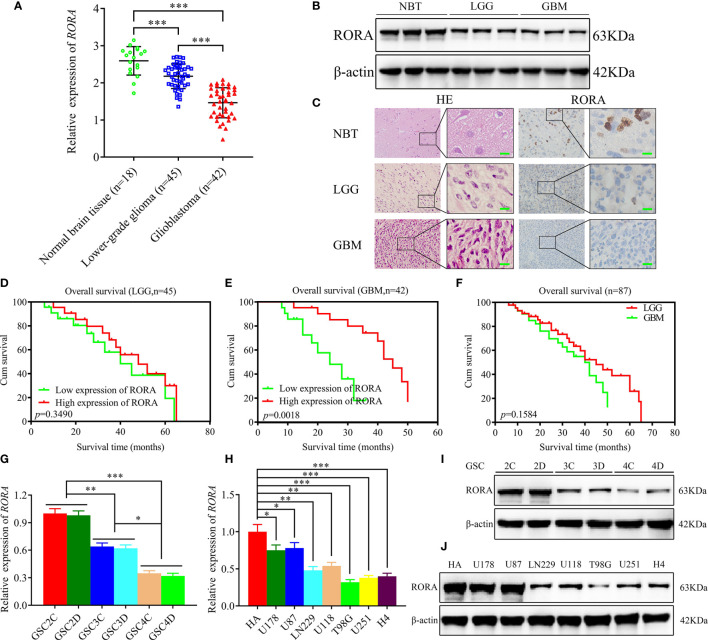
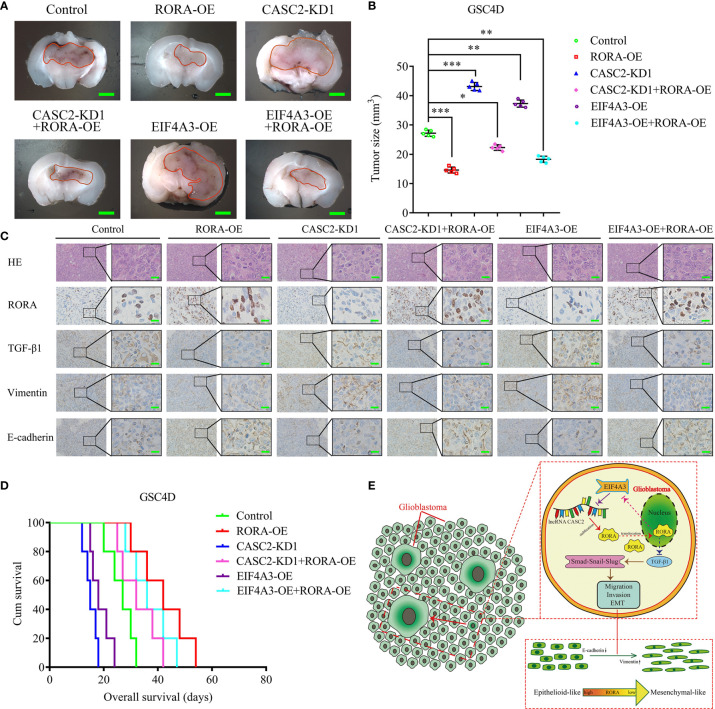
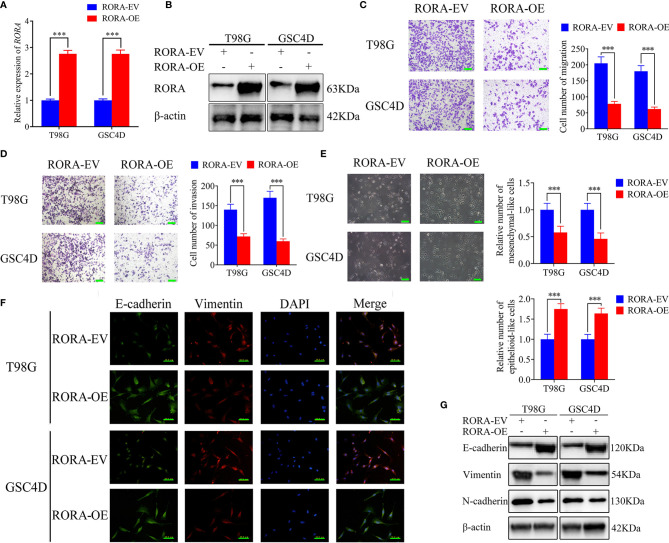
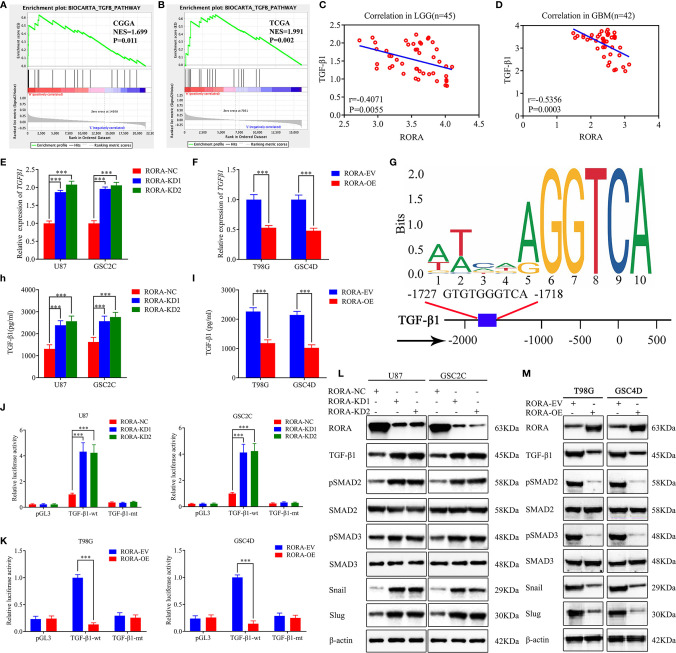
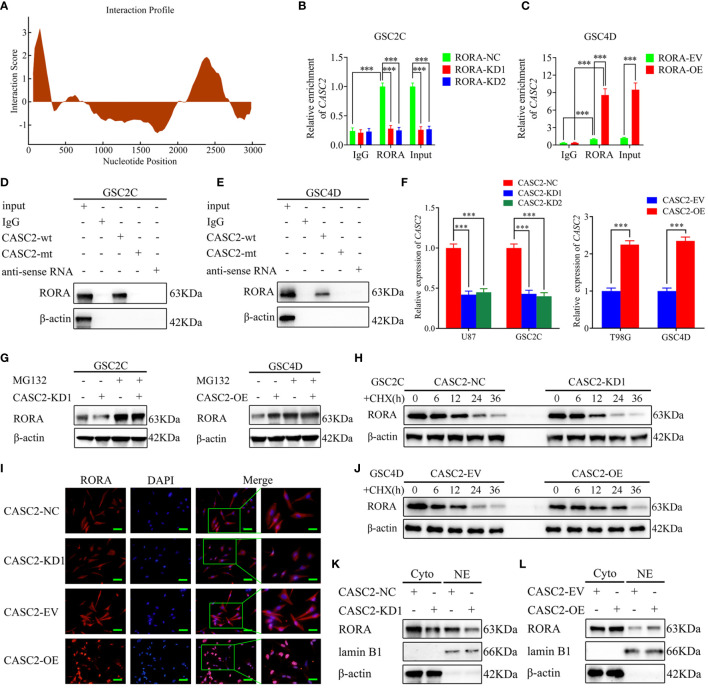
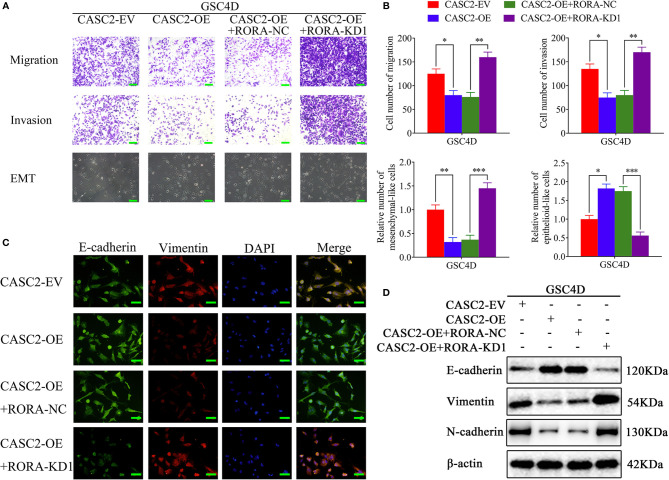
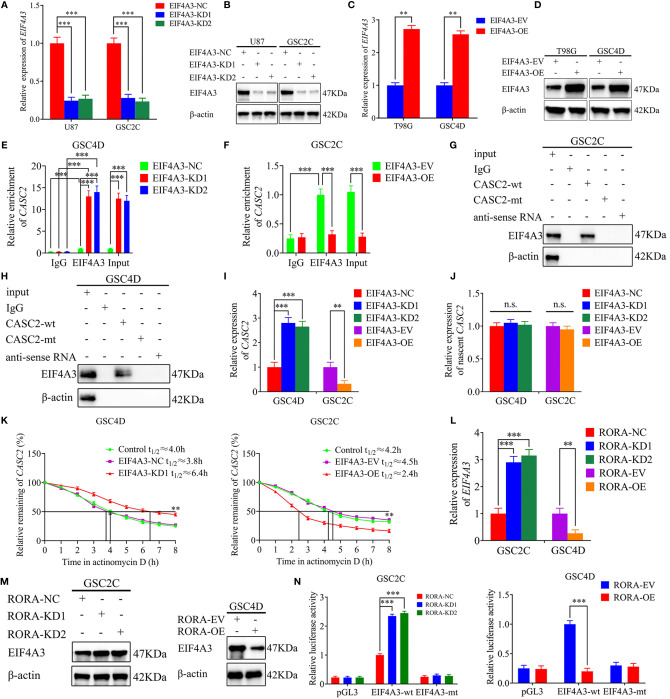
Glioblastoma (GBM) is a common and refractory subtype of high-grade glioma with a poor prognosis. The epithelial-mesenchymal transition (EMT) is an important cause of enhanced glioblastoma invasiveness and tumor recurrence. Our previous study found that retinoic acid receptor-related orphan receptor A (RORA) is a nuclear receptor and plays an important role in inhibiting proliferation and tumorigenesis of glioma. We further confirmed RORA was downregulated in GBM. Thus, we determined whether RORA was involved in the migration, invasion, and EMT of GBM. Human GBM cell lines, U87 and T98G, and patient-derived glioma stem cells (GSCs), GSC2C and GSC4D, were used for and experiments. The expressions of RORA, CASC2, and EIF4A3 in GBM cells and GSCs were detected by RT-qPCR and western blotting. The biological effects of RORA, CASC2, and EIF4A3 on GBM migration, invasion, and EMT were evaluated using the migration assay, transwell assay, immunofluorescence staining, and xenograft experiments. We found that RORA inhibited the migration, invasion, and EMT of GBM. CASC2 could bind to, maintain the stability, and promote the nuclear translocation of RORA protein. EIF4A3 could downregulate CASC2 expression inducing its cleavage, while RORA transcriptionally inhibited EIF4A3 expression, which formed a feedback loop among EIF4A3/CASC2/RORA. Moreover, gene set enrichment analysis (GSEA) and and experiments showed RORA inhibited the aggressiveness of GBM by negatively regulating the TGF-β1/Smad signaling pathway. Therefore, The EIF4A3/CASC2/RORA feedback loop regulated TGF-β1/Smad signaling pathway might become a promising therapeutic strategy for GBM treatment.
胶质母细胞瘤(GBM)是一种常见且难治的高级别胶质瘤亚型,预后较差。上皮-间质转化(EMT)是胶质母细胞瘤侵袭性增强和肿瘤复发的重要原因。我们之前的研究发现,视黄酸受体相关孤儿受体A(RORA)是一种核受体,在抑制胶质瘤的增殖和肿瘤发生中起重要作用。我们进一步证实RORA在GBM中表达下调。因此,我们确定RORA是否参与GBM的迁移、侵袭和EMT过程。使用人GBM细胞系U87和T98G以及患者来源的胶质瘤干细胞(GSCs)GSC2C和GSC4D进行实验。通过RT-qPCR和蛋白质印迹法检测GBM细胞和GSCs中RORA、CASC2和EIF4A3的表达。使用迁移实验、Transwell实验、免疫荧光染色和异种移植实验评估RORA、CASC2和EIF4A3对GBM迁移、侵袭和EMT的生物学作用。我们发现RORA抑制GBM的迁移、侵袭和EMT。CASC2可以结合、维持RORA蛋白的稳定性并促进其核转位。EIF4A3可以通过诱导CASC2裂解而下调其表达,而RORA转录抑制EIF4A3的表达,这在EIF4A3/CASC2/RORA之间形成了一个反馈环。此外,基因集富集分析(GSEA)以及实验表明RORA通过负调控TGF-β1/Smad信号通路抑制GBM的侵袭性。因此,EIF4A3/CASC2/RORA反馈环调节TGF-β1/Smad信号通路可能成为GBM治疗的一种有前景的治疗策略。