Department of Newborn Care, John Radcliffe Hospital, Oxford, UK.
Faculty of Medicine, Nursing and Health Sciences, Monash University, Clayton, Victoria, Australia.
Arch Dis Child Fetal Neonatal Ed. 2022 May;107(3):281-288. doi: 10.1136/archdischild-2021-322147. Epub 2021 Aug 19.
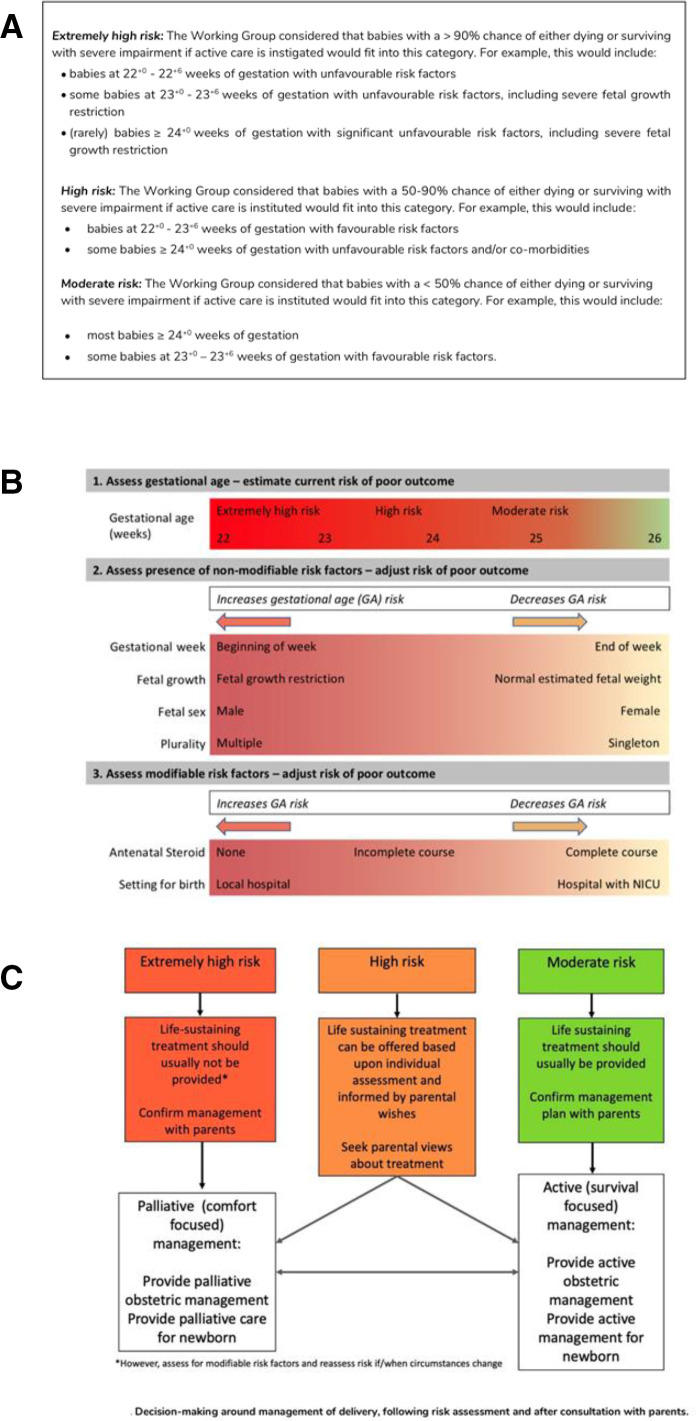
The British Association of Perinatal Medicine (BAPM) published a revised framework for perinatal management of extremely preterm infants (EPIs) in 2019. We aimed to assess UK neonatal professionals' interpretation of elements of this framework, as well as the consistency of their estimates of outcome for EPIs.
An online survey gave participants five cases involving anticipated extremely preterm birth with different favourable and unfavourable risk factors. Respondents were asked to assign a risk category and management option using the BAPM framework and to estimate the chance of survival if the baby received active resuscitation and the chance of severe disability if they survived.
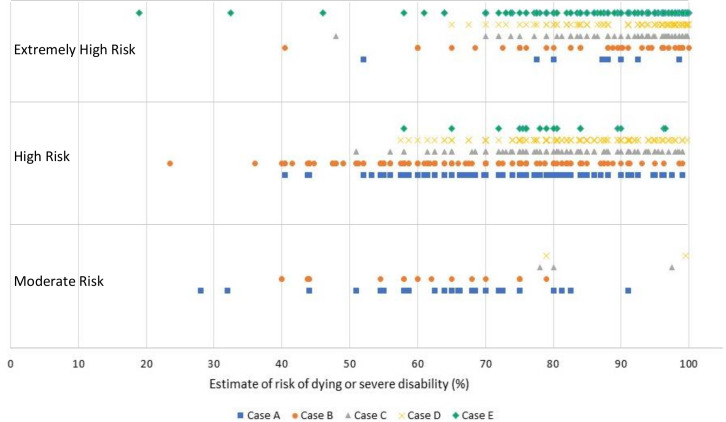
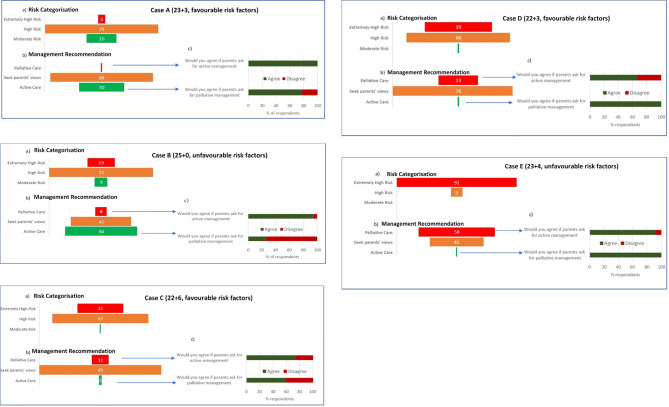
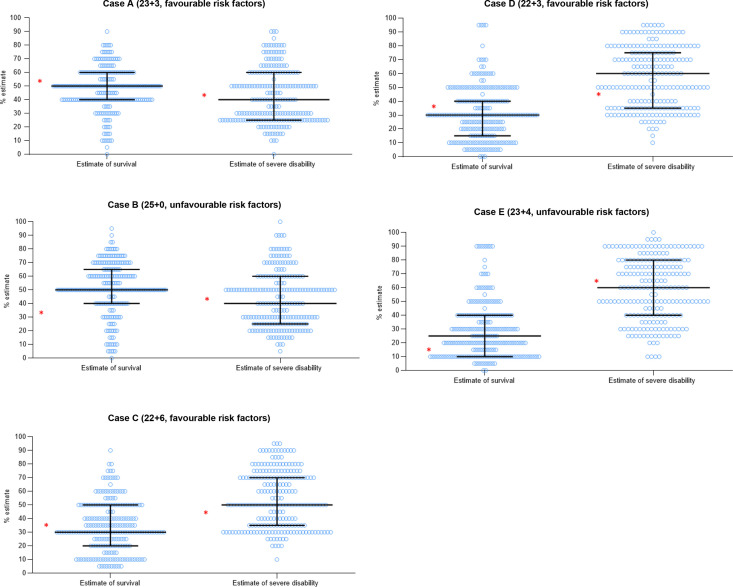
Respondents were consistent in interpretation of risk categories. The majority would follow parental wishes about management. Management decisions did not always correspond with risk assessment, with less inclination to recommend palliative (comfort) care. There were wide estimates of survival or severe disability (5%-90%) with consultants providing lower estimates of severe disability than other groups.
UK neonatal professionals deferred to parental wishes in the cases presented, indicating an emphasis on shared decision making. However, they did not necessarily use the risk stratification approach for management decisions. Variation in estimates of outcome raises questions about the accuracy of informed decision making and suggests support is needed for UK clinicians to incorporate risk factors into individualised counselling. There may be value in validating existing online risk calculators for UK infants or in developing a UK specific risk model.
英国围产医学协会(BAPM)于 2019 年发布了一份修订后的极早产儿围产管理框架。我们旨在评估英国新生儿专业人员对该框架要素的解读,以及他们对极早产儿结局估计的一致性。
一项在线调查为参与者提供了五个涉及预期极早产儿出生的病例,这些病例具有不同的有利和不利风险因素。要求受访者使用 BAPM 框架为婴儿分配风险类别和管理选项,并估计婴儿接受积极复苏的存活机会和如果存活严重残疾的机会。
受访者对风险类别的解读是一致的。大多数人会遵从父母对管理的意愿。管理决策并不总是与风险评估相对应,不太倾向于推荐姑息(舒适)治疗。对于生存或严重残疾(5%-90%)的估计存在很大差异,顾问组对严重残疾的估计低于其他组。
英国新生儿专业人员在提出的案例中尊重父母的意愿,表明他们强调共同决策。然而,他们在管理决策中并不一定使用风险分层方法。结果估计的差异引发了有关知情决策准确性的问题,并表明英国临床医生需要支持将风险因素纳入个体化咨询。验证现有的英国婴儿在线风险计算器或开发英国特定的风险模型可能具有价值。