Lellouch Alexandre G, Taveau Corentin B, Andrews Alec R, Molde Joseph, Ng Zhi Yang, Tratnig-Frankl Philipp, Rosales Ivy A, Goutard Marion, Lupon Elise, Lantieri Laurent A, Colvin Robert B, Randolph Mark A, Kohn Joachim, Cetrulo Curtis L
Division of Plastic and Reconstructive Surgery, Massachusetts General Hospital, Harvard Medical School, Boston, MA, USA.
Vascularized Composite Allotransplantation Laboratory, Center for Transplantation Sciences, Massachusetts General Hospital, Harvard Medical School, Boston, MA, USA.
Ann Transl Med. 2021 Jul;9(13):1070. doi: 10.21037/atm-21-313.
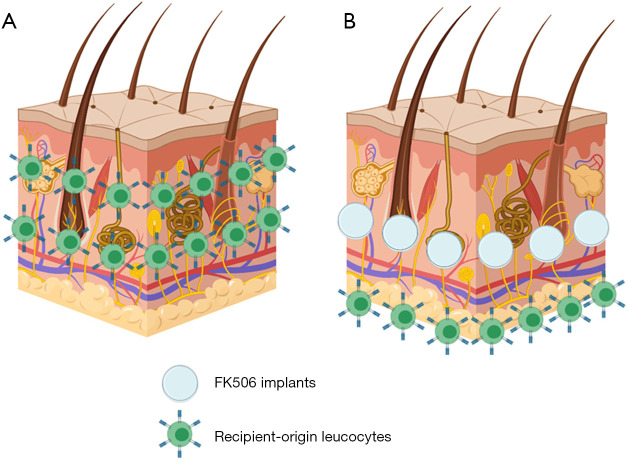
Previous vascularized composite allograft (VCA) studies from our laboratory have shown that topical FK506 delivery in non-human primates (NHPs) was limited by inadequate dermal penetration and rejection persisted. Herein, we report the first utilization of FK506 via subcutaneously implanted discs to mitigate VCA rejection in NHPs.
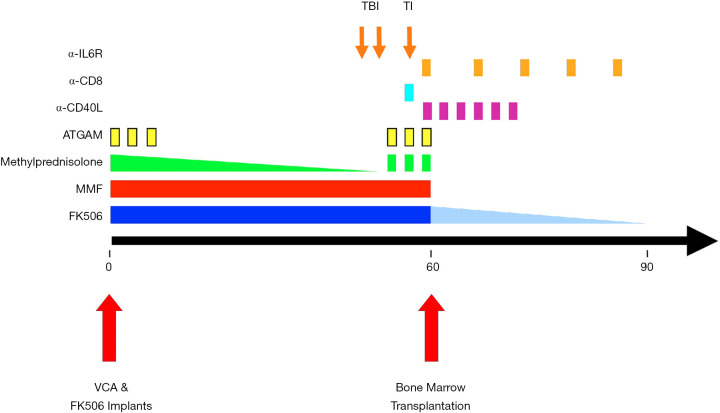
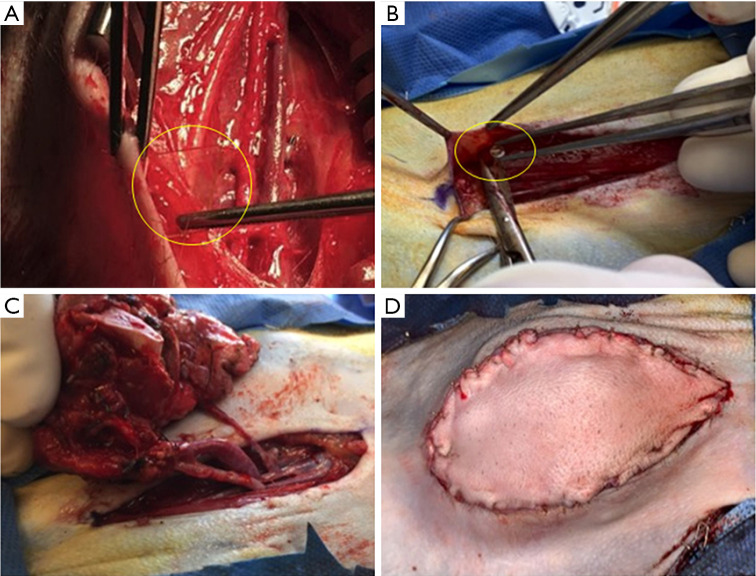
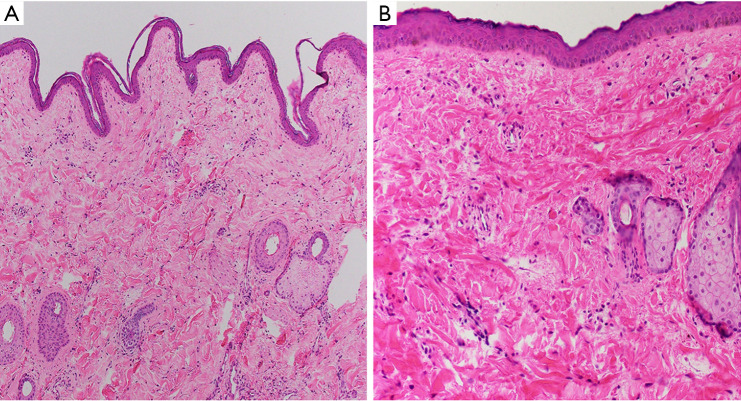
Full major histocompatibility complex (MHC)-mismatched NHP pairs underwent partial-face VCA and FK506 disc implantation along the suture line. All allotransplants were maintained post-operatively for two months on the FK506 discs, methylprednisolone, mycophenolate mofetil, and supplemented with intramuscular FK506 if necessary. Group 1 (n=4) was used for optimization of the implant, while Group 2 (n=3) underwent delayed bone marrow transplantation (DBMT) after two months. VCA skin biopsies and peripheral blood samples were obtained for serial assessment of rejection and mixed chimerism by histopathology and flow cytometry respectively.
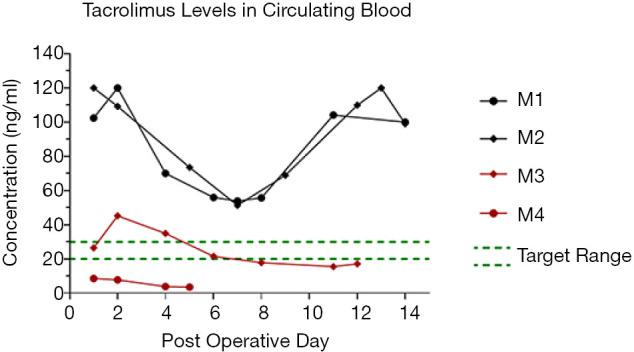
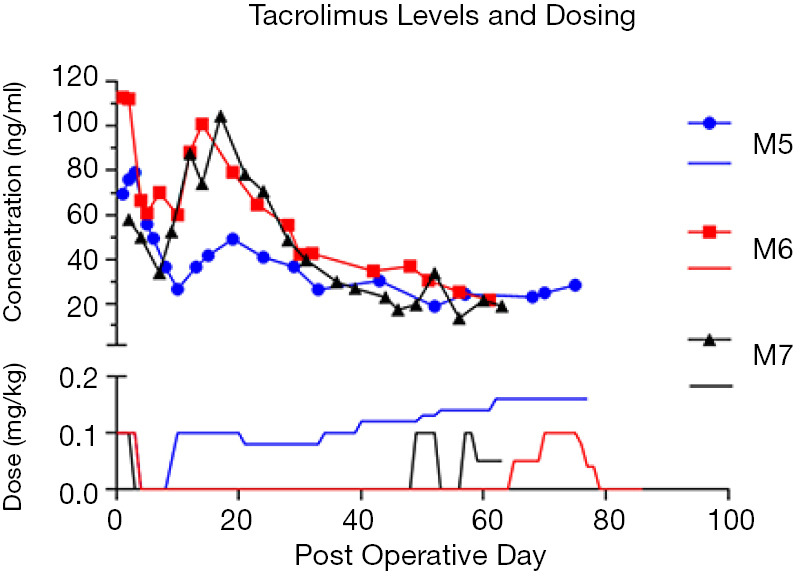
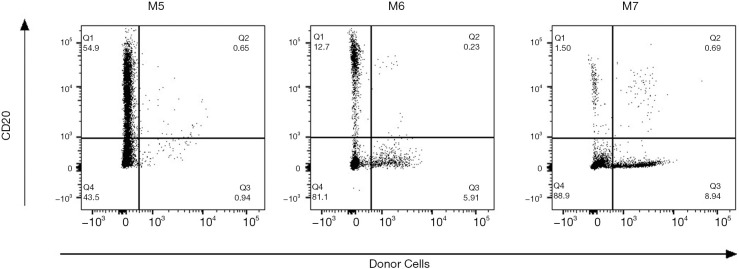
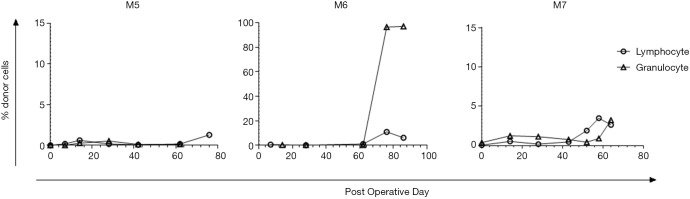
In Group 1, two technical failures occurred. Of the remaining two NHPs, one developed supratherapeutic levels of FK506 (50-120 ng/mL) and had to be euthanized on postoperative day (POD) 12. Reformulation of the implant resulted in stable FK506 levels (20-30 ng/mL) up to POD12 when further intramuscular (IM) FK506 injections were necessitated. In Group 2, two NHPs survived to undergo conditioning and one successfully developed chimerism at 2-3 weeks post-DBMT (96-97% granulocytes and 7-11% lymphocytes of recipient-origin). However, all three NHPs had to be terminated from study at POD64, 77 and 86 due to underlying post-transplant lymphoproliferative disorder. All VCAs remained rejection-free up to study endpoint otherwise.
This study shows preliminary results of local FK506 implants in potentially mitigating VCA acute rejection for tolerance protocols based on mixed chimerism approach.
我们实验室之前的血管化复合组织异体移植(VCA)研究表明,非人灵长类动物(NHP)局部应用FK506时,由于皮肤穿透不足,药物递送受限,排斥反应持续存在。在此,我们报告首次通过皮下植入圆盘使用FK506来减轻NHP的VCA排斥反应。
完全主要组织相容性复合体(MHC)不匹配的NHP对接受部分面部VCA,并沿缝线植入FK506圆盘。所有同种异体移植术后在FK506圆盘、甲泼尼龙、霉酚酸酯的作用下维持两个月,必要时补充肌肉注射FK506。第1组(n = 4)用于优化植入物,而第2组(n = 3)在两个月后进行延迟骨髓移植(DBMT)。分别通过组织病理学和流式细胞术获取VCA皮肤活检和外周血样本,用于连续评估排斥反应和混合嵌合现象。
在第1组中,出现了两次技术失败。在其余两只NHP中,一只FK506水平超过治疗范围(50 - 120 ng/mL),不得不在术后第12天实施安乐死。重新配制植入物后,直至术后第12天需要进一步肌肉注射(IM)FK506时,FK506水平保持稳定(20 - 30 ng/mL)。在第2组中,两只NHP存活下来接受预处理,一只在DBMT后2 - 3周成功形成嵌合现象(粒细胞96 - 97%和淋巴细胞7 - 11%源自受体)。然而,由于潜在的移植后淋巴细胞增生性疾病,所有三只NHP不得不在术后第64、77和86天终止研究。否则,所有VCA直至研究终点均未出现排斥反应。
本研究显示了局部FK506植入物在基于混合嵌合方法的耐受性方案中可能减轻VCA急性排斥反应的初步结果。