Department of Psychiatry and Psychotherapy, Charité-Universitätsmedizin Berlin, Freie Universität Berlin and Humboldt-Universität zu Berlin, Berlin, Germany.
Biomedical Innovation Academy, Berlin Institute of Health, Berlin, Germany.
PLoS Med. 2021 Aug 23;18(8):e1003750. doi: 10.1371/journal.pmed.1003750. eCollection 2021 Aug.
Homelessness continues to be a pressing public health concern in many countries, and mental disorders in homeless persons contribute to their high rates of morbidity and mortality. Many primary studies have estimated prevalence rates for mental disorders in homeless individuals. We conducted a systematic review and meta-analysis of studies on the prevalence of any mental disorder and major psychiatric diagnoses in clearly defined homeless populations in any high-income country.
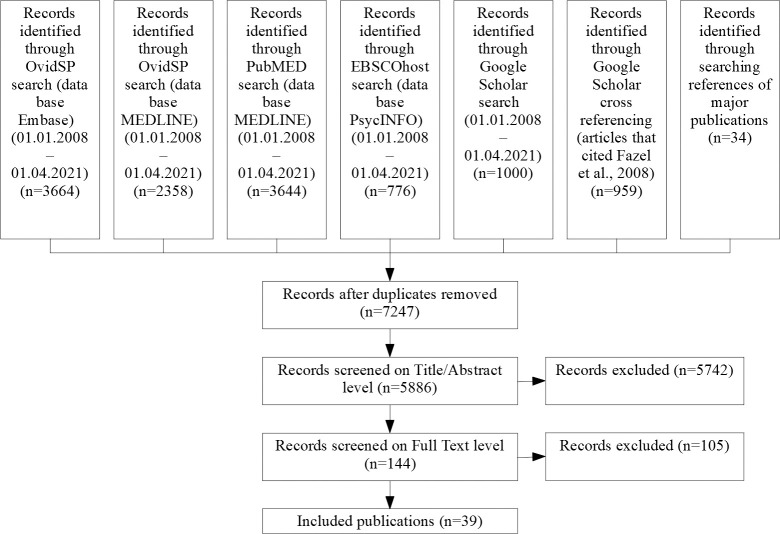
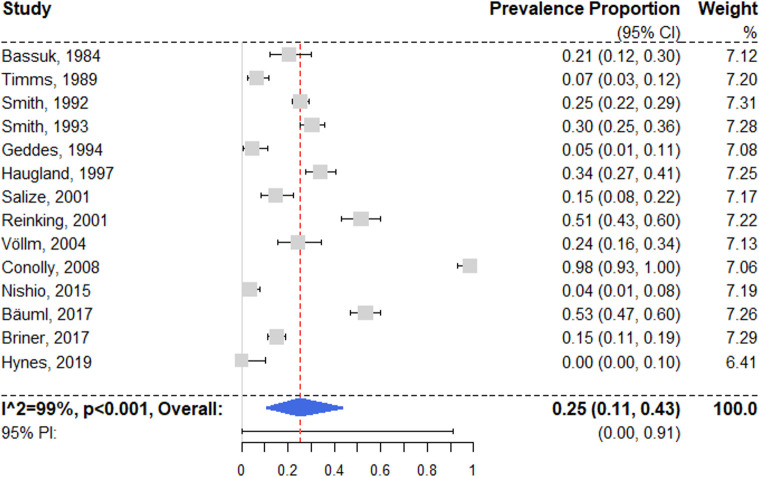
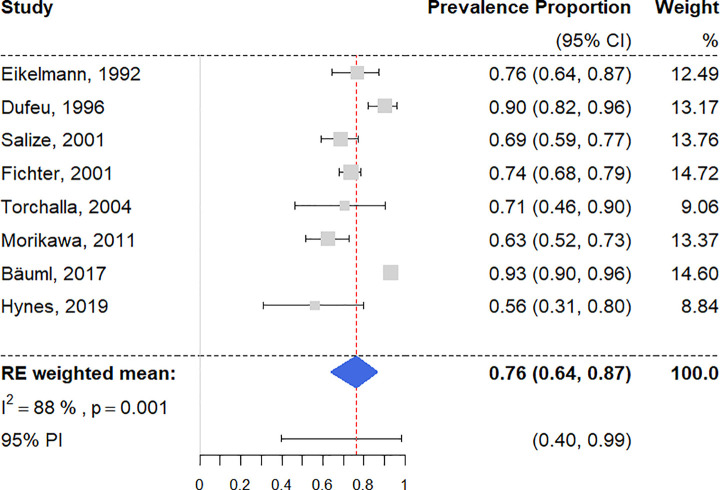
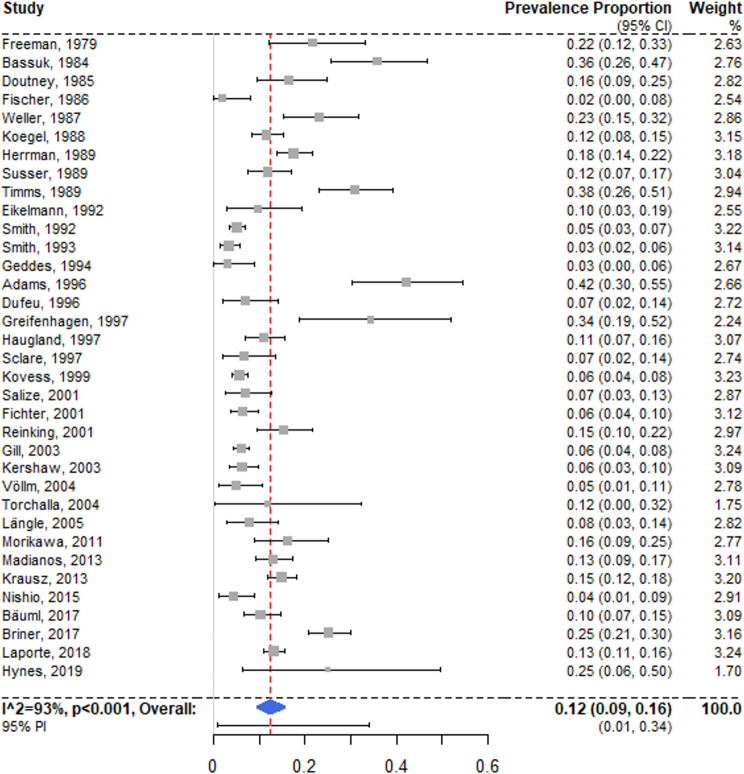
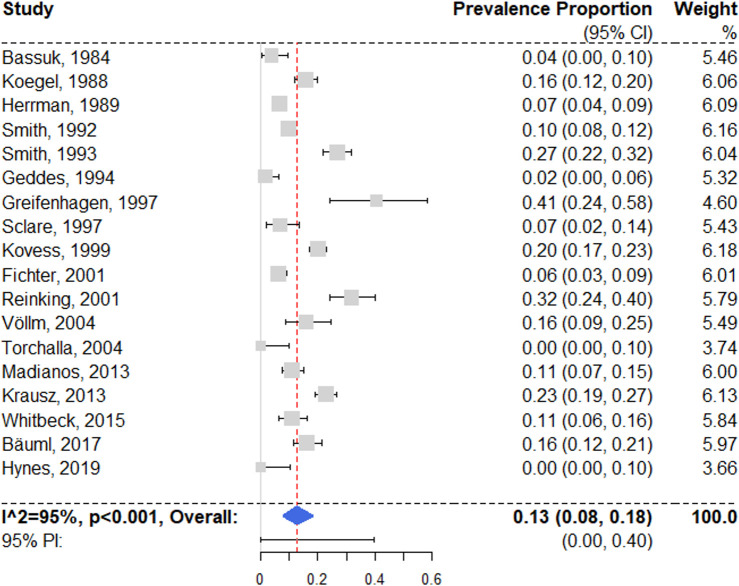
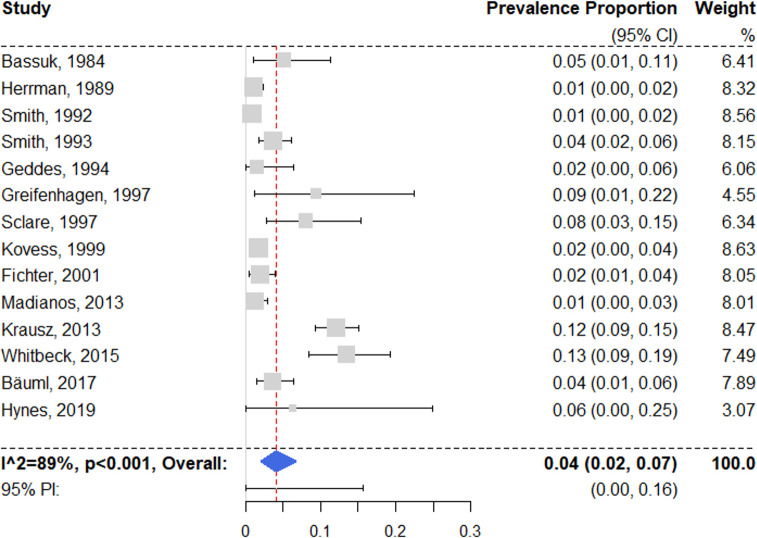
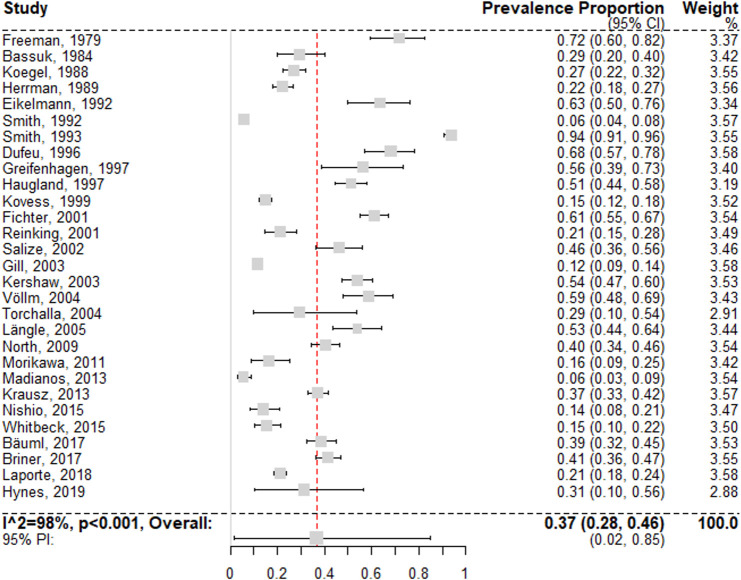
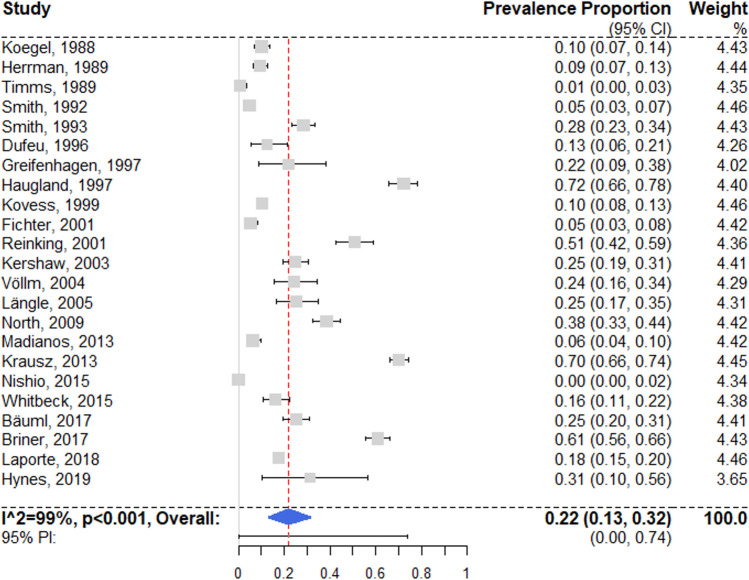
We systematically searched for observational studies that estimated prevalence rates of mental disorders in samples of homeless individuals, using Medline, Embase, PsycInfo, and Google Scholar. We updated a previous systematic review and meta-analysis conducted in 2007, and searched until 1 April 2021. Studies were included if they sampled exclusively homeless persons, diagnosed mental disorders by standardized criteria using validated methods, provided point or up to 12-month prevalence rates, and were conducted in high-income countries. We identified 39 publications with a total of 8,049 participants. Study quality was assessed using the JBI critical appraisal tool for prevalence studies and a risk of bias tool. Random effects meta-analyses of prevalence rates were conducted, and heterogeneity was assessed by meta-regression analyses. The mean prevalence of any current mental disorder was estimated at 76.2% (95% CI 64.0% to 86.6%). The most common diagnostic categories were alcohol use disorders, at 36.7% (95% CI 27.7% to 46.2%), and drug use disorders, at 21.7% (95% CI 13.1% to 31.7%), followed by schizophrenia spectrum disorders (12.4% [95% CI 9.5% to 15.7%]) and major depression (12.6% [95% CI 8.0% to 18.2%]). We found substantial heterogeneity in prevalence rates between studies, which was partially explained by sampling method, study location, and the sex distribution of participants. Limitations included lack of information on certain subpopulations (e.g., women and immigrants) and unmet healthcare needs.
Public health and policy interventions to improve the health of homeless persons should consider the pattern and extent of psychiatric morbidity. Our findings suggest that the burden of psychiatric morbidity in homeless persons is substantial, and should lead to regular reviews of how healthcare services assess, treat, and follow up homeless people. The high burden of substance use disorders and schizophrenia spectrum disorders need particular attention in service development. This systematic review and meta-analysis has been registered with PROSPERO (CRD42018085216).
PROSPERO CRD42018085216.
在许多国家,无家可归仍是一个紧迫的公共卫生问题,无家可归者的精神障碍导致其发病率和死亡率居高不下。许多初步研究已经估计了无家可归者中心理障碍的患病率。我们对任何高收入国家明确界定的无家可归人群中任何精神障碍和主要精神诊断的患病率进行了系统评价和荟萃分析。
我们使用 Medline、Embase、PsycInfo 和 Google Scholar 系统地搜索了估计无家可归者样本中心理障碍患病率的观察性研究。我们更新了 2007 年进行的先前的系统评价和荟萃分析,并一直搜索到 2021 年 4 月 1 日。如果研究仅抽样无家可归者,使用经过验证的方法通过标准化标准诊断精神障碍,提供点或长达 12 个月的患病率,并在高收入国家进行,则纳入研究。我们确定了 39 篇出版物,共有 8049 名参与者。使用 JBI 流行率研究的批判性评估工具和偏倚风险工具评估研究质量。进行了患病率的随机效应荟萃分析,并通过荟萃回归分析评估了异质性。当前任何精神障碍的平均患病率估计为 76.2%(95%CI 64.0%至 86.6%)。最常见的诊断类别是酒精使用障碍,为 36.7%(95%CI 27.7%至 46.2%),药物使用障碍为 21.7%(95%CI 13.1%至 31.7%),其次是精神分裂症谱系障碍(12.4%[95%CI 9.5%至 15.7%])和重度抑郁症(12.6%[95%CI 8.0%至 18.2%])。我们发现研究之间的患病率存在很大差异,部分原因是抽样方法、研究地点和参与者的性别分布不同。限制包括缺乏某些亚群(例如妇女和移民)的信息以及未满足的医疗保健需求。
改善无家可归者健康的公共卫生和政策干预措施应考虑到精神疾病发病率的模式和程度。我们的研究结果表明,无家可归者的精神疾病负担很大,应定期审查医疗保健服务如何评估、治疗和跟踪无家可归者。物质使用障碍和精神分裂症谱系障碍的高负担需要在服务发展中特别关注。这项系统评价和荟萃分析已在 PROSPERO(CRD42018085216)中注册。
PROSPERO CRD42018085216。