Department of Small Animal Clinical Sciences, College of Veterinary Medicine and Biomedical Sciences, Texas A&M University, College Station, Texas.
Department of Neurosurgery, Northwestern University, Chicago, Illinois.
Clin Cancer Res. 2021 Oct 15;27(20):5528-5535. doi: 10.1158/1078-0432.CCR-21-1914. Epub 2021 Aug 25.
Activation of STING (timulator of terferon enes) can trigger a robust, innate antitumor immune response in immunologically "cold" tumors such as glioblastoma.
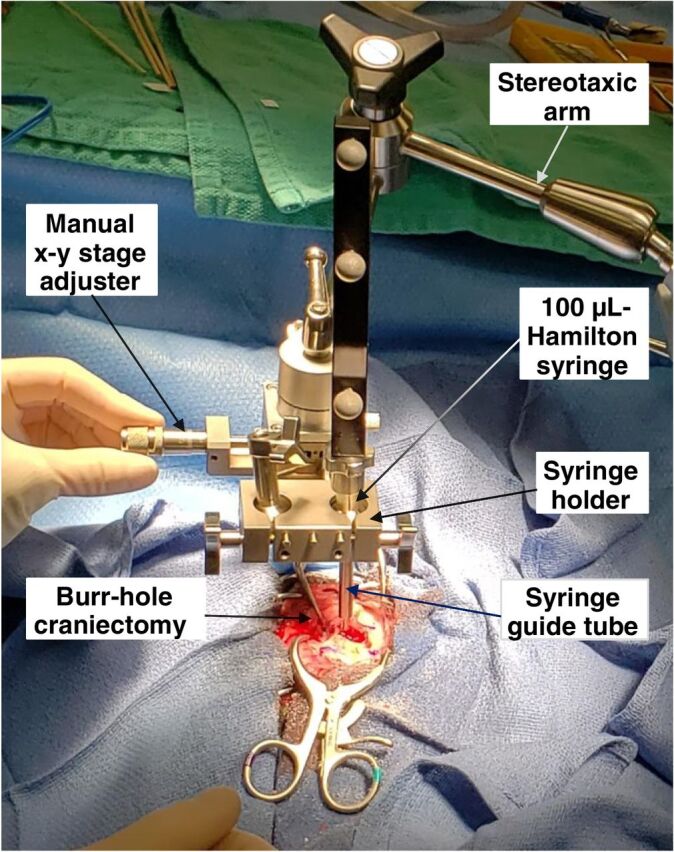
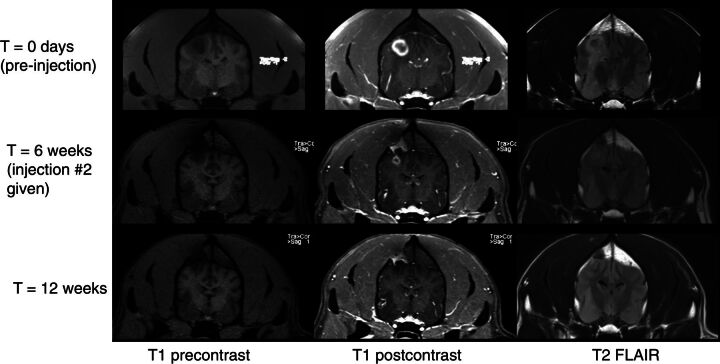
A small-molecule STING agonist, IACS-8779, was stereotactically administered using intraoperative navigation intratumorally in dogs with spontaneously arising glioblastoma. The phase I trial used an escalating dose design, ascending through four dose levels (5-20 μg). Treatment was repeated every 4-6 weeks for a minimum of two cycles. Radiographic response to treatment was determined by response assessment in neuro-oncology (RANO) criteria applied to isovoxel postcontrast T1-weighted MR images obtained on a single 3T magnet.
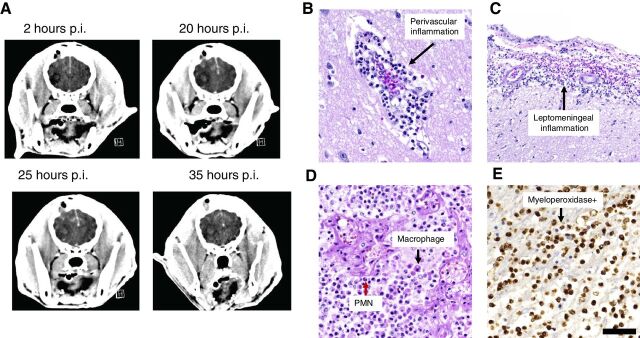
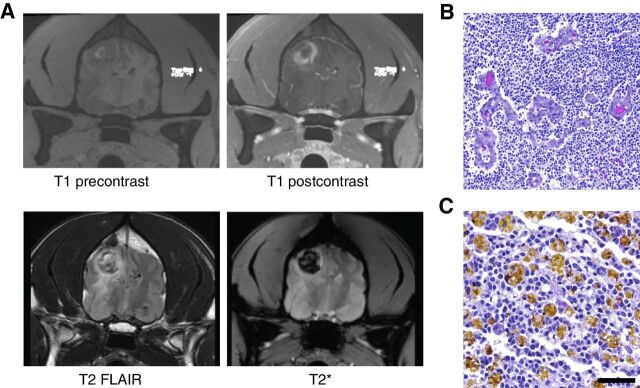
Six dogs were enrolled and completed ≥1 cycle of treatment. One dog was determined to have an abscess and was removed from further analysis. One procedure-related fatality was observed. Radiographic responses were dose dependent after the first cycle. The first subject had progressive disease, whereas there was 25% volumetric reduction in one subject and greater than 50% in the remaining surviving subjects. The median progression-free survival time was 14 weeks (range: 0-22 weeks), and the median overall survival time was 32 weeks (range: 11-39 weeks).
Intratumoral STING agonist (IACS-8779) administration was well tolerated in dogs with glioblastoma to a dose of 15 μg. Higher doses of IACS-8779 were associated with radiographic responses.
STING(干扰素基因刺激物)的激活可以在免疫“冷”肿瘤(如神经胶质瘤)中引发强烈的固有抗肿瘤免疫反应。
一种小分子 STING 激动剂 IACS-8779 通过术中导航立体定向在患有自发性神经胶质瘤的狗的肿瘤内进行瘤内给药。I 期试验采用递增剂量设计,分为四个剂量水平(5-20μg)递增。治疗每 4-6 周重复一次,至少进行两个周期。根据应用于在单个 3T 磁体上获得的等体素对比后 T1 加权 MR 图像的神经肿瘤学反应评估(RANO)标准,通过放射学反应来确定治疗反应。
六只狗被纳入并完成了至少一个周期的治疗。一只狗被确定为脓肿,并被排除在进一步分析之外。观察到一起与手术相关的死亡事件。第一次治疗后,放射学反应与剂量相关。第一个受试者出现进展性疾病,而一个受试者的体积减少了 25%,其余存活的受试者的体积减少了 50%以上。无进展生存时间的中位数为 14 周(范围:0-22 周),总生存时间的中位数为 32 周(范围:11-39 周)。
在患有神经胶质瘤的狗中,肿瘤内 STING 激动剂(IACS-8779)给药至 15μg 时耐受性良好。更高剂量的 IACS-8779 与放射学反应相关。