Li Chunyu, Wang Zhihong, Chen Wei, Cao Bo, Zhang Mingyu, Gu Qiong, Qi Shuya, Fei Xiaofei, Shi Yafei, Li Xingjie, Li RuiSheng, Wang Jiabo, Li Guohui
National Cancer Center/National Clinical Research Center for Cancer/Cancer Hospital, Chinese Academy of Medical Sciences and Peking Union Medical College, Beijing, China.
Research Center for Clinical and Translational Medicine, Fifth Medical Center of Chinese People's Liberation Army (PLA) General Hospital, Beijing, China.
Front Oncol. 2021 Aug 9;11:697247. doi: 10.3389/fonc.2021.697247. eCollection 2021.
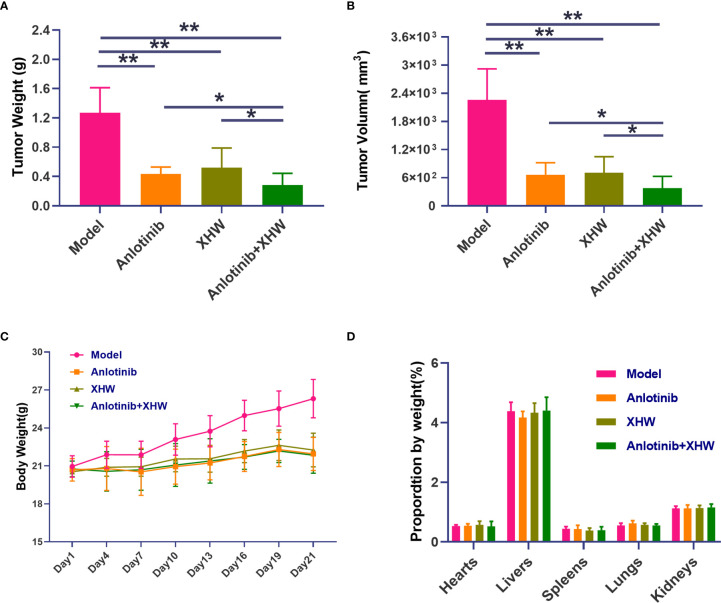
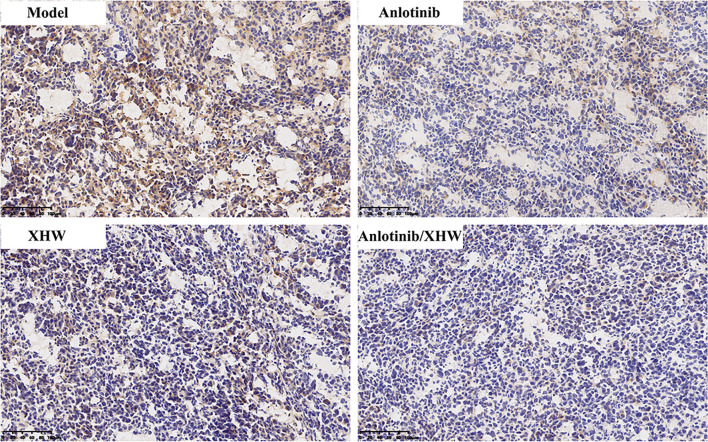
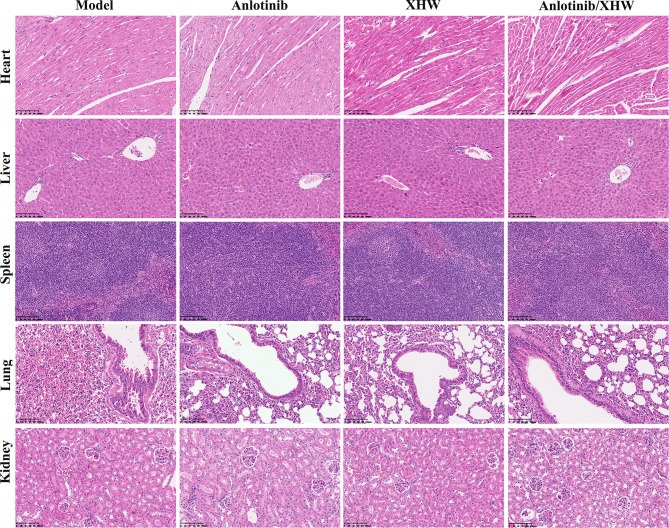
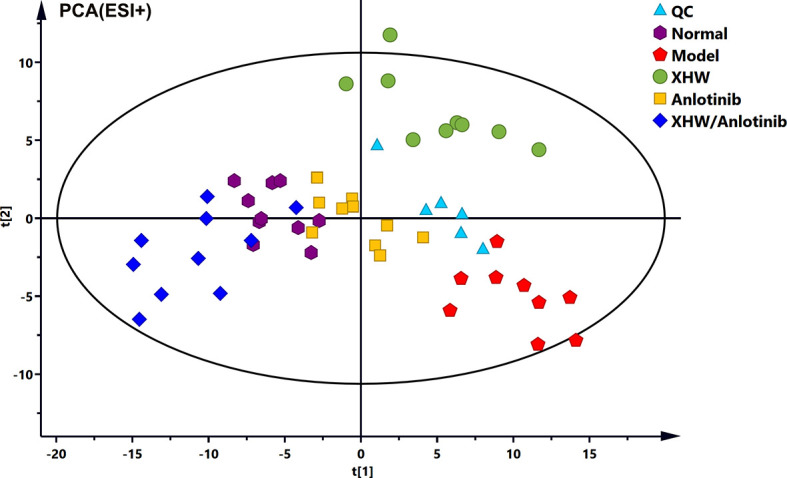
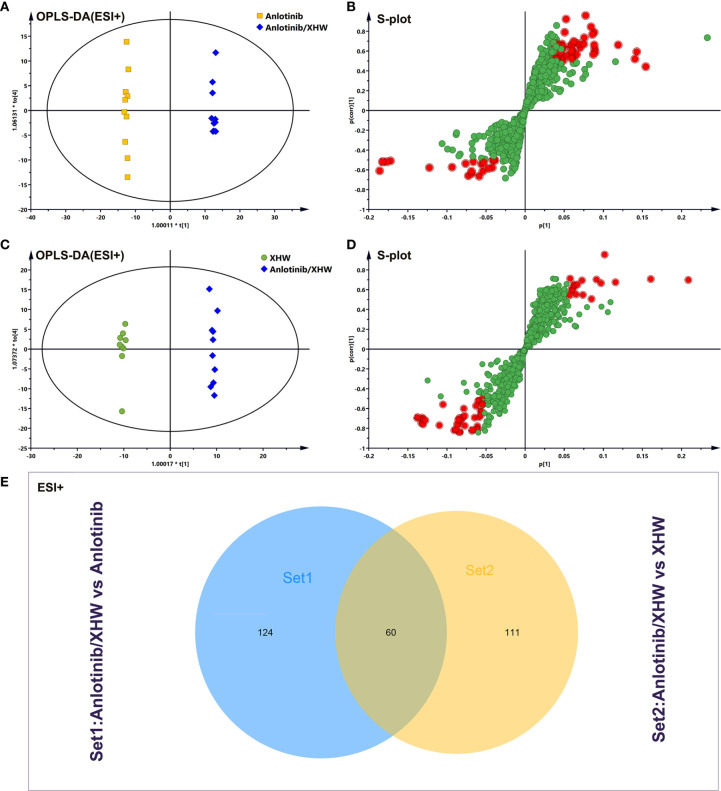
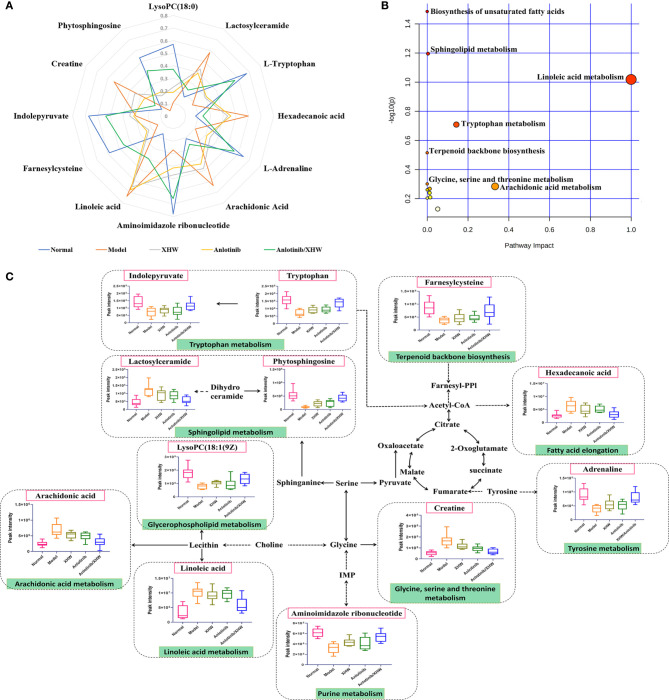
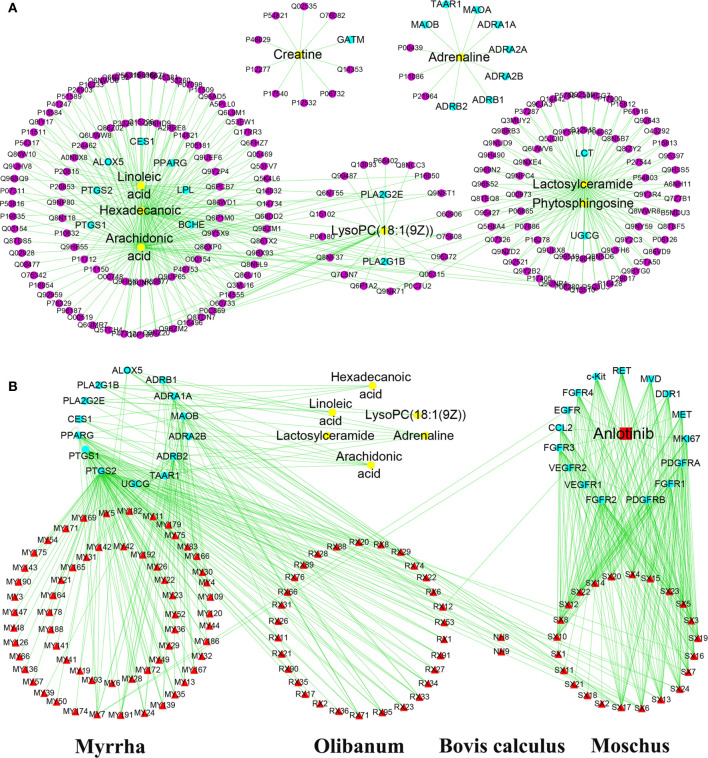
Lung cancer ranks as a leading cause of death. Although targeted therapies usually trigger profound initial patient responses, these effects are transient due to drug resistance and severe side effects. Xihuang Pill (XHW) is a popular Chinese medicine formula that might benefit cancer patients when used as a complementary therapy. However, its underlying mechanism when combined with anticancer drugs is not clearly understood. Here, we used an integrated strategy to reveal the regulatory properties of XHW in increasing the antitumor activity of anlotinib in lung cancer. We evaluated the anti-lung cancer effect of XHW combined with anlotinib in mice bearing Lewis lung carcinoma (LLC). We applied untargeted metabolomics to identify the differences metabolism and found that XHW improved the effects of anlotinib on lung cancer. The components and targets related to the effects of XHW treatment on lung cancer were obtained through network pharmacology. Then, by integrating the biologically active components of XHW and anlotinib as well as the treatment-responsive metabolites and their related targets, an interaction network was constructed to evaluate the combination therapy. Finally, important protein candidates for this response were verified by immunohistochemistry of tumor tissues. The results showed that XHW significantly improved the inhibitory effect of anlotinib on tumor growth in LLC-bearing mice. Additionally, 12 differentially-abundant metabolites were identified by untargeted metabolomics in the XHW/anlotinib group compared with the XHW or anlotinib groups, and they were mainly enriched in fatty acid metabolism, lipid metabolism and amino acid metabolism pathways. Anlotinib, 23 components in Shexiang, 2 components in Niuhuang, 30 components in Ruxiang and 60 components in Moyao work together to act on 30 targets to regulate hexadecanoic acid (also named palmitic acid), linoleic acid, lactosylceramide, adrenaline, arachidonic acid and lysoPC(18:1(9Z)). The results of immunohistochemistry showed that XHW combined with anlotinib reduced the expression of PDGFRA in tumors. Overall, the key metabolites of XHW that enhances the efficacy of anlotinib were regulated by a multicomponent and multitarget interaction network. Our results suggested that anlotinib combined with XHW may be a promising strategy for the treatment of lung cancer.
肺癌是主要的死亡原因之一。尽管靶向治疗通常会使患者最初产生显著反应,但由于耐药性和严重的副作用,这些效果是短暂的。西黄丸(XHW)是一种常用的中药配方,作为辅助疗法可能对癌症患者有益。然而,其与抗癌药物联合使用时的潜在机制尚不清楚。在此,我们采用综合策略来揭示西黄丸在增强安罗替尼对肺癌的抗肿瘤活性方面的调节特性。我们评估了西黄丸联合安罗替尼对携带Lewis肺癌(LLC)的小鼠的抗肺癌效果。我们应用非靶向代谢组学来识别代谢差异,发现西黄丸改善了安罗替尼对肺癌的疗效。通过网络药理学获得了与西黄丸治疗肺癌效果相关的成分和靶点。然后,通过整合西黄丸和安罗替尼的生物活性成分以及治疗反应性代谢物及其相关靶点,构建了一个相互作用网络来评估联合治疗。最后,通过肿瘤组织的免疫组织化学验证了参与这种反应的重要蛋白质候选物。结果表明,西黄丸显著提高了安罗替尼对携带LLC小鼠肿瘤生长的抑制作用。此外,与西黄丸组或安罗替尼组相比,非靶向代谢组学在西黄丸/安罗替尼组中鉴定出12种差异丰富的代谢物,它们主要富集在脂肪酸代谢、脂质代谢和氨基酸代谢途径中。安罗替尼、麝香中的23种成分、牛黄中的2种成分、乳香中的30种成分和没药中的60种成分共同作用于30个靶点,以调节十六烷酸(也称为棕榈酸)、亚油酸、乳糖神经酰胺、肾上腺素、花生四烯酸和溶血磷脂酰胆碱(18:1(9Z))。免疫组织化学结果表明,西黄丸联合安罗替尼降低了肿瘤中血小板衍生生长因子受体α(PDGFRA)的表达。总体而言,增强安罗替尼疗效的西黄丸关键代谢物是由一个多成分、多靶点相互作用网络调节的。我们的结果表明,安罗替尼联合西黄丸可能是一种有前景的肺癌治疗策略。