Regenerative Medicine and Stem Cell Research Center, The Shraga Segal Department of Microbiology, Immunology, and Genetics, Faculty of Health Sciences, Ben Gurion University of the Negev, Beer Sheva 8410501, Israel.
Laboratory of Connective Tissue, Centro Nacional de Investigación y Atención de Quemados, Instituto Nacional de Rehabilitación "Luis Guillermo Ibarra Ibarra", Calzada Mexico-Xochimilco No. 289, Col. Arenal de Guadalupe, Tlalpan, Mexico City 14389, Mexico.
Mar Drugs. 2021 Aug 9;19(8):454. doi: 10.3390/md19080454.
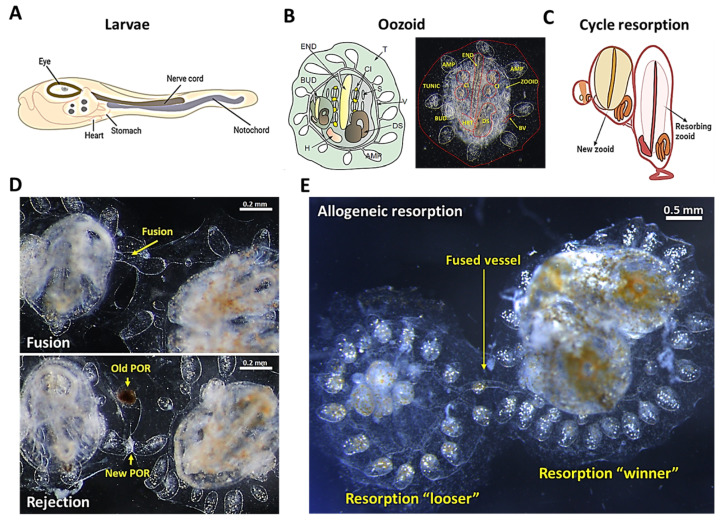
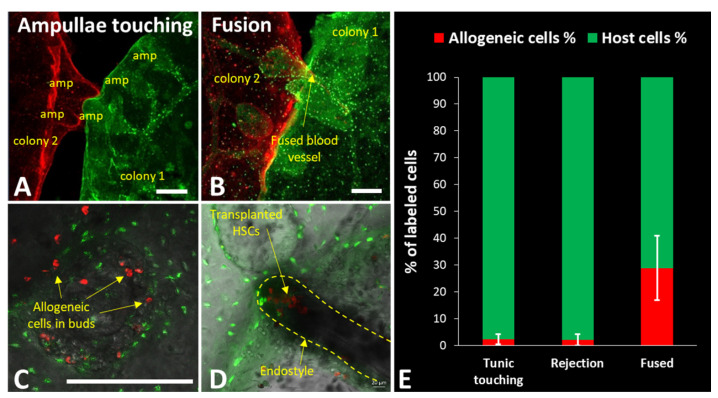
Understanding the mechanisms that sustain immunological nonreactivity is essential for maintaining tissue in syngeneic and allogeneic settings, such as transplantation and pregnancy tolerance. While most transplantation rejections occur due to the adaptive immune response, the proinflammatory response of innate immunity is necessary for the activation of adaptive immunity. , a colonial tunicate, which is the nearest invertebrate group to the vertebrates, is devoid of T- and B-cell-based adaptive immunity. It has unique characteristics that make it a valuable model system for studying innate immunity mechanisms: (i) a natural allogeneic transplantation phenomenon that results in either fusion or rejection; (ii) whole animal regeneration and noninflammatory resorption on a weekly basis; (iii) allogeneic resorption which is comparable to human chronic rejection. Recent studies in have led to the recognition of a molecular and cellular framework underlying the innate immunity loss of tolerance to allogeneic tissues. Additionally, was developed as a model for studying hematopoietic stem cell (HSC) transplantation, and it provides further insights into the similarities between the HSC niches of human and . In this review, we discuss why studying the molecular and cellular pathways that direct successful innate immune tolerance in can provide novel insights into and potential modulations of these immune processes in humans.
了解维持免疫无反应性的机制对于维持同种和同种异体组织(如移植和妊娠耐受)至关重要。虽然大多数移植排斥反应是由于适应性免疫反应引起的,但固有免疫的促炎反应对于适应性免疫的激活是必要的。海鞘是与脊椎动物最接近的无脊椎动物群,它缺乏基于 T 细胞和 B 细胞的适应性免疫。它具有独特的特征,使其成为研究先天免疫机制的有价值的模型系统:(i)自然同种异体移植现象,导致融合或排斥;(ii)每周进行全动物再生和非炎症性吸收;(iii)与人类慢性排斥相当的同种异体吸收。最近在海鞘中的研究导致了对先天免疫失去对同种异体组织耐受性的分子和细胞框架的认识。此外,海鞘被开发为研究造血干细胞(HSC)移植的模型,它提供了关于人和海鞘之间 HSC 龛之间相似性的进一步见解。在这篇综述中,我们讨论了为什么研究指导成功的先天免疫耐受的分子和细胞途径可以为人类这些免疫过程提供新的见解和潜在的调节。