Nyandwi Jean-Baptiste, Ko Young Shin, Jin Hana, Yun Seung Pil, Park Sang Won, Kim Hye Jung
Department of Pharmacology, Institute of Health Sciences, College of Medicine, Gyeongsang National University, Jinju 52727, Korea.
Department of Convergence Medical Science (BK21 Plus), Gyeongsang National University, Jinju 52727, Korea.
Int J Mol Sci. 2021 Aug 16;22(16):8791. doi: 10.3390/ijms22168791.
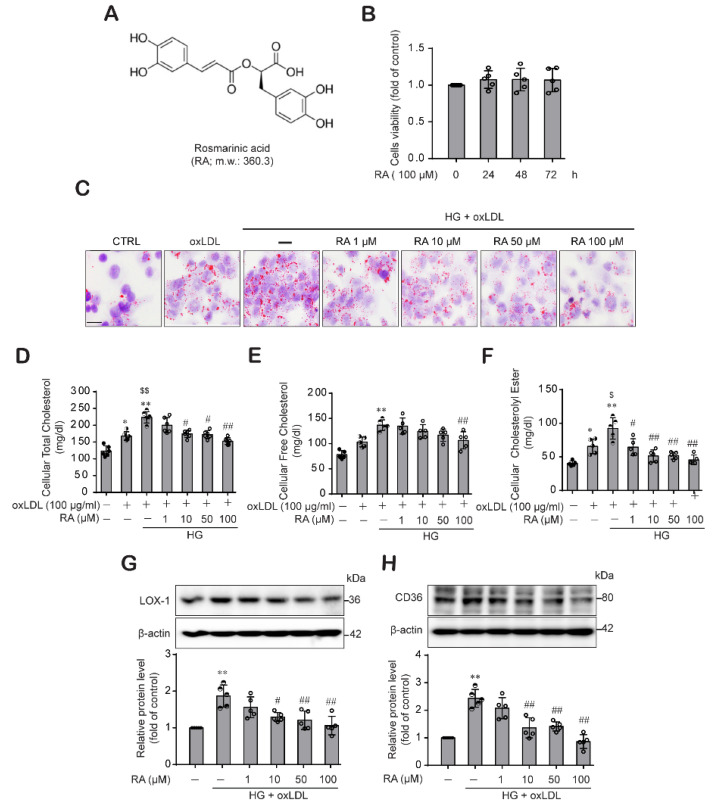
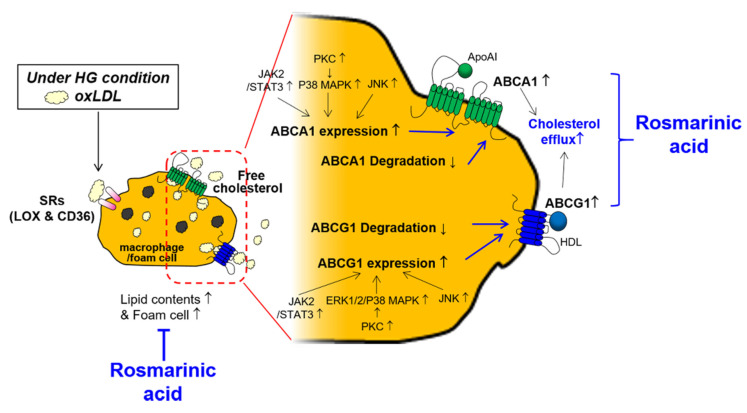
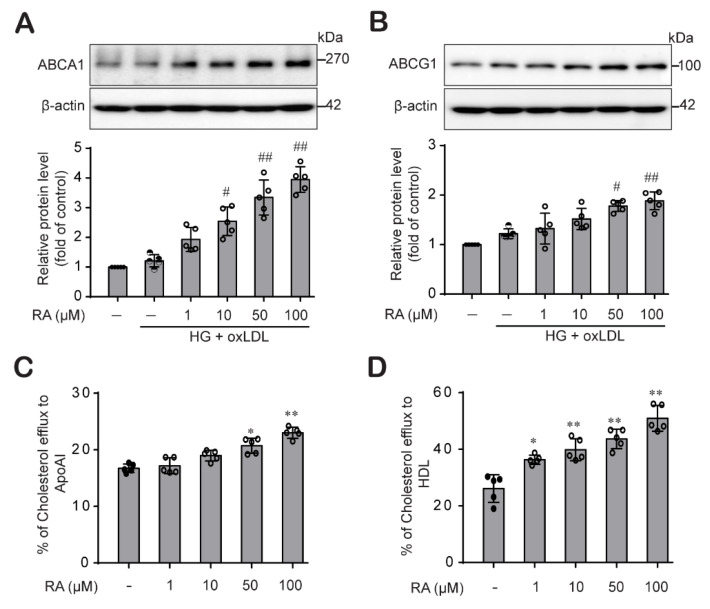
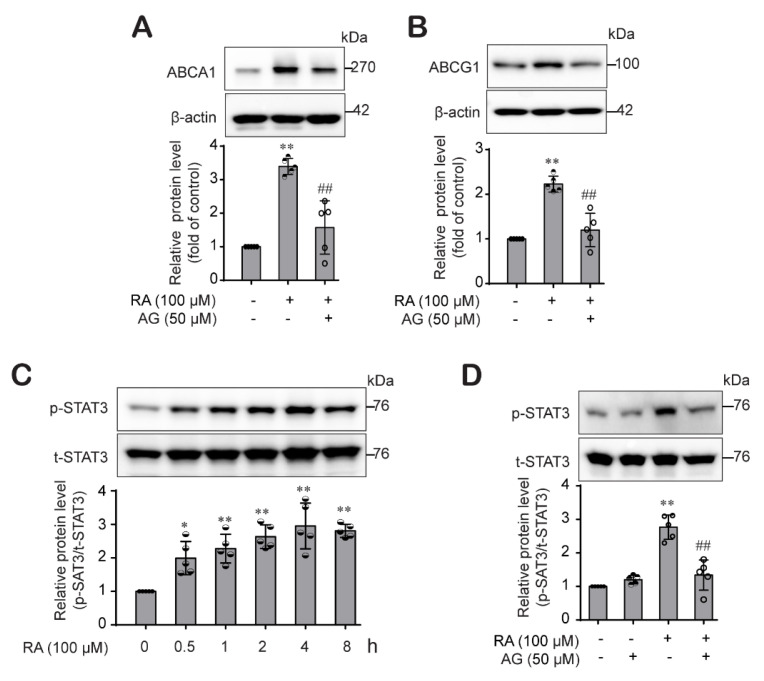
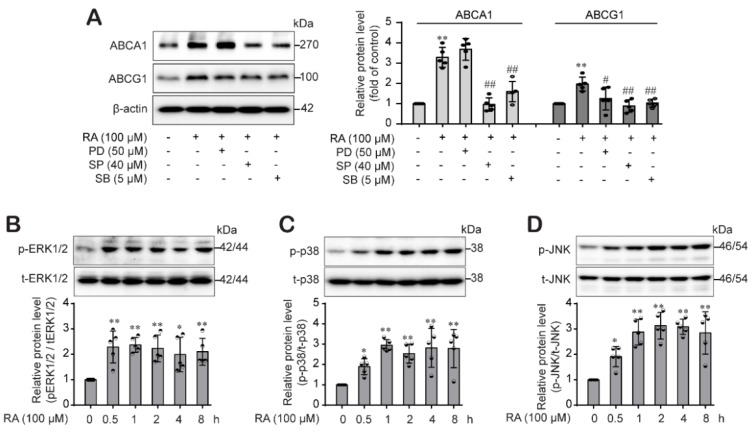
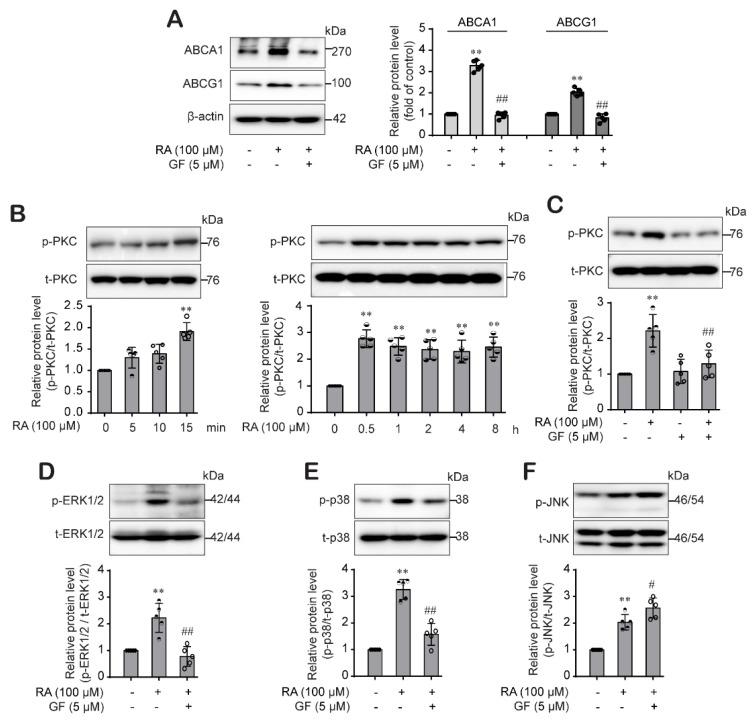
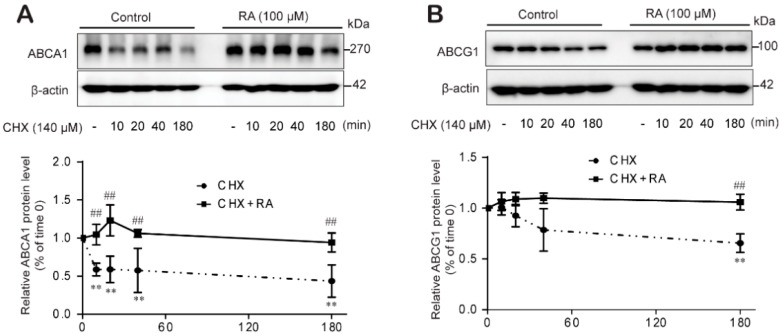
Lipid dysregulation in diabetes mellitus escalates endothelial dysfunction, the initial event in the development and progression of diabetic atherosclerosis. In addition, lipid-laden macrophage accumulation in the arterial wall plays a significant role in the pathology of diabetes-associated atherosclerosis. Therefore, inhibition of endothelial dysfunction and enhancement of macrophage cholesterol efflux is the important antiatherogenic mechanism. Rosmarinic acid (RA) possesses beneficial properties, including its anti-inflammatory, antioxidant, antidiabetic and cardioprotective effects. We previously reported that RA effectively inhibits diabetic endothelial dysfunction by inhibiting inflammasome activation in endothelial cells. However, its effect on cholesterol efflux remains unknown. Therefore, in this study, we aimed to assess the effect of RA on cholesterol efflux and its underlying mechanisms in macrophages. RA effectively reduced oxLDL-induced cholesterol contents under high glucose (HG) conditions in macrophages. RA enhanced ATP-binding cassette transporter A1 (ABCA1) and G1 (ABCG1) expression, promoting macrophage cholesterol efflux. Mechanistically, RA differentially regulated ABCA1 expression through JAK2/STAT3, JNK and PKC-p38 and ABCG1 expression through JAK2/STAT3, JNK and PKC-ERK1/2/p38 in macrophages. Moreover, RA primarily stabilized ABCA1 rather than ABCG1 protein levels by impairing protein degradation. These findings suggest RA as a candidate therapeutic to prevent atherosclerotic cardiovascular disease complications related to diabetes by regulating cholesterol efflux in macrophages.
糖尿病中的脂质失调会加剧内皮功能障碍,这是糖尿病动脉粥样硬化发生和发展的初始事件。此外,动脉壁中富含脂质的巨噬细胞积聚在糖尿病相关动脉粥样硬化的病理过程中起重要作用。因此,抑制内皮功能障碍和增强巨噬细胞胆固醇外流是重要的抗动脉粥样硬化机制。迷迭香酸(RA)具有有益特性,包括抗炎、抗氧化、抗糖尿病和心脏保护作用。我们之前报道过,RA通过抑制内皮细胞中的炎性小体激活有效抑制糖尿病性内皮功能障碍。然而,其对胆固醇外流的影响尚不清楚。因此,在本研究中,我们旨在评估RA对巨噬细胞中胆固醇外流及其潜在机制的影响。RA在高糖(HG)条件下有效降低了巨噬细胞中氧化型低密度脂蛋白(oxLDL)诱导的胆固醇含量。RA增强了ATP结合盒转运蛋白A1(ABCA1)和G1(ABCG1)的表达,促进了巨噬细胞胆固醇外流。从机制上讲,RA通过JAK2/STAT3、JNK和PKC-p38差异调节巨噬细胞中ABCA1的表达,并通过JAK2/STAT3、JNK和PKC-ERK1/2/p38差异调节ABCG1的表达。此外,RA主要通过损害蛋白质降解来稳定ABCA1而非ABCG1的蛋白质水平。这些发现表明,RA作为一种候选治疗药物,可通过调节巨噬细胞中的胆固醇外流来预防与糖尿病相关的动脉粥样硬化性心血管疾病并发症。