Degobert Ghania, Aydin Dunya
LAGEPP UMR 5007 CNRS, University of Lyon, Université Claude Bernard Lyon 1, 69622 Villeurbanne, France.
Pharmaceutics. 2021 Jul 21;13(8):1112. doi: 10.3390/pharmaceutics13081112.
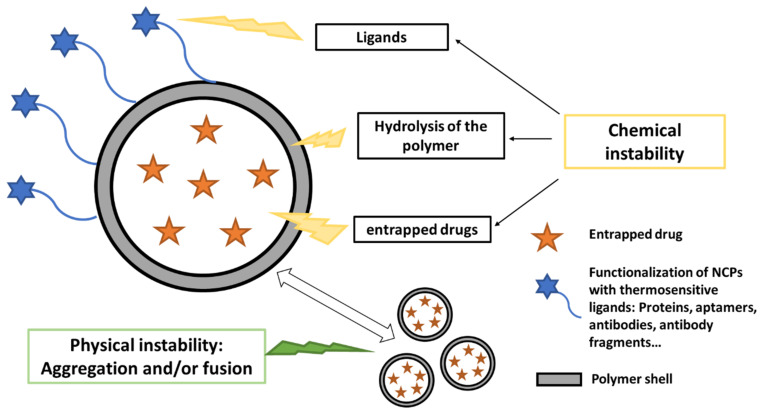
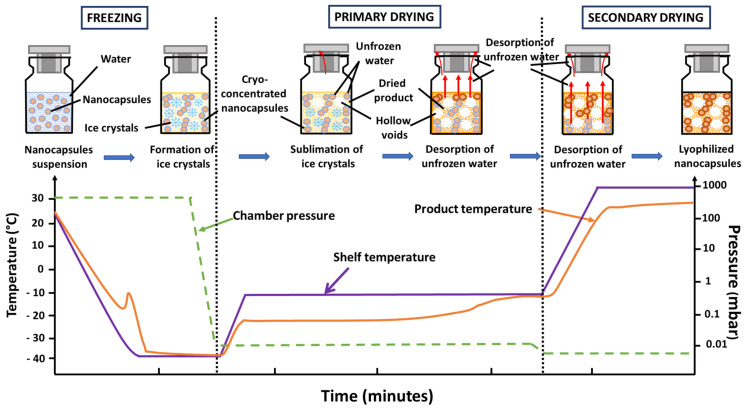
Polymeric nanocapsules have gained more and more interest in the medical sciences. Their core-shell structure offers numerous advantages, especially regarding their use as drug delivery systems. This review begins by presenting the different intrinsic sources of the instability of nanocapsules. The physical and chemical potential instabilities of nanocapsules reduce their shelf-life and constitute a barrier to their clinical use and to their commercialization. To overcome these issues, lyophilization is often used as a process of choice in the pharmaceutical industry especially when labile compounds are used. The state of the art of lyophilization nanocapsules is reviewed. The formulation properties and the process parameters are discussed for a complete understanding of their impact on the stability and storage of the final dried product. To assess the quality of the dried product, various characterization methods are also discussed.
聚合物纳米胶囊在医学领域越来越受到关注。它们的核壳结构具有许多优点,特别是在用作药物递送系统方面。本综述首先介绍了纳米胶囊不稳定性的不同内在来源。纳米胶囊的物理和化学潜在不稳定性会缩短其保质期,并成为其临床应用和商业化的障碍。为了克服这些问题,冻干通常是制药行业的首选工艺,尤其是在使用不稳定化合物时。本文综述了冻干纳米胶囊的研究现状。讨论了配方特性和工艺参数,以全面了解它们对最终干燥产品稳定性和储存的影响。为了评估干燥产品的质量,还讨论了各种表征方法。