Song Zhuqing, Huang Xiuxian, Wang Jieqiong, Cai Feiyan, Zhao Ping, Yan Fei
Department of Breast Surgery, Peking University Shenzhen Hospital, Shenzhen 518036, China.
Paul C. Lauterbur Research Center for Biomedical Imaging, Institute of Biomedical and Health Engineering, Shenzhen Institutes of Advanced Technology, Chinese Academy of Sciences, Shenzhen 518055, China.
Pharmaceutics. 2021 Aug 17;13(8):1270. doi: 10.3390/pharmaceutics13081270.
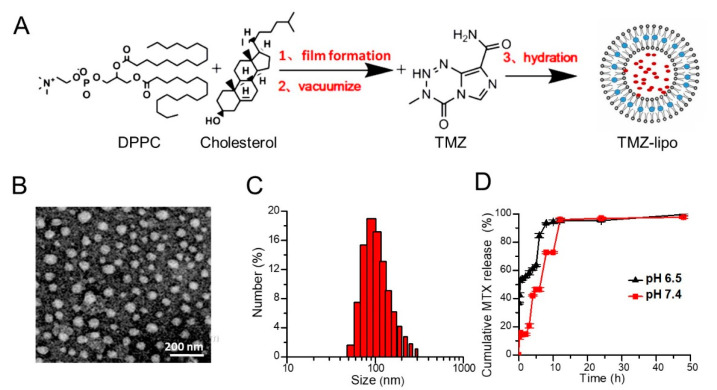
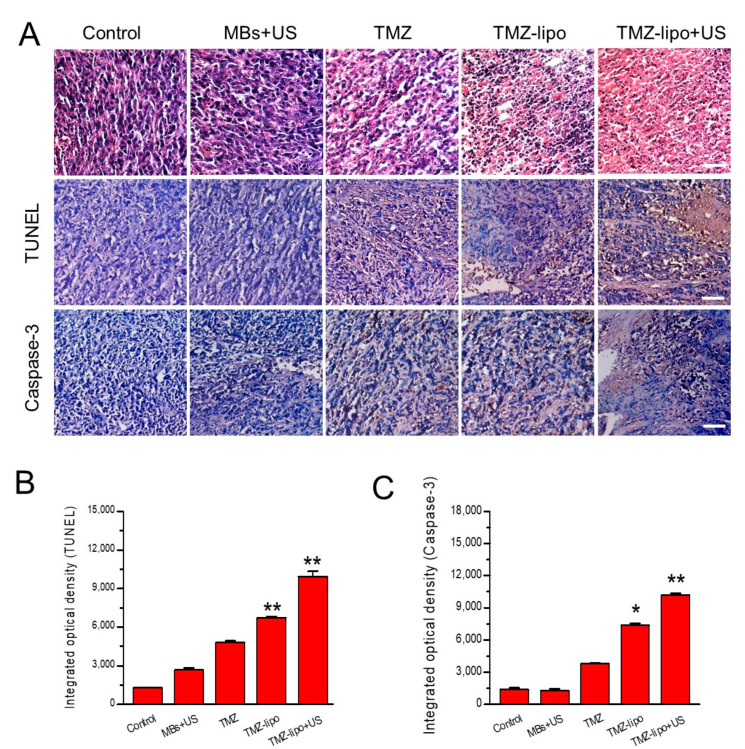
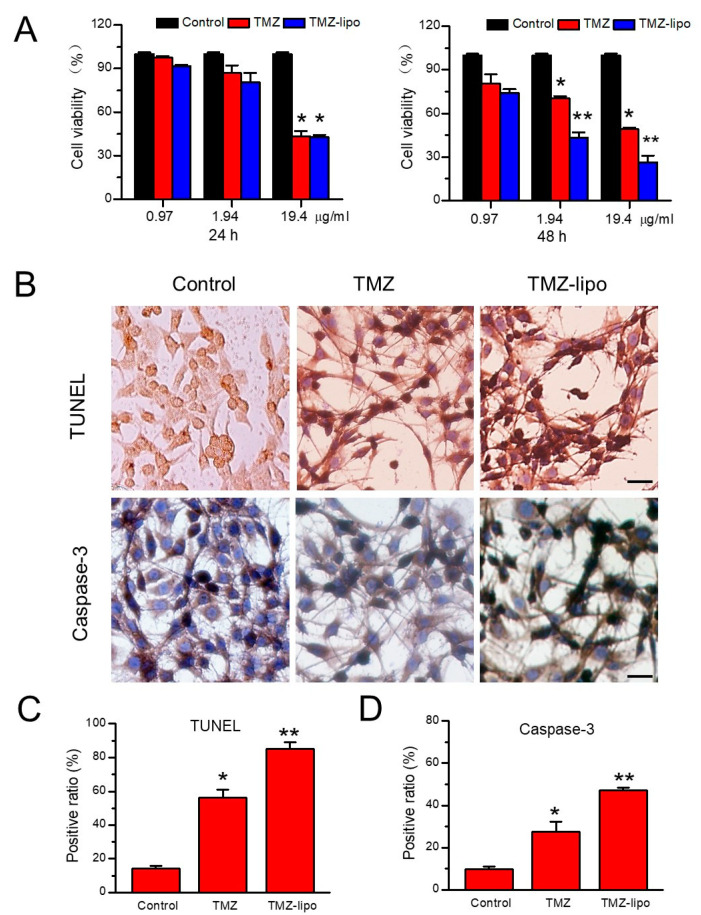
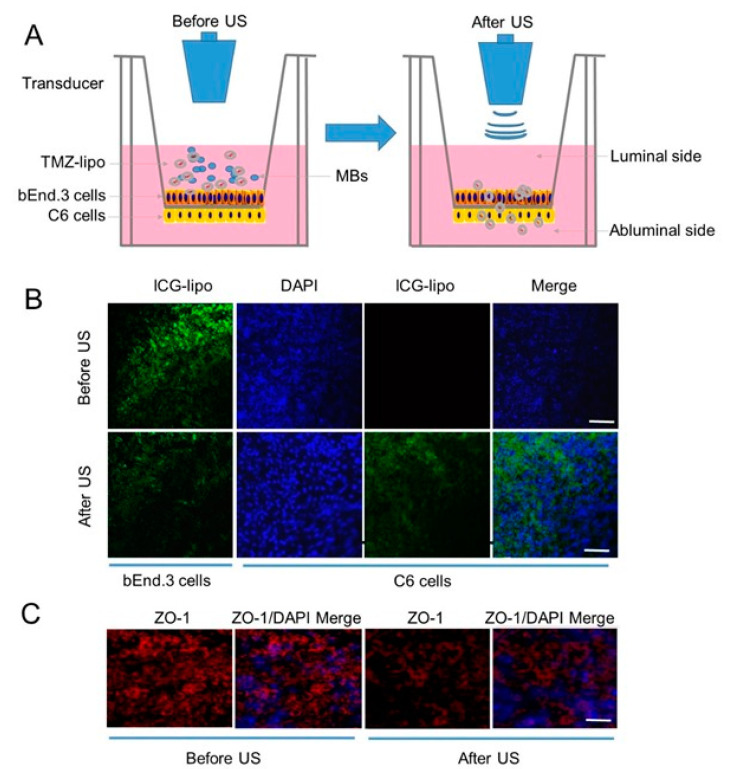
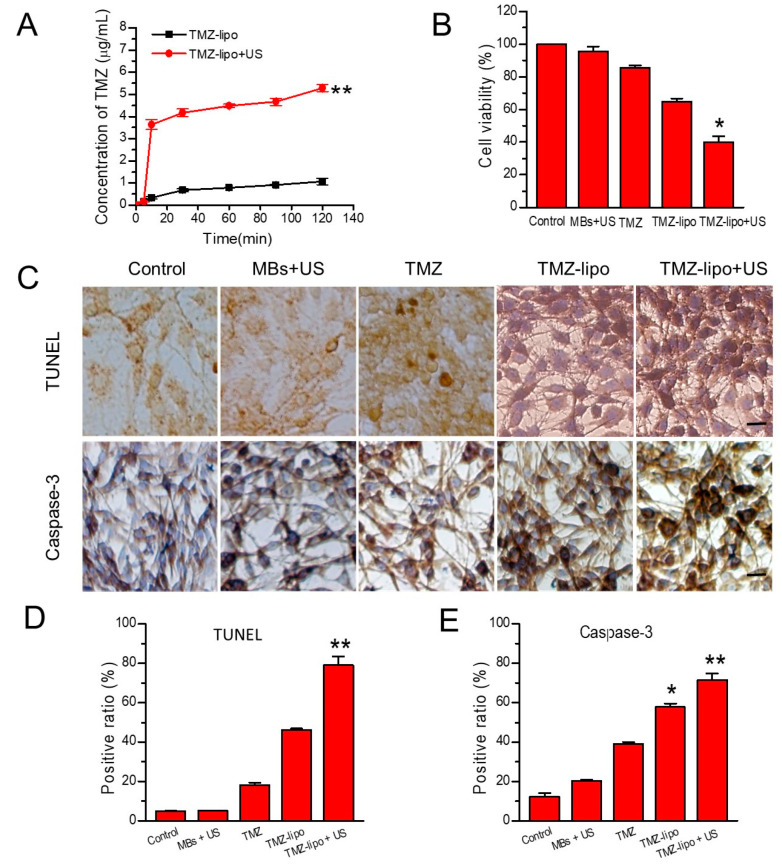
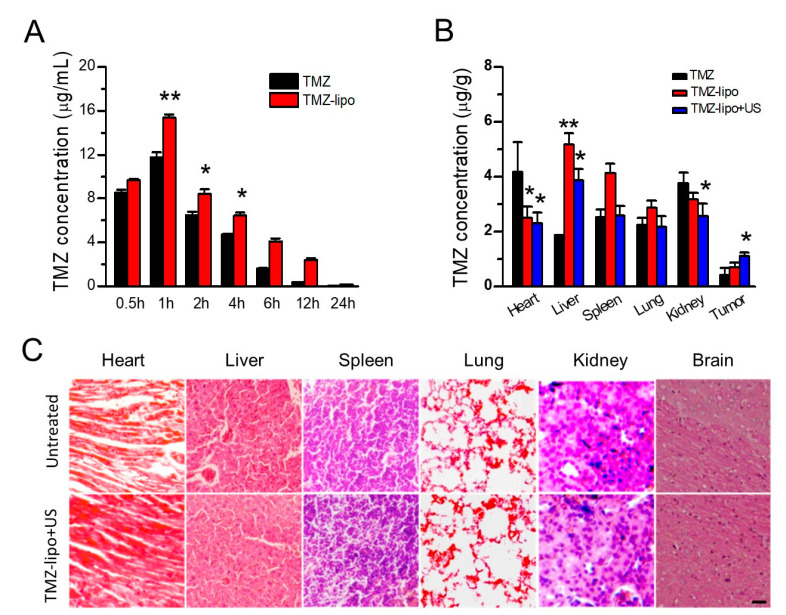
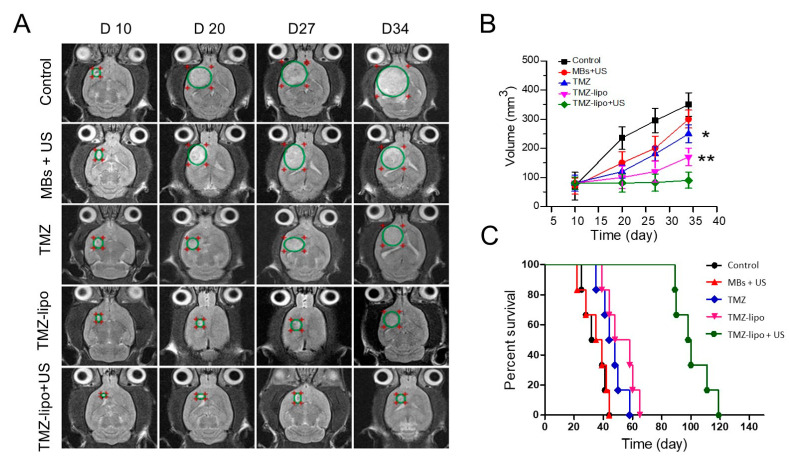
Glioblastoma (GBM) is the commonest form of primary brain tumor in the central nervous system, with median survival below 15 months and only a 25% two-year survival rate for patients. One of the major clinical challenges in treating GBM is the presence of the blood-brain barrier (BBB), which greatly limits the availability of therapeutic drugs to the tumor. Ultrasound-mediated BBB opening provides a promising approach to help deliver drugs to brain tumors. The use of temozolomide (TMZ) in the clinical treatment of GBM has been shown to be able to increase survival in patients with GBM, but this improvement is still trivial. In this study, we developed a liposomal temozolomide formulation (TMZ-lipo) and locally delivered these nanoparticles into GBM through ultrasound-mediated BBB opening technology, significantly suppressing tumor growth and prolonging tumor-bearing animal survival. No significant side effects were observed in comparison with control rats. Our study provides a novel strategy to improve the efficacy of TMZ against GBM.
胶质母细胞瘤(GBM)是中枢神经系统中最常见的原发性脑肿瘤形式,患者的中位生存期低于15个月,两年生存率仅为25%。治疗GBM的主要临床挑战之一是血脑屏障(BBB)的存在,这极大地限制了治疗药物到达肿瘤的可用性。超声介导的血脑屏障开放为帮助将药物递送至脑肿瘤提供了一种有前景的方法。在GBM的临床治疗中使用替莫唑胺(TMZ)已被证明能够提高GBM患者的生存率,但这种改善仍然微不足道。在本研究中,我们开发了一种脂质体替莫唑胺制剂(TMZ-lipo),并通过超声介导的血脑屏障开放技术将这些纳米颗粒局部递送至GBM,显著抑制肿瘤生长并延长荷瘤动物的生存期。与对照大鼠相比,未观察到明显的副作用。我们的研究提供了一种提高TMZ治疗GBM疗效的新策略。