Department of Orthopedic Surgery, Eunpyeong St. Mary's Hospital, College of Medicine, The Catholic University of Korea, 1021, Tongil-Ro, Eunpyeong-gu, 03312, Seoul, Republic of Korea.
Department of Orthopaedic Surgery, Yeouido St. Mary's Hospital, College of Medicine, The Catholic University of Korea, Seoul, Korea.
BMC Musculoskelet Disord. 2021 Aug 28;22(1):741. doi: 10.1186/s12891-021-04625-7.
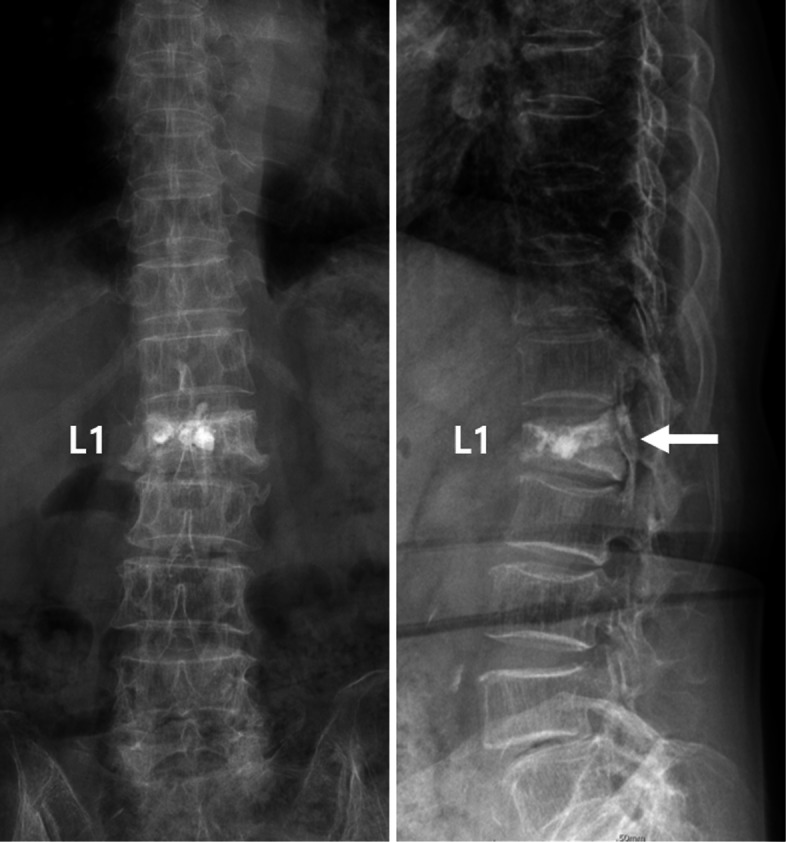
Vertebroplasty (VP) is considered an alternative therapy in an osteoporotic compression fracture that failed conservative treatment. However, cement leakage into the intradural space can cause catastrophic complications. To the best of our knowledge, intradural cement leakage following VP has been reported only in 7 cases. We report here a case of intradural cement leakage following VP with a literature review.
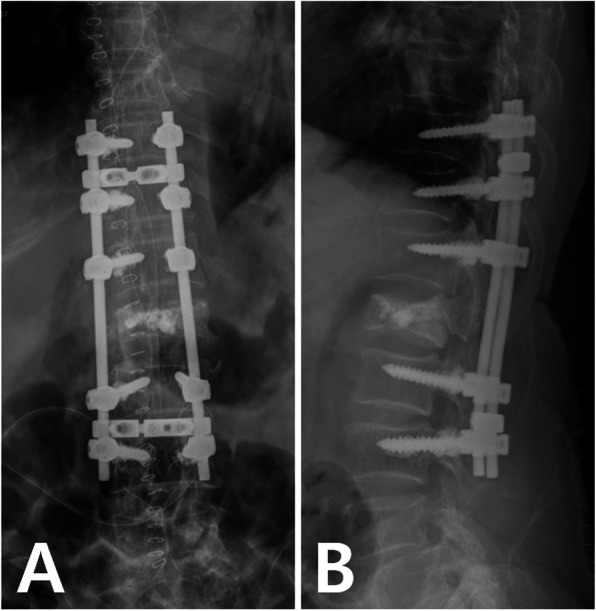
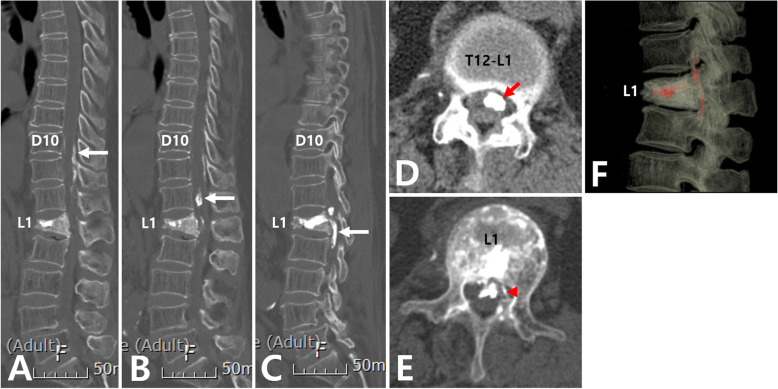
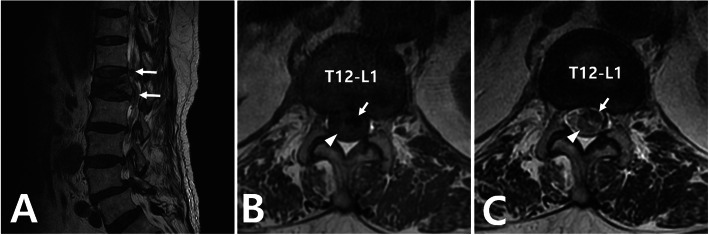
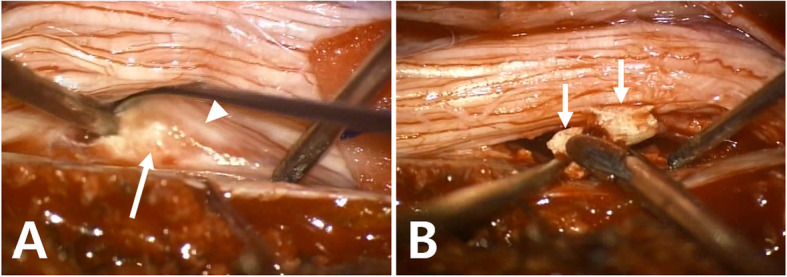
An 84-year-old female with an L1 osteoporotic fracture underwent percutaneous VP at a local hospital. Immediately after the procedure, she complained of weakness, numbness, and pain in both legs, and her back pain aggravated. She was transferred to our hospital. The initial muscle power was grade 2 for the right leg and grade 4 for the left leg. Computed tomography (CT) scan showed intradural cement leakage from T10 to L2. Magnetic resonance imaging showed an intradural mass lesion. Although we performed total laminectomy with durotomy and removed intradural cement completely, the neurological deficit did not completely recover. The muscle power was grade 3 for the right leg and grade 4 for the left leg at the last follow-up.
If a neurological deficit is found after VP, a CT scan should be taken to confirm the pattern of cement leakage. In case of intradural cement leakage, surgical decompression should be recommended to improve neurological deficit. To prevent intradural cement leakage during the VP, the needle tip should not perforate the medial wall of the pedicle with appropriate viscosity of cement.
椎体成形术(VP)被认为是骨质疏松性压缩性骨折保守治疗失败后的一种替代疗法。然而,水泥渗漏至椎管内可引起灾难性的并发症。据我们所知,VP 后发生椎管内水泥渗漏的病例仅有 7 例。我们在此报告一例 VP 后发生椎管内水泥渗漏的病例,并进行文献复习。
一位 84 岁女性因 L1 骨质疏松性骨折在当地医院行经皮 VP。术后即刻,她主诉双下肢无力、麻木和疼痛,且背痛加重。她被转至我院。初始肌力为右侧 2 级,左侧 4 级。CT 扫描显示 T10 至 L2 椎管内水泥渗漏。磁共振成像显示椎管内占位性病变。尽管我们进行了全椎板切除术和硬脊膜切开术,并完全清除了椎管内的水泥,但神经功能缺损并未完全恢复。末次随访时,右侧肌力为 3 级,左侧肌力为 4 级。
如果 VP 后发现神经功能缺损,应行 CT 扫描以确认水泥渗漏的模式。如果发生椎管内水泥渗漏,应推荐手术减压以改善神经功能缺损。为了防止 VP 过程中发生椎管内水泥渗漏,针尖不应穿透适当粘度水泥的椎弓根内侧壁。