National Center for PTSD, White River Junction, VT, USA; Department of Psychiatry, Geisel School of Medicine at Dartmouth, Hanover, NH, USA.
Department of Psychiatry & Behavioral Sciences, Medical University of South Carolina, Charleston, SC, USA; Ralph H. Johnson VA Medical Center, Charleston, SC, USA.
Psychiatry Res Neuroimaging. 2021 Nov 30;317:111368. doi: 10.1016/j.pscychresns.2021.111368. Epub 2021 Aug 20.
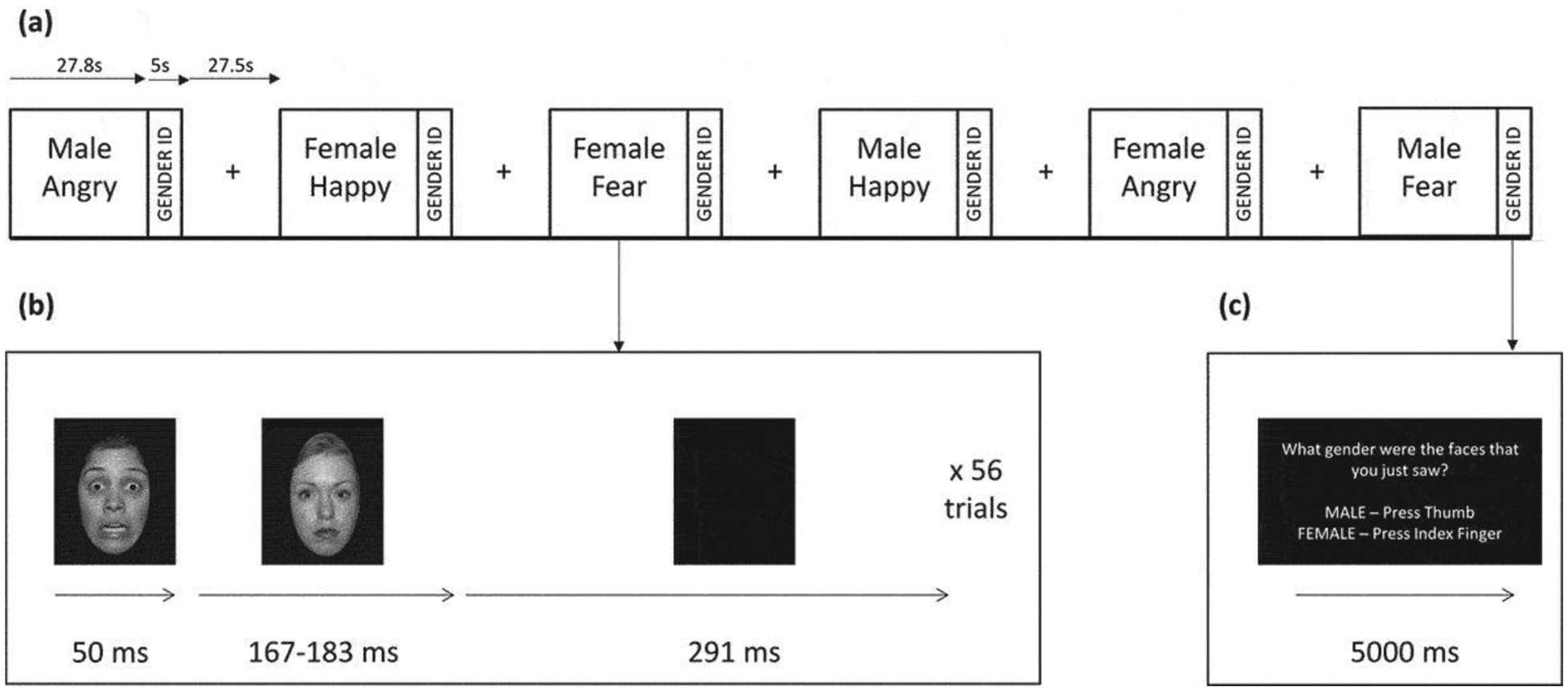
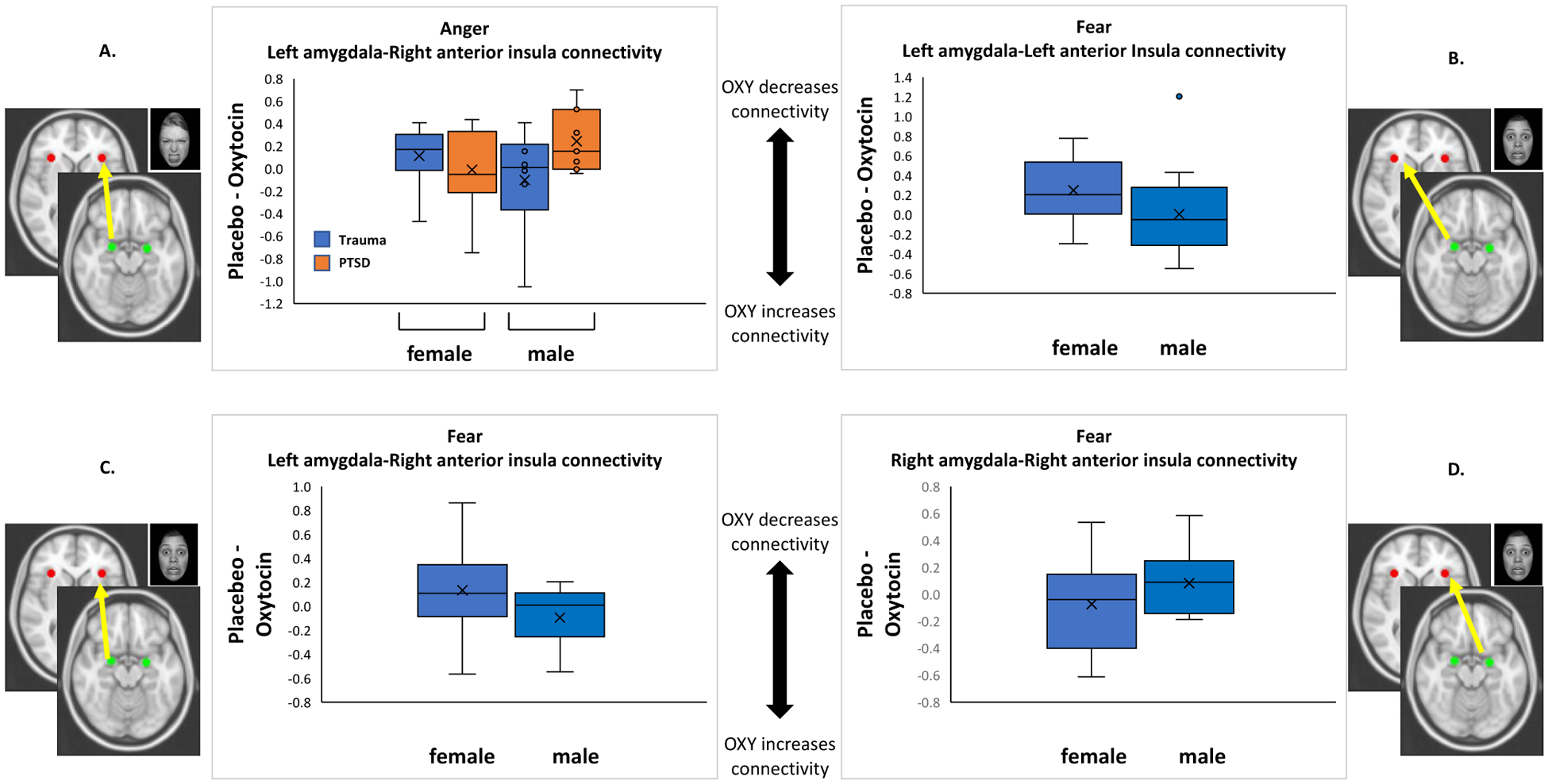
Novel treatments that target neurobiological alterations associated with childhood trauma, particularly among those with posttraumatic stress disorder (PTSD), could mitigate negative outcomes for these at-risk individuals. PTSD is characterized by abnormalities within the brain's salience network and reward circuitry, which are modulated by intranasal oxytocin. Using a double-blind, randomized, placebo-controlled crossover design, we tested whether intranasal oxytocin (24 international units) influenced functional coupling of the amygdala with the anterior insula (AI), dorsal anterior cingulate cortex, and nucleus accumbens in response to implicitly presented fearful, angry, and happy faces among childhood trauma-exposed individuals with (n = 16, 9 women) and without PTSD (n = 18, 12 women). Psychophysiological interaction analyses revealed that oxytocin effects were limited to amygdala-AI connectivity in the fear condition, distinct for men and women, and not impacted by PTSD diagnosis. In response to fear faces, oxytocin reduced left amygdala-left AI connectivity for women but not men; reduced left amygdala-right AI connectivity among women, but increased this connectivity in men; and reduced right amygdala-right anterior insula connectivity for men, but increased it for women. Results suggest that intranasal oxytocin modulates threat salience among childhood trauma-exposed individuals and that these effects vary as a function of gender and hemisphere.
针对与儿童期创伤相关的神经生物学改变的新疗法,特别是针对创伤后应激障碍 (PTSD) 的新疗法,可能会减轻这些高危人群的负面后果。PTSD 的特征是大脑显着网络和奖励回路中的异常,这些异常受鼻内催产素调节。我们使用双盲、随机、安慰剂对照交叉设计,测试了鼻内催产素(24 国际单位)是否会影响经历过儿童期创伤的个体(n=16,9 名女性)和没有 PTSD 的个体(n=18,12 名女性)对隐含呈现的恐惧、愤怒和快乐的面孔时杏仁核与前岛叶(AI)、背侧前扣带皮层和伏隔核之间的功能耦合。心理生理相互作用分析表明,催产素的作用仅限于恐惧条件下的杏仁核-AI 连接,且对男性和女性有区别,不受 PTSD 诊断的影响。在对恐惧面孔的反应中,催产素降低了女性的左杏仁核-左 AI 连接,但不降低男性的连接;降低了女性的左杏仁核-右 AI 连接,但增加了男性的连接;并降低了男性的右杏仁核-右前岛叶连接,但增加了女性的连接。结果表明,鼻内催产素调节了经历过儿童期创伤的个体的威胁显着性,并且这些影响因性别和大脑半球而异。