Department of Speech, Language and Hearing Sciences, The University of Arizona, Tucson, Arizona, USA.
Texas Auditory Neuroscience (TexAN) Lab, Department of Speech, Language and Hearing Sciences, The University of Texas at Austin, Austin, Texas, USA.
Ear Hear. 2022 Mar/Apr;43(2):531-544. doi: 10.1097/AUD.0000000000001116.
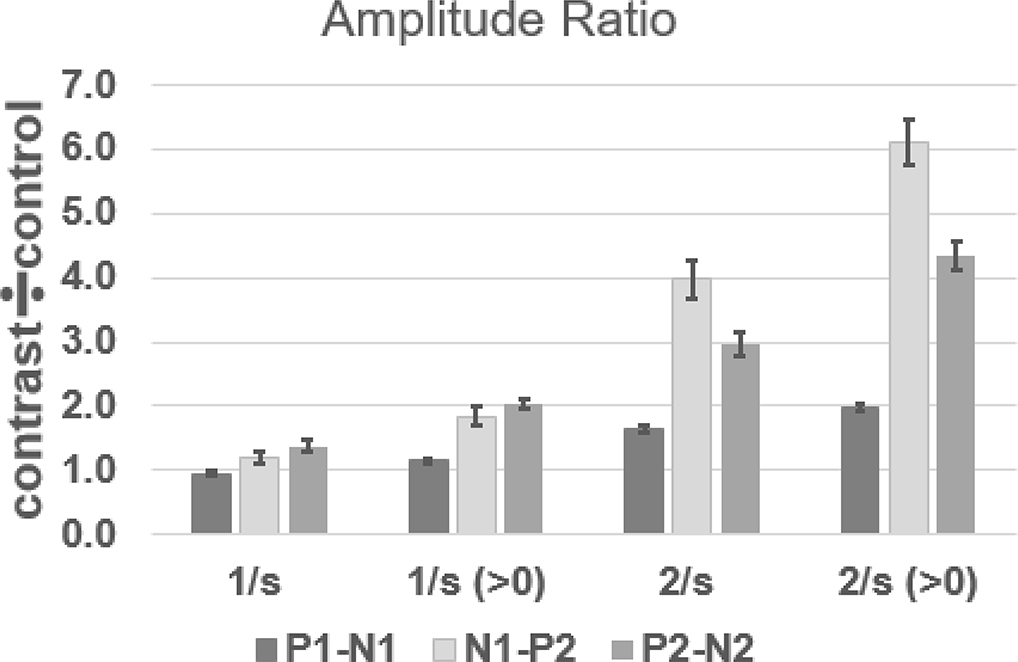
To measure the effect of stimulus rate and vowel change direction on the acoustic change complex (ACC) latencies and amplitudes and compare ACC metrics to behavioral measures of vowel contrast detection for infants tested under the age of 1 year. We tested the hypothesis that the direction of spectral energy shift from a vowel change would result in differences in the ACC, owing to the sensitivity of cortical neurons to the direction of frequency change. We evaluated the effect of the stimulus rate (1/s versus 2/s) on the infants' ACC. We evaluated the ACC amplitude ratio's sensitivity (proportion of ACCs present for each change trial) and compared it to perceptual responses obtained using a visually reinforced infant speech discrimination paradigm (VRISD). This report provides normative data from infants for the ACC toward the ultimate goal of developing a clinically useful index of neural capacity for vowel discrimination.
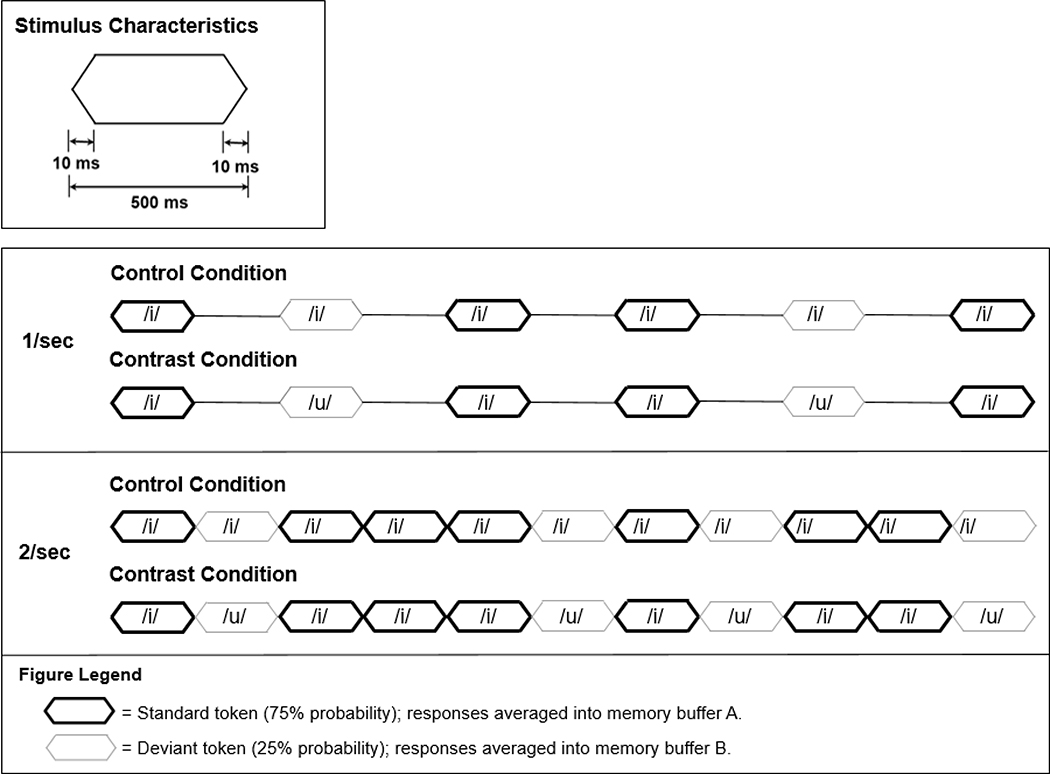
Twenty-nine infants, nine females, 4.0 to 11.8 months of age, participated. All participants were born at full term and passed their newborn hearing screens. None had risk factors for hearing or neurologic impairment. Cortical auditory evoked potentials were obtained in response to synthesized vowel tokens /a/, /i/, /o/, and /u/ presented at a rate of 1- or 2/s in an oddball stimulus paradigm with a 25% probability of the deviant stimulus. All combinations of vowel tokens were tested at the two rates. The ACC was obtained in response to the deviant stimulus. The infants were also tested for vowel contrast detection using a VRISD paradigm with the same combinations of vowel tokens used for the ACC. The mean age at the time of the ACC test was 5.4 months, while the mean age at the behavioral test was 6.8 months.
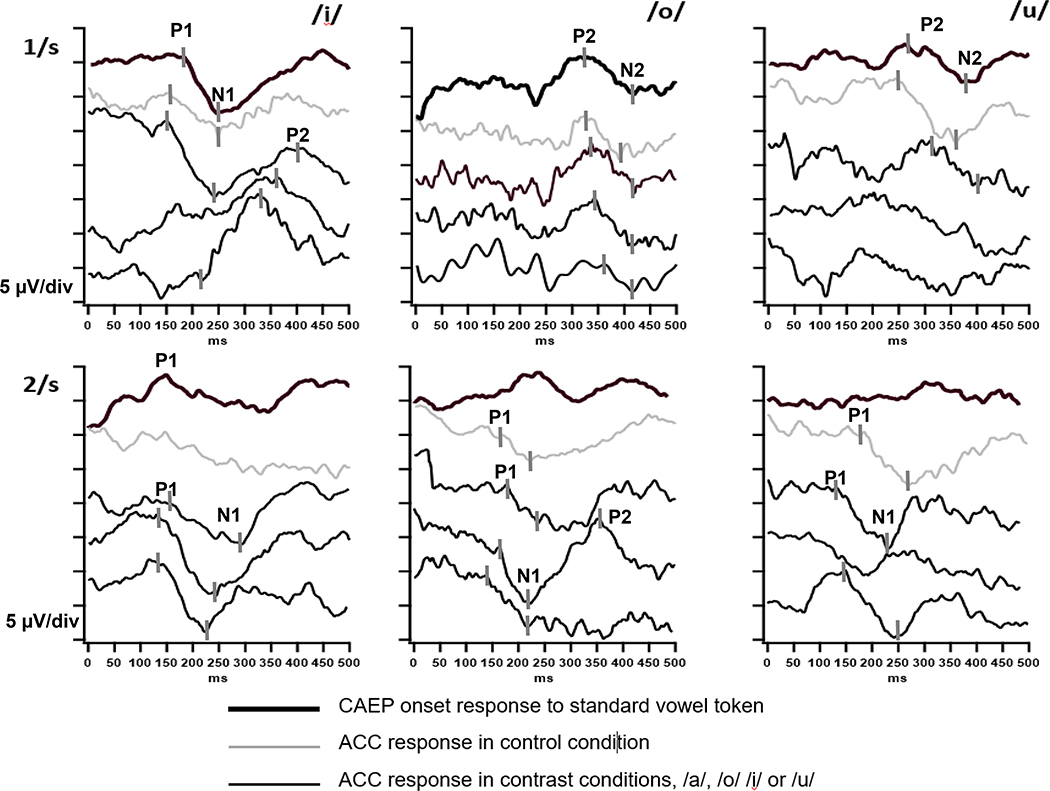
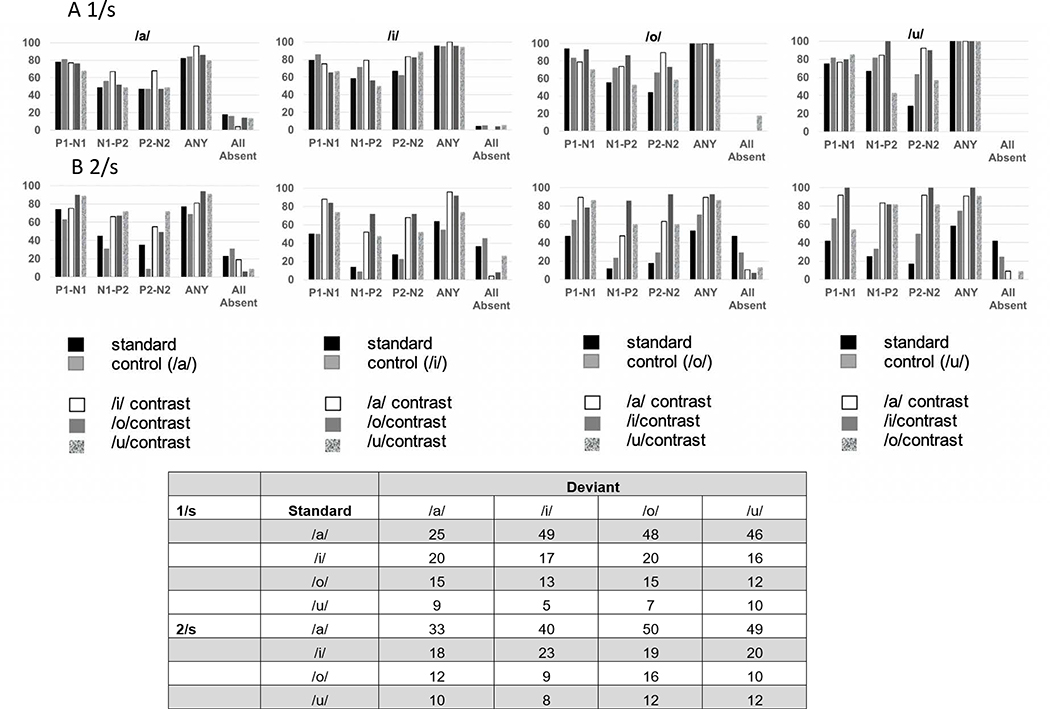
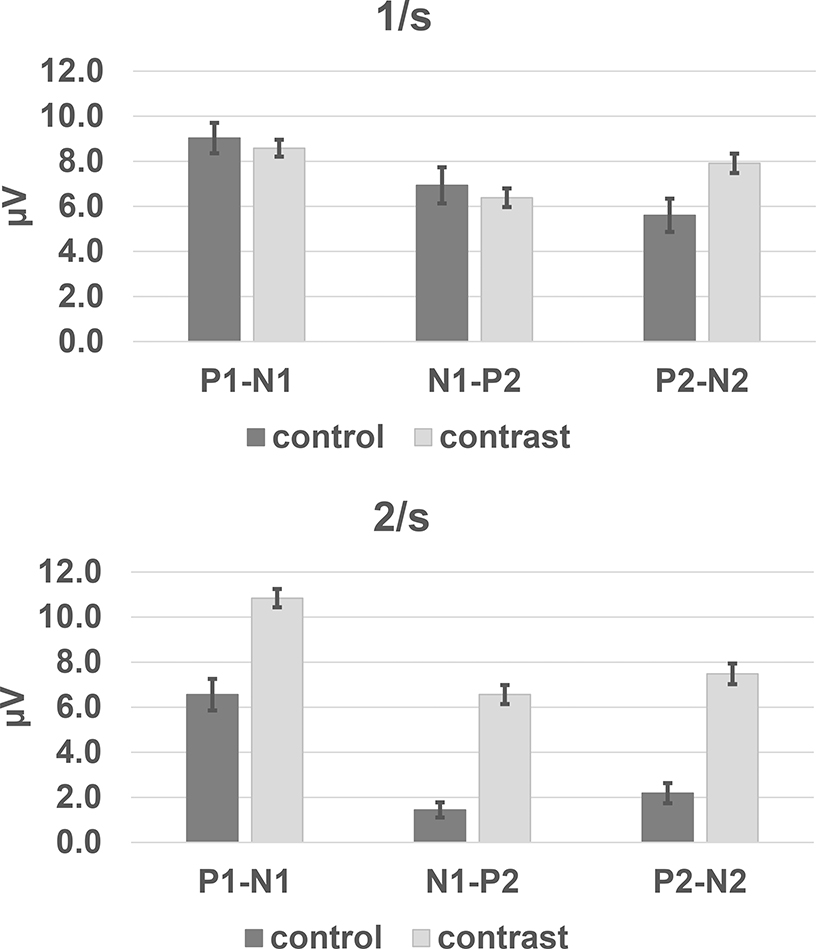
Variations in ACC amplitude and latency occurred as a function of the initial vowel token and the contrast token. However, the hypothesis that the direction of vowel (spectral) change would result in significantly larger change responses for high-to-low spectral changes was not supported. The contrasts with /a/ as the leading vowel of the contrast pair resulted in the largest ACC amplitudes than other conditions. Significant differences in the ACC presence and amplitude were observed as a function of rate, with 2/s resulting in ACCs with the largest amplitude ratios. Latency effects of vowel contrast and rate were present, but not systematic. The ACC amplitude ratio's sensitivity for detecting a vowel contrast was greater for the 2/s rate than the 1/s rate. For an amplitude ratio criterion of ≥1.5, the sensitivity was 93% for ACC component P2-N2 at 2/s, whereas at 1/s sensitivity was 70%. VRISD tests of vowel-contrast detection had a 71% hit and a 21% false-positive rate. Many infants who could not reach performance criteria for VRISD had ACC amplitude ratios of ≥2.0.
The ACC for vowel contrasts presented at a rate of 2/s is a robust index of vowel-contrast detection when obtained in typically developing infants under the age of 1 year. The ACC is present in over 90% of infants tested at this rate when an amplitude ratio criterion of ≥1.5 is used to define a response. The amplitude ratio appears to be a sensitive metric for the difference between a control and contrast condition. The ACC can be obtained in infants who do not yet exhibit valid behavioral responses for vowel change contrasts and may be useful for estimating neural capacity for discriminating these sounds.
测量刺激率和元音变化方向对听性复合动作电位(ACC)潜伏期和幅度的影响,并将 ACC 指标与婴儿的行为测量进行比较,以评估其在 1 岁以下的情况下检测元音对比的能力。我们假设,由于皮质神经元对频率变化方向的敏感性,元音变化的频谱能量转移方向会导致 ACC 产生差异。我们评估了刺激率(1/s 与 2/s)对婴儿 ACC 的影响。我们评估了 ACC 幅度比的灵敏度(每个变化试验中存在的 ACC 比例),并将其与使用视觉强化婴儿言语辨别范式(VRISD)获得的感知反应进行了比较。本报告提供了朝向最终目标的正常婴儿的 ACC 数据,即开发一种用于评估婴儿元音辨别能力的临床有用的神经能力指数。
29 名婴儿(9 名女性),年龄在 4.0 至 11.8 个月之间,均足月出生且通过了新生儿听力筛查。他们均无听力或神经损伤的风险因素。在以 25%的概率出现变异刺激的奇异刺激范式中,以 1/s 或 2/s 的速率呈现合成元音标记 /a/、/i/、/o/和 /u/,以获得皮质听觉诱发电位。以两种速率测试所有元音标记的组合。在出现变异刺激时获得 ACC。婴儿还用相同的元音标记组合在 VRISD 范式中进行元音对比检测。获得 ACC 时的平均年龄为 5.4 个月,而进行行为测试时的平均年龄为 6.8 个月。
ACC 幅度和潜伏期的变化与初始元音标记和对比标记有关。然而,元音(频谱)变化方向会导致高到低频谱变化的变化反应更大的假设并没有得到支持。与其他条件相比,以 /a/ 为对比对主导元音的条件会产生最大的 ACC 幅度。在刺激率的影响下,ACC 的存在和幅度存在显著差异,2/s 导致的幅度比最大。在检测元音对比时,潜伏期的效应和速率都存在,但不系统。2/s 时的 ACC 幅度比的灵敏度大于 1/s 时的灵敏度,对于幅度比临界值≥1.5,2/s 时的 ACC 成分 P2-N2 的灵敏度为 93%,而 1/s 时的灵敏度为 70%。用于检测元音对比的 VRISD 测试的准确率为 71%,假阳性率为 21%。许多无法达到 VRISD 行为标准的婴儿的 ACC 幅度比都≥2.0。
当在 1 岁以下的正常发育婴儿中以 2/s 的速率呈现元音对比时,ACC 是元音对比检测的可靠指标。当使用≥1.5 的幅度比标准来定义反应时,超过 90%的婴儿在该速率下会产生 ACC。幅度比似乎是控制和对比条件之间差异的敏感指标。在尚未表现出有效的元音变化对比行为反应的婴儿中可以获得 ACC,它可能有助于估计这些声音的辨别能力。