
槲皮素通过调节ERK1/2/DRP1信号通路保护H9c2心肌细胞免受氧糖剥夺/复氧诱导的氧化应激和线粒体凋亡。
Quercetin Protects H9c2 Cardiomyocytes against Oxygen-Glucose Deprivation/Reoxygenation-Induced Oxidative Stress and Mitochondrial Apoptosis by Regulating the ERK1/2/DRP1 Signaling Pathway.
作者信息
Li Fen, Li Dongsheng, Tang Shifan, Liu Jianguang, Yan Jie, Chen Haifeng, Yan Xisheng
机构信息
Department of Neurology, Wuhan Third Hospital & Tongren Hospital of Wuhan University, Wuhan 430074, China.
Department of Cardiology, Wuhan Third Hospital & Tongren Hospital of Wuhan University, Wuhan 430074, China.
出版信息
Evid Based Complement Alternat Med. 2021 Aug 19;2021:7522175. doi: 10.1155/2021/7522175. eCollection 2021.
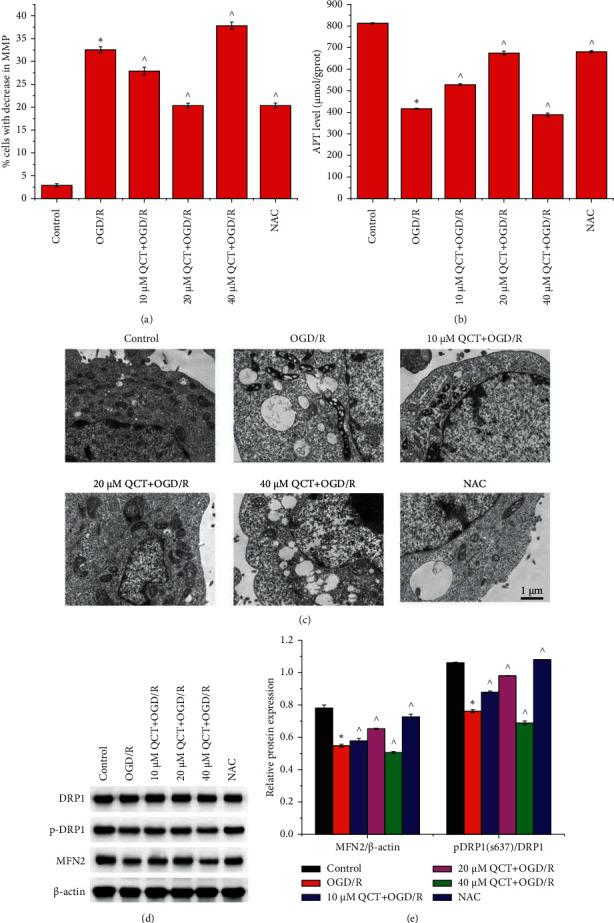
Reperfusion of blood flow during ischemic myocardium resuscitation induces ischemia/reperfusion (I/R) injury. Oxidative stress has been identified as a major cause in this process. Quercetin (QCT) is a member of the flavonoid family that exerts antioxidant effects. The aim of this study was to investigate the preventive effects of QCT on I/R injury and its underlying mechanism. To this end, H9c2 cardiomyocytes were treated with different concentrations of QCT (10, 20, and 40 M) and subsequently subjected to oxygen-glucose deprivation/reperfusion (OGD/R) administration. The results indicated that OGD/R-induced oxidative stress, apoptosis, and mitochondrial dysfunction in H9c2 cardiomyocytes were aggravated following 40 M QCT treatment and alleviated following the administration of 10 and 20 M QCT prior to OGD/R treatment. In addition, OGD/R treatment inactivated ERK1/2 signaling activation. The effect was mitigated using 10 and 20 M QCT prior to OGD/R treatment. In conclusion, these results suggested that low concentrations of QCT might alleviate I/R injury by suppressing oxidative stress and improving mitochondrial function through the regulation of ERK1/2-DRP1 signaling, providing a potential candidate for I/R injury prevention.
缺血性心肌复苏过程中的血流再灌注会引发缺血/再灌注(I/R)损伤。氧化应激已被确认为这一过程中的主要原因。槲皮素(QCT)是具有抗氧化作用的黄酮类家族成员。本研究旨在探讨QCT对I/R损伤的预防作用及其潜在机制。为此,用不同浓度的QCT(10、20和40μM)处理H9c2心肌细胞,随后进行氧糖剥夺/再灌注(OGD/R)处理。结果表明,40μM QCT处理后,OGD/R诱导的H9c2心肌细胞氧化应激、凋亡和线粒体功能障碍加剧,而在OGD/R处理前给予10和20μM QCT可减轻这些损伤。此外,OGD/R处理使ERK1/2信号激活失活。在OGD/R处理前使用10和20μM QCT可减轻该效应。总之,这些结果表明,低浓度的QCT可能通过抑制氧化应激和通过调节ERK1/2-DRP1信号改善线粒体功能来减轻I/R损伤,为预防I/R损伤提供了一个潜在的候选药物。


 Zotero 插件