Liu Yao, Wang Shourong, Zhou Ruiqi, Li Wenxue, Zhang Guiyu
Department of Gynecology and Obstetrics, Qilu Hospital, Cheeloo College of Medicine, Shandong University, Jinan, Shandong 250012, P.R. China.
Oncol Lett. 2021 Oct;22(4):710. doi: 10.3892/ol.2021.12971. Epub 2021 Aug 5.
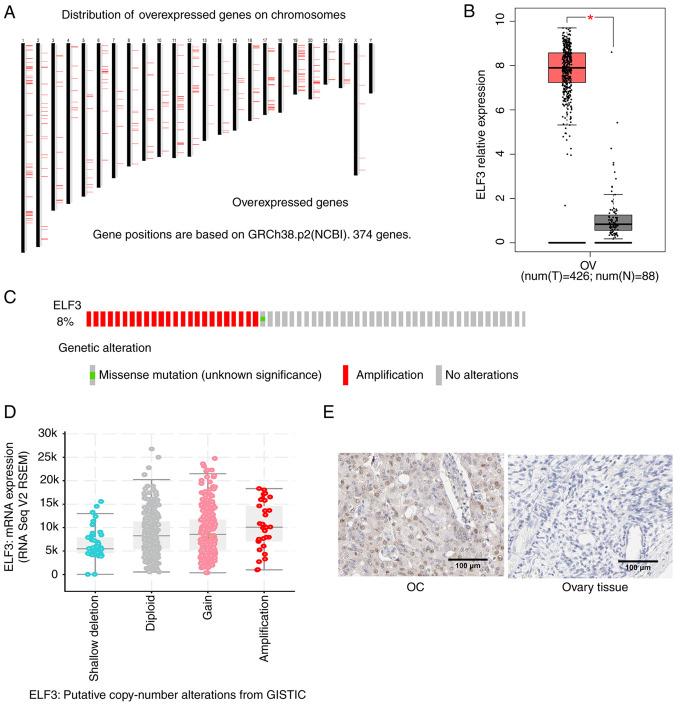
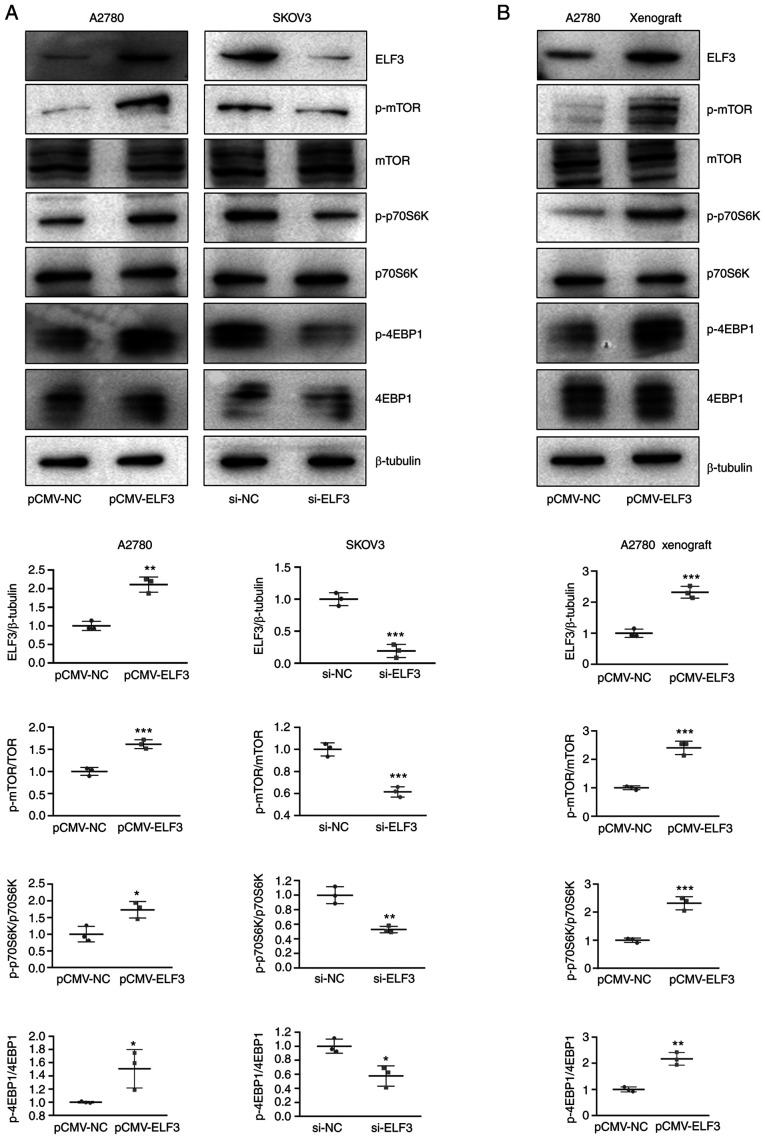
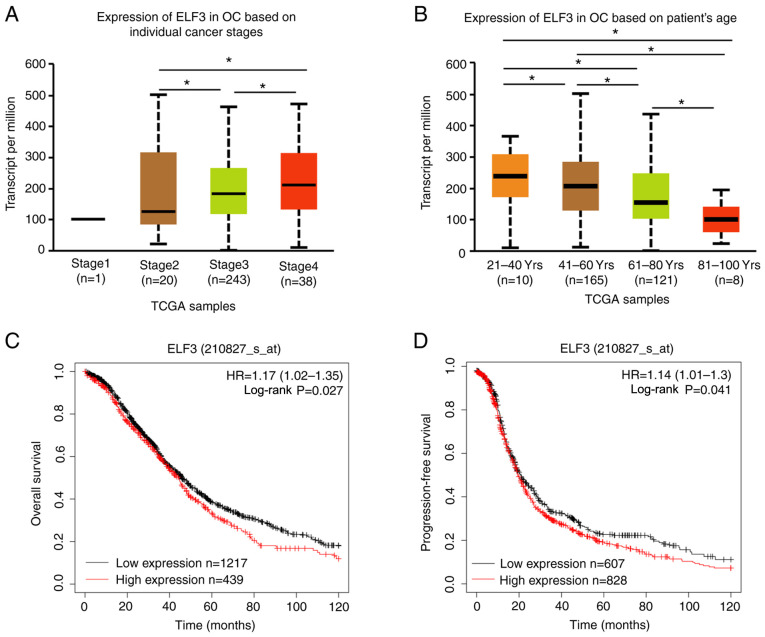
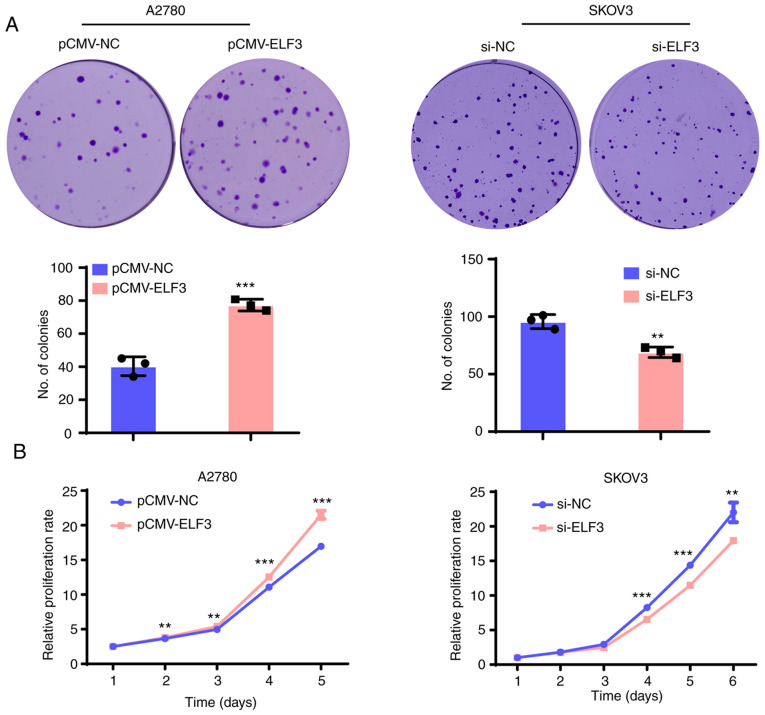
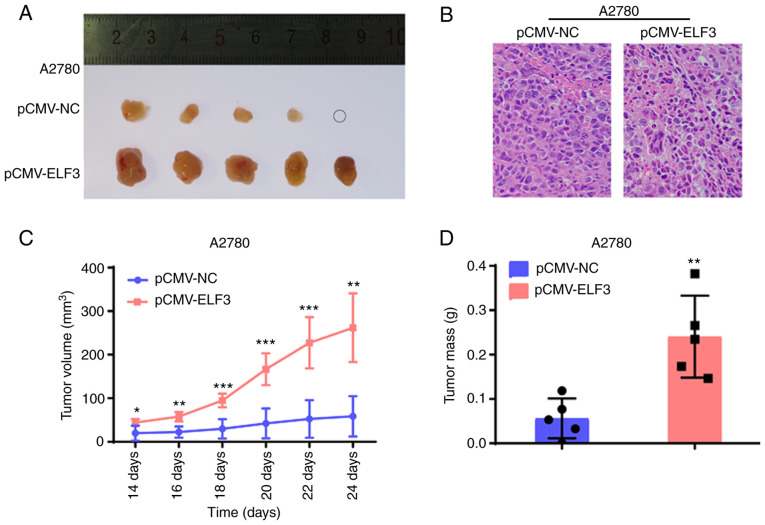
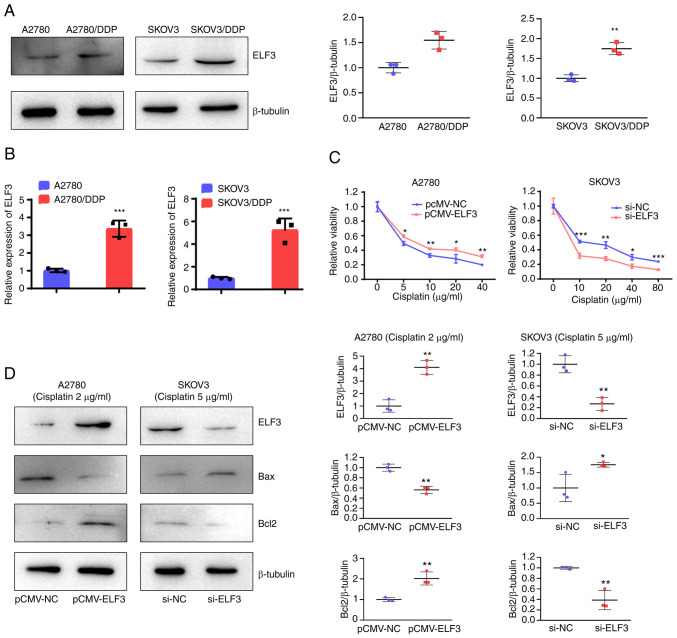
E74-like E26 transformation-specific (ETS) transcription factor 3 (ELF3), is a member of the ETS transcription factor family, and has been characterized as an epithelial cell-specific transcription factor. The role of ELF3 in tumor progression remains to be elucidated. Previous studies have indicated that loss of ELF3 mRNA and protein expression was associated with poor outcomes in ovarian cancer (OC). By contrast, the present study demonstrated that ELF3 was upregulated in OC, using data from The Cancer Genome Atlas, and elevated expression levels of ELF3 were associated with a poor prognosis. ELF3 promoted OC cell proliferation and . The present study revealed that ELF3 inhibited apoptosis and reduced the cisplatin sensitivity of OC cells. Furthermore, the mTOR pathway was found to be activated by ELF3. Collectively, the results of the present study indicated the role of ELF3 in the development and pathogenesis of OC.
E74样E26转化特异性(ETS)转录因子3(ELF3)是ETS转录因子家族的成员,已被鉴定为上皮细胞特异性转录因子。ELF3在肿瘤进展中的作用仍有待阐明。先前的研究表明,ELF3 mRNA和蛋白表达缺失与卵巢癌(OC)的不良预后相关。相比之下,本研究利用癌症基因组图谱的数据证明ELF3在OC中上调,且ELF3表达水平升高与预后不良相关。ELF3促进OC细胞增殖并且……本研究表明ELF3抑制细胞凋亡并降低OC细胞对顺铂的敏感性。此外,发现mTOR通路被ELF3激活。总体而言,本研究结果表明了ELF3在OC发生发展及发病机制中的作用。