Department of Orthopedics, Ningbo No. 6 Hospital, Ningbo, China.
Biomed Res Int. 2021 Aug 17;2021:5018791. doi: 10.1155/2021/5018791. eCollection 2021.
Three-dimensional (3D) printing technology has been widely used in orthopedics surgery. However, its efficacy in acetabular fractures remains unclear. The aim of this systematic review and meta-analysis was to examine the effect of using 3D printing technology in the surgery for acetabular fractures.
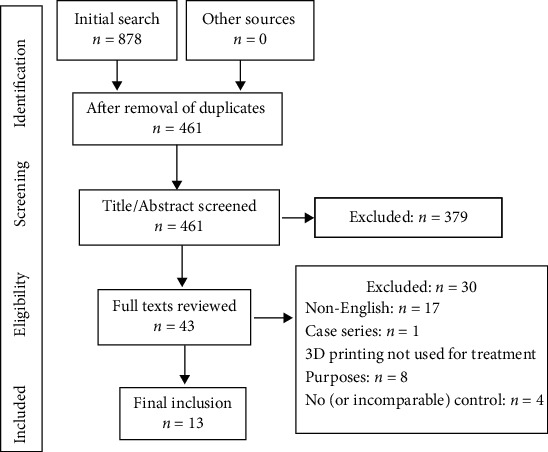
The systematic review was performed following the PRISMA guidelines. Four major electronic databases were searched (inception to February 2021). Studies were screened using a priori criteria. Data from each study were extracted by two independent reviewers and organized using a standardized table. Data were pooled and presented in forest plots.
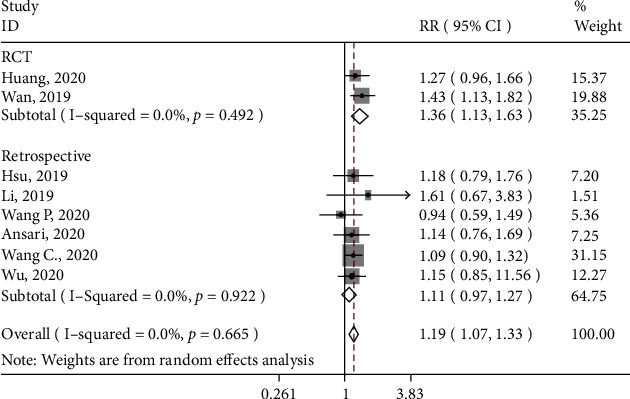
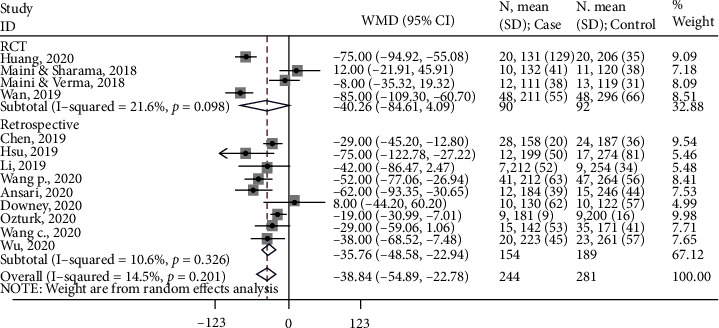
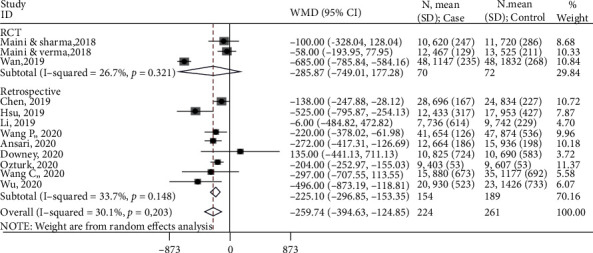
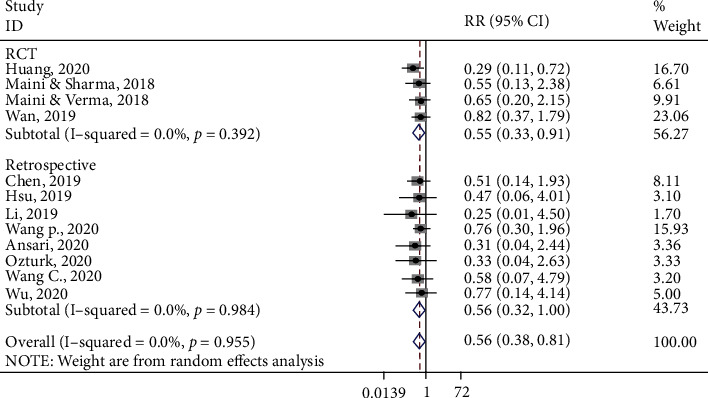
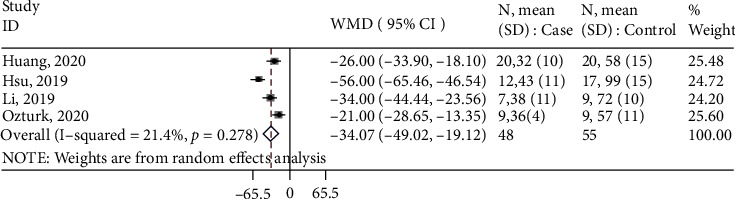
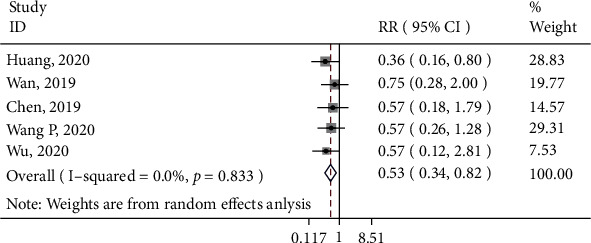
Thirteen studies were included in the final analysis. Four were prospective randomized trials, and nine used a retrospective comparative design. The patients aged between 32.1 (SD 14.6) years and 51.9 (SD 18.9) years. Based on the pooled analyses, overall, 3D printing-assisted surgery decreased operation time by 38.8 minutes (95% CI: -54.9, -22.8), intraoperative blood loss by 259.7 ml (95% CI: -394.6, -124.9), instrumentation time by 34.1 minutes (95% CI: -49.0, -19.1). Traditional surgery was less likely to achieve good/excellent function of hip (RR, 0.53; 95% CI: 0.34, 0.82) and more likely to have complications than 3D printing-assisted surgery (RR, 1.19; 95% CI: 1.07, 1.33).
3D printing technology demonstrated efficacy in the treatment of acetabular fractures. It may improve surgery-related and clinical outcomes. More prospective studies using a rigorous design (e.g., randomized trial with blinding) are warranted to confirm the long-term effects of 3D printing technology in orthopedics surgeries.
三维(3D)打印技术已广泛应用于骨科手术。然而,其在髋臼骨折治疗中的疗效尚不清楚。本系统评价和荟萃分析旨在研究使用 3D 打印技术治疗髋臼骨折的效果。
本系统评价按照 PRISMA 指南进行。检索了四个主要的电子数据库(从建库到 2021 年 2 月)。使用预先设定的标准筛选研究。由两名独立的评审员提取每个研究的数据,并使用标准化表格进行组织。汇总数据并以森林图呈现。
最终分析纳入了 13 项研究。其中 4 项为前瞻性随机试验,9 项采用回顾性对比设计。患者年龄 32.1(SD 14.6)岁至 51.9(SD 18.9)岁。基于汇总分析,总体而言,3D 打印辅助手术可使手术时间缩短 38.8 分钟(95%CI:-54.9,-22.8),术中失血量减少 259.7ml(95%CI:-394.6,-124.9),器械使用时间缩短 34.1 分钟(95%CI:-49.0,-19.1)。与 3D 打印辅助手术相比,传统手术更有可能导致髋关节功能不佳/优良(RR,0.53;95%CI:0.34,0.82),更有可能出现并发症(RR,1.19;95%CI:1.07,1.33)。
3D 打印技术在髋臼骨折治疗中具有疗效。它可能改善手术相关和临床结局。需要更多采用严格设计(如随机试验并设盲)的前瞻性研究来证实 3D 打印技术在骨科手术中的长期效果。