Navya V B, Hosur M V
National Institute of Advanced Studies, IISc. Campus, Bangalore, 560012, India.
Inform Med Unlocked. 2021;26:100714. doi: 10.1016/j.imu.2021.100714. Epub 2021 Aug 23.
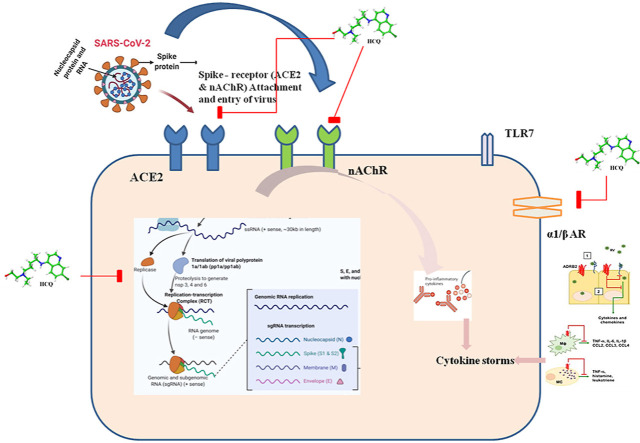
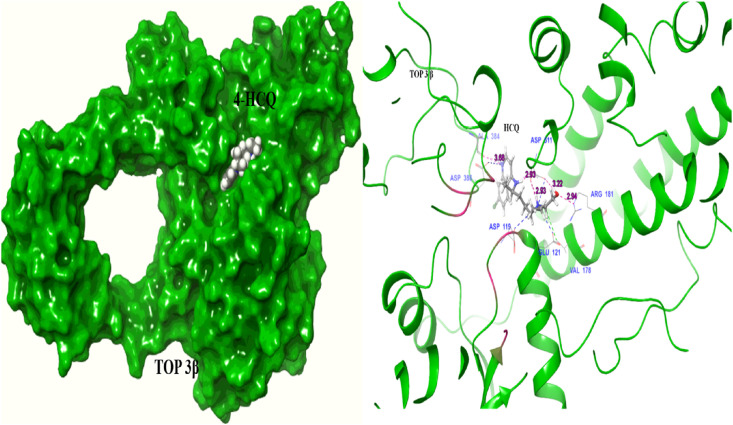
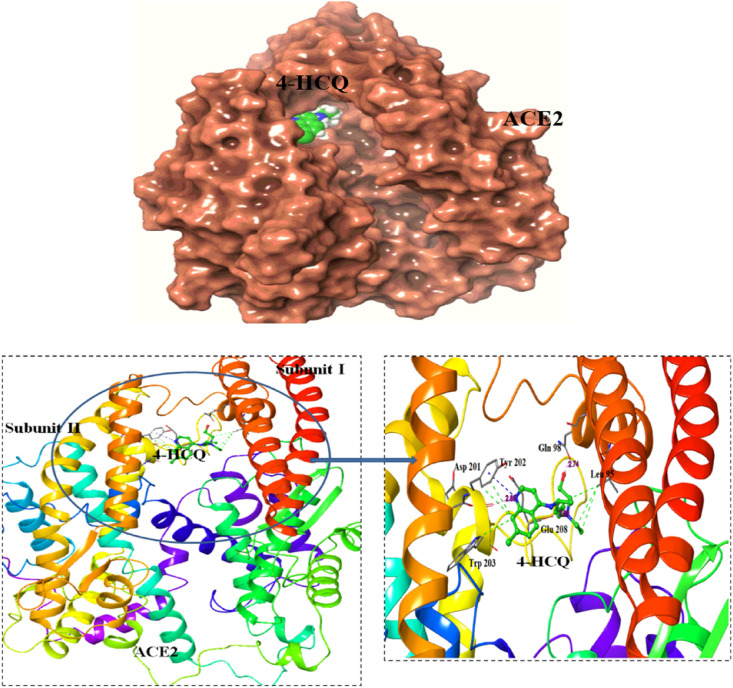
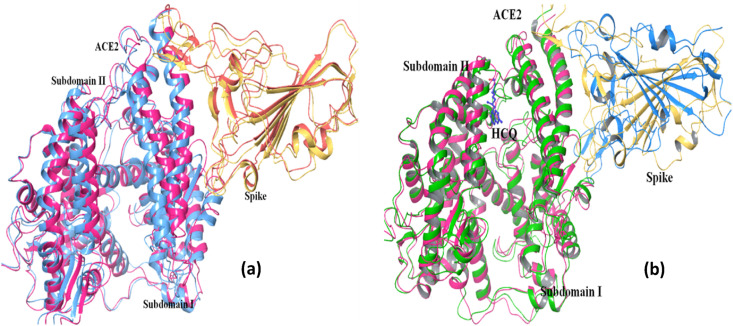
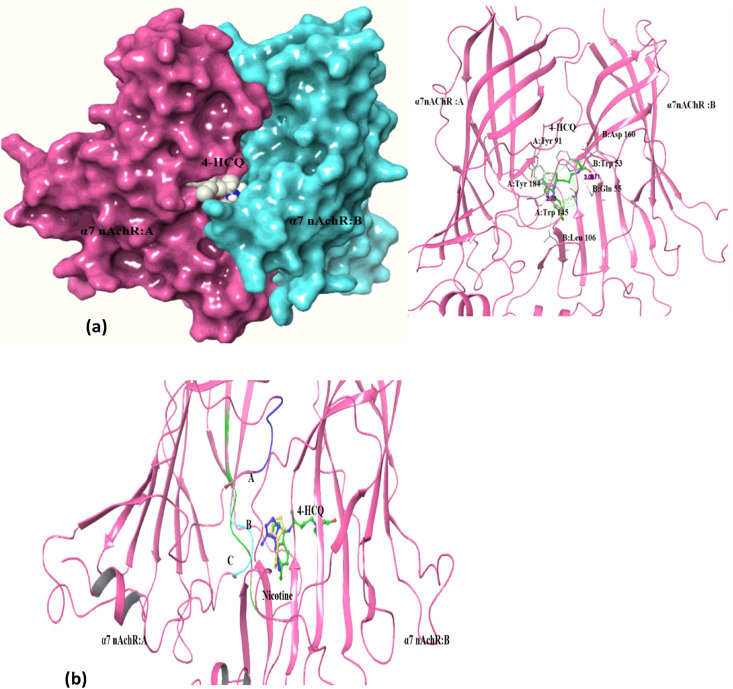
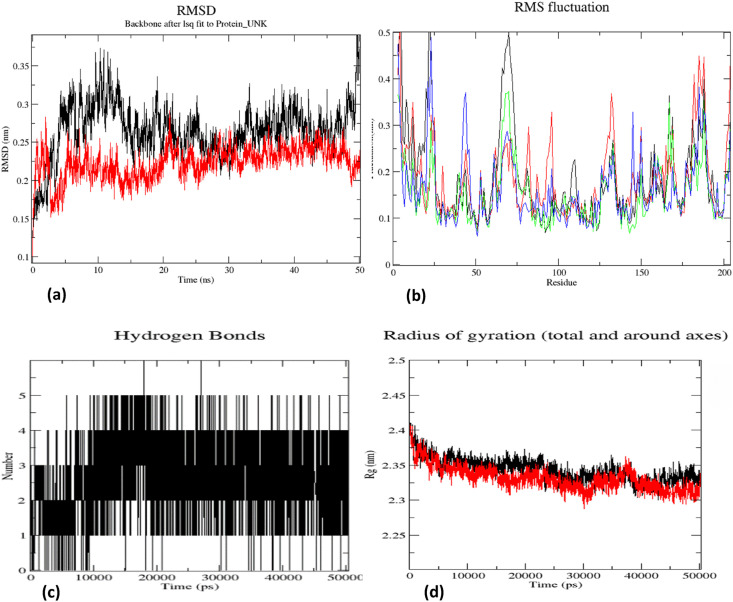
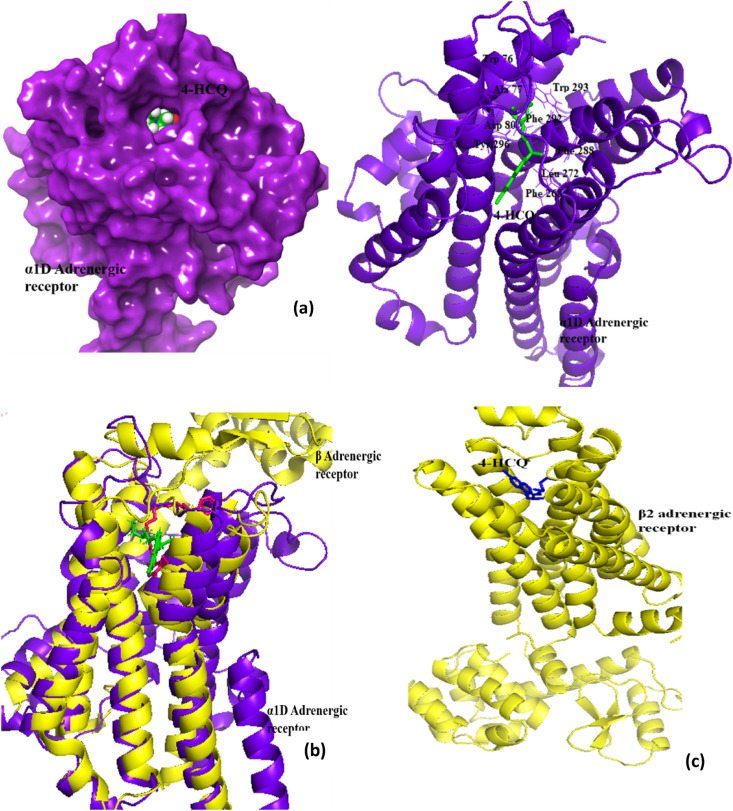
COVID-19 disease caused by severe acute respiratory syndrome coronavirus 2 (SARS-CoV-2) infection has posed a global health emergency. Repurposing of existing drugs can be a rapid and effective strategy to fight the infection. Clinical trials have reported reduction or elimination of viral load when patients were treated with the anti-malarial drug Hydroxychloroquine (HCQ). To understand the molecular mechanism of action for effective repurposing of this drug we have carried out docking and dynamics studies on complexes between HCQ and target proteins, which were identified through both literature survey and structural similarity searches in databases of small molecule - protein complexes. The proteins identified as binding HCQ are: Angiotensin Converting Enzyme 2 (ACE2), α7 nicotinic AcetylCholine Receptor (α7 nAChR), α1D-adrenergic receptor (α1D-AR), Histamine N- Methyl Transferase (HNMT) and DNA gyrase/Topoisomerase III β (Top3β). The majority of these proteins are novel and have not been used before, in docking studies. Our docking and simulation results support action of HCQ both at the entry and post-entry stages of SARS-CoV2 infection. The mechanism of action at the entry stage is through blocking the virus-binding sites on the two receptors, ACE2 & α7 nAChR, by binding directly at those sites. Our computational studies also show that the action of HCQ at the post-entry stage is to prevent both viral replication and generation of 'cytokine storm' by inhibiting host Top3β enzyme and α1D-AR, respectively. Binding of HCQ to HNMT is not a desired binding, and therefore this should be reduced during repurposing of HCQ.
由严重急性呼吸综合征冠状病毒2(SARS-CoV-2)感染引起的2019冠状病毒病已构成全球卫生紧急事件。重新利用现有药物可能是对抗该感染的一种快速有效的策略。临床试验报告称,使用抗疟药物羟氯喹(HCQ)治疗患者时,病毒载量会降低或消除。为了了解该药物有效重新利用的分子作用机制,我们对HCQ与靶蛋白之间的复合物进行了对接和动力学研究,这些靶蛋白是通过文献调研以及在小分子-蛋白质复合物数据库中进行结构相似性搜索确定的。被确定为与HCQ结合的蛋白质有:血管紧张素转换酶2(ACE2)、α7烟碱型乙酰胆碱受体(α7 nAChR)、α1D-肾上腺素能受体(α1D-AR)、组胺N-甲基转移酶(HNMT)以及DNA促旋酶/拓扑异构酶IIIβ(Top3β)。这些蛋白质中的大多数都是新发现的,之前在对接研究中未曾使用过。我们的对接和模拟结果支持HCQ在SARS-CoV-2感染的进入阶段和进入后阶段均发挥作用。在进入阶段的作用机制是通过直接结合在两个受体ACE2和α7 nAChR上的病毒结合位点来阻断病毒。我们的计算研究还表明,HCQ在进入后阶段的作用是分别通过抑制宿主Top3β酶和α1D-AR来防止病毒复制和“细胞因子风暴”的产生。HCQ与HNMT的结合并非理想的结合,因此在HCQ重新利用过程中应减少这种结合。