Watthanakulpanich Dorn, Jakkul Wallop, Chanapromma Chaichana, Ketboonlue Thawatchai, Dekumyoy Paron, Lv Zhiyue, Chan Abigail Hui En, Thaenkham Urusa, Chaisiri Kittipong
Department of Helminthology, Faculty of Tropical Medicine, Mahidol University, Bangkok 10400, Thailand.
Crown Prince Kuchinarai Hospital, Kuchinarai District, Kalasin Province 46110, Thailand.
Food Waterborne Parasitol. 2021 Jul 31;24:e00128. doi: 10.1016/j.fawpar.2021.e00128. eCollection 2021 Sep.
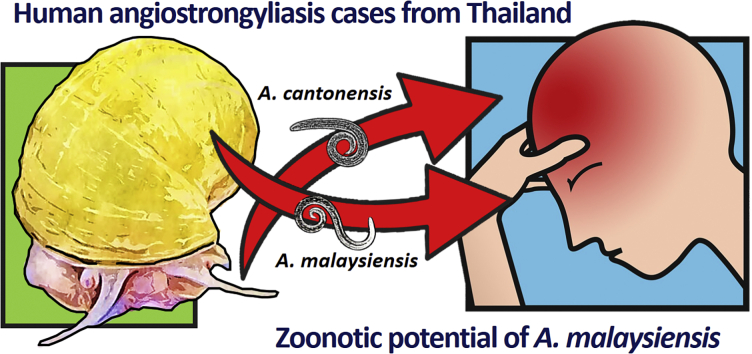
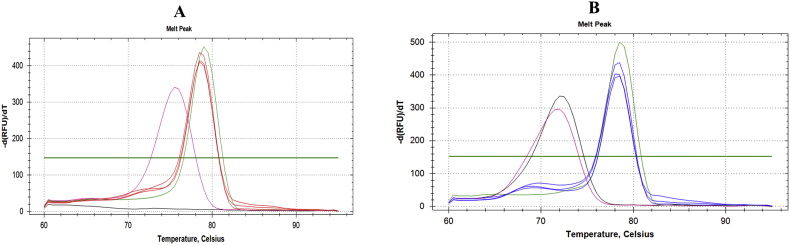
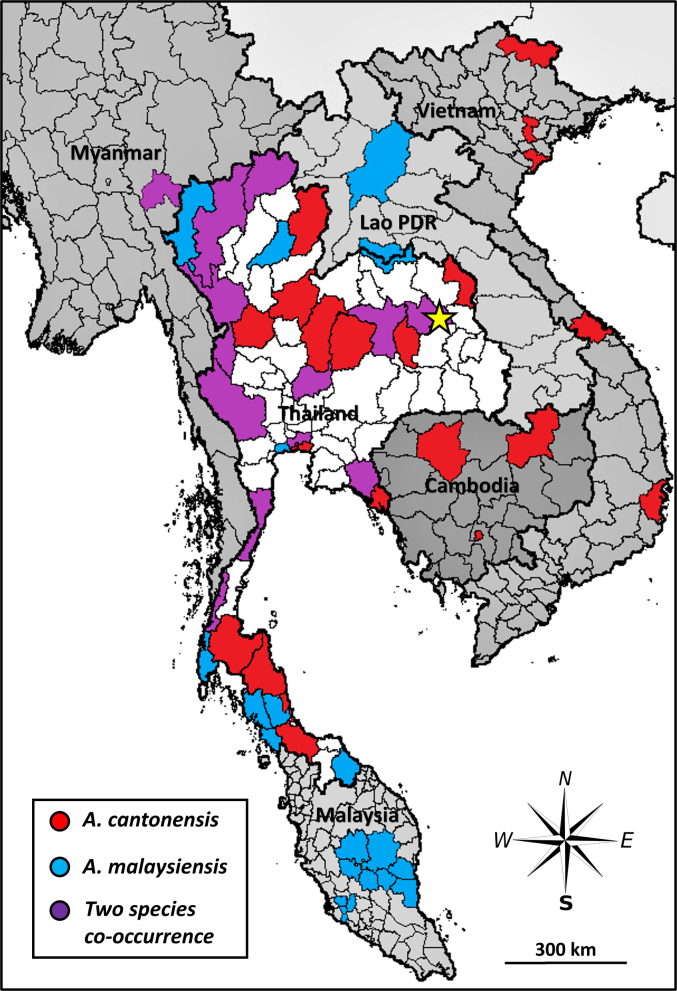
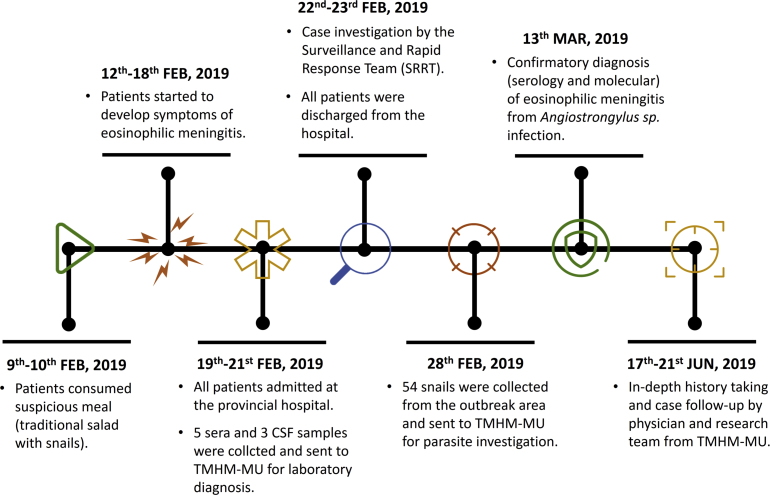
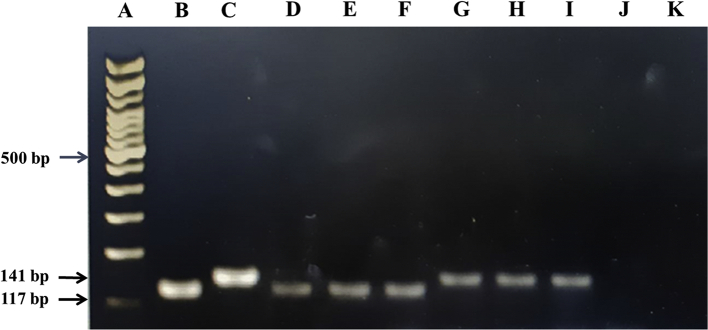
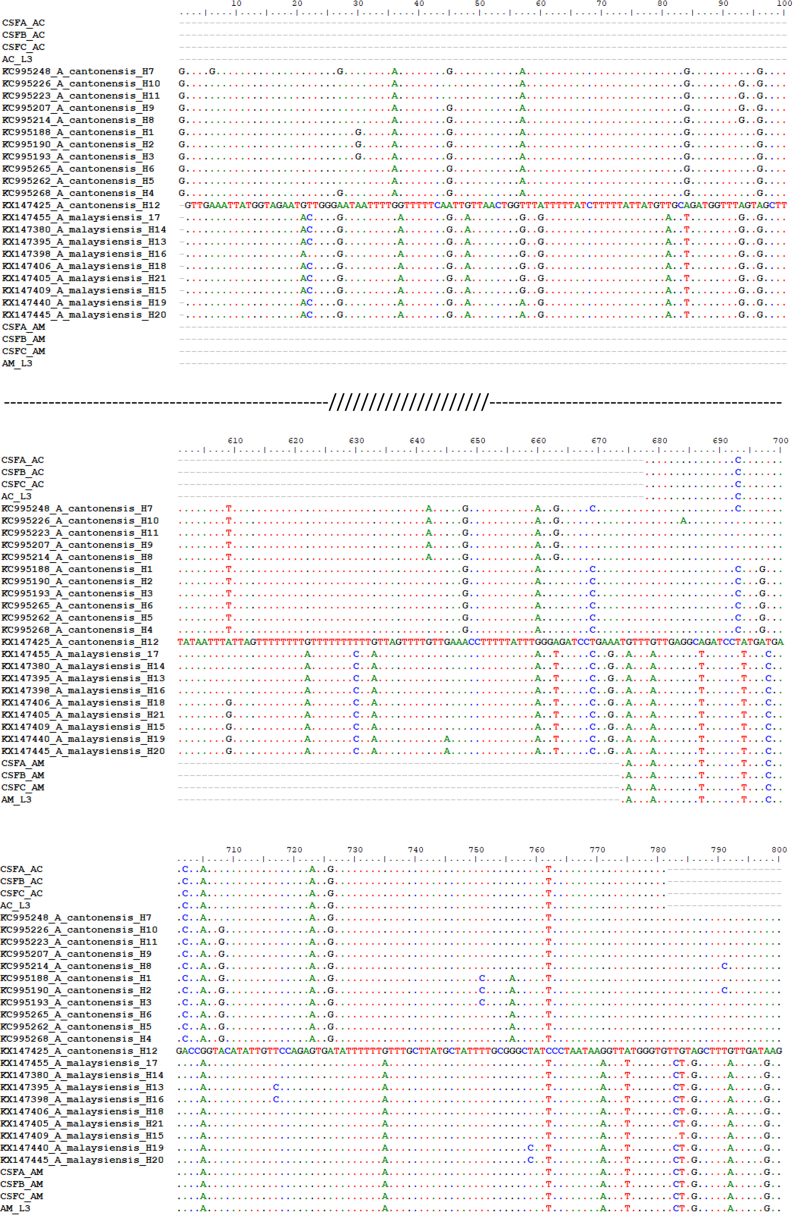
, the main causative agent of human neuroangiostrongyliasis, is a food-borne parasitic zoonosis, particularly in Southeast Asia and Mainland China. , a cryptic species, has not been unequivocally identified as a causative agent for human angiostrongyliasis. Here, we investigated a local incidence of human angiostrongyliasis in Kalasin Province, northeastern part of Thailand. Field and laboratory investigations, clinical symptoms, and treatment of the disease are also discussed. Five sera and three cerebrospinal fluid samples were taken from each patient who displayed clinical symptoms of mild or severe headache without neck stiffness after ingesting a local dish containing . With molecular evidence using PCR and DNA sequencing approaches, we confirmed the presence of and DNA in the patient samples. In addition, and collected in the vicinity were also examined for the existence of angistrongylid larvae. The rate of infection in the snail population was 33.3% (18 infection out of 54 examined), with as the predominant species. Notably, two snails were found to be co-infected with both and . This discovery comes after several years of suspicion that it could be a zoonotic pathogen. Therefore, our findings are important for public health and clinical diagnosis since clinicians are not aware of the zoonotic potential of in humans.
作为人类嗜酸性粒细胞增多性脑膜炎的主要病原体,是一种食源性寄生人畜共患病,在东南亚和中国大陆尤为常见。作为一种隐存种,尚未被明确鉴定为人类嗜酸性粒细胞增多性脑膜炎的病原体。在此,我们调查了泰国东北部呵叻府人类嗜酸性粒细胞增多性脑膜炎的当地发病率。还讨论了该疾病的现场和实验室调查、临床症状及治疗情况。从每一位在食用含有 的当地菜肴后出现轻度或重度头痛且无颈部僵硬临床症状的患者身上采集了5份血清和3份脑脊液样本。通过使用聚合酶链反应(PCR)和DNA测序方法的分子证据,我们在患者样本中证实了 和 的DNA存在。此外,还对在附近采集的 和 进行了嗜酸性粒细胞幼虫存在情况的检查。蜗牛种群的感染率为33.3%(54只受检蜗牛中有18只感染),其中 为优势种。值得注意的是,发现两只蜗牛同时感染了 和 。这一发现是在人们怀疑其可能为人畜共患病原体数年之后得出的。因此,我们的发现对于公共卫生和临床诊断具有重要意义,因为临床医生并未意识到 在人类中的人畜共患病潜力。