Daniel K. Inouye College of Pharmacy, University of Hawai'i at Hilo, Hilo, Hawai'i, United States of America.
Department of Statistics, College of Science, Virginia Tech, Blacksburg, VA, United States of America.
PLoS One. 2019 Apr 25;14(4):e0209813. doi: 10.1371/journal.pone.0209813. eCollection 2019.
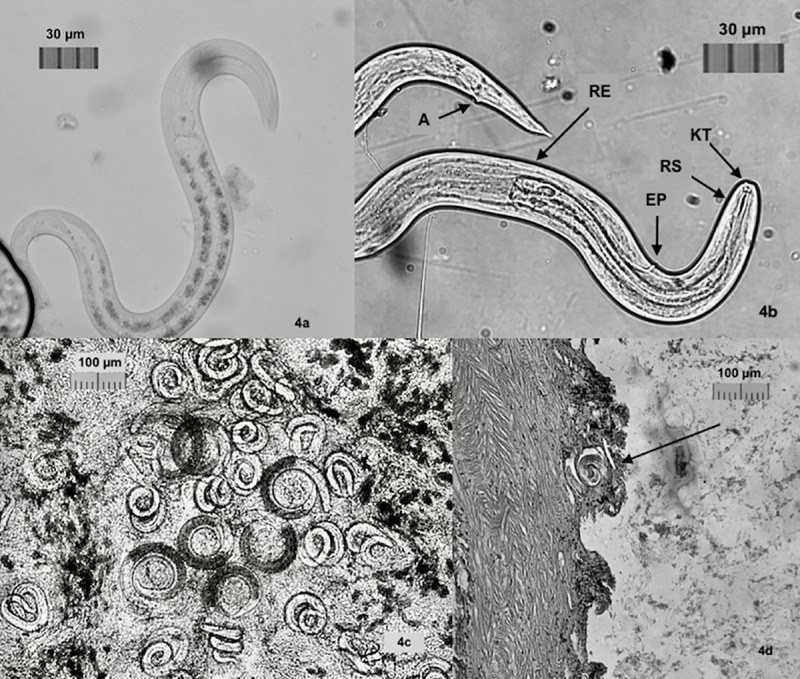
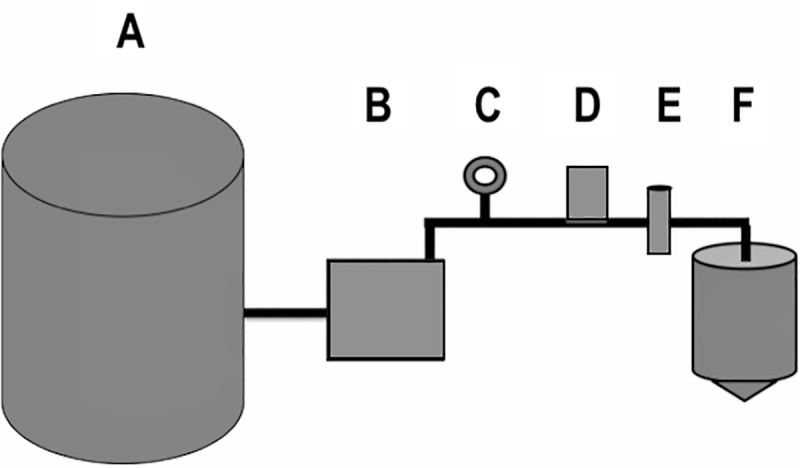
Neuroangiostrongyliasis, caused by Angiostrongylus cantonensis, has been reported in Hawai'i since the 1950's. An increase in cases is being reported primarily from East Hawai'i Island, correlated with the introduction of the semi-slug Parmarion martensi. Households in areas lacking infrastructure for water must use rainwater catchment as their primary domestic water supply, for which there is no federal, state, or county regulation. Despite evidence that slugs and snails can contaminate water and cause infection, regulatory bodies have not addressed this potential transmission route. This study evaluates: 1) the emergence of live, infective-stage A. cantonensis larvae from drowned, non-native, pestiforous gastropods; 2) larvae location in an undisturbed water column; 3) longevity of free-living larvae in water; and 4) effectiveness of rainwater catchment filters in blocking infective-stage larvae. Larvae were shed from minced and whole gastropods drowned in either municipal water or rainwater with ~94% of larvae recovered from the bottom of the water column 72-96 hours post drowning. Infective-stage larvae were active for 21 days in municipal water. Histological sectioning of P. martensi showed proximity of nematode larvae to the body wall of the gastropod, consistent with the potential for shedding of larvae in slime. Gastropod tissue squashes showed effectivity as a quick screening method. Live, infective-stage larvae were able to traverse rainwater catchment polypropylene sediment filters of 20 μm, 10 μm, 5 μm, and 1 μm filtration ratings, but not a 5 μm carbon block filter. These results demonstrate that live, infective-stage A. cantonensis larvae emerge from drowned snails and slugs, survive for extended periods of time in water, and may be able to enter a catchment user's household water supply. This study illustrates the need to better investigate and understand the potential role of contaminated water as a transmission route for neuroangiostrongyliasis.
神经血管旋毛虫病由广东血管圆线虫引起,自 20 世纪 50 年代以来在夏威夷就有报告。目前主要从夏威夷东部报告病例增加,与半蛞蝓 Parmarion martensi 的引入有关。缺乏基础设施供水的家庭必须将雨水收集作为主要的家庭用水来源,但联邦、州或县都没有对此进行监管。尽管有证据表明蛞蝓和蜗牛会污染水并导致感染,但监管机构尚未解决这一潜在的传播途径。本研究评估了:1)淹死的非本地害虫腹足纲动物体内活的、感染期的广东血管圆线虫幼虫的出现情况;2)未受干扰的水柱中幼虫的位置;3)自由生活幼虫在水中的寿命;4)雨水收集过滤器阻止感染期幼虫的效果。将切碎和完整的腹足纲动物淹死在市政用水或雨水后,72-96 小时后,约 94%的幼虫从水柱底部回收。感染期幼虫在市政水中可存活 21 天。对 P. martensi 的组织切片显示,线虫幼虫靠近腹足纲动物的体壁,这与幼虫在黏液中脱落的可能性一致。腹足纲动物组织压片显示是一种快速筛选方法。活的、感染期的幼虫能够穿透 20 μm、10 μm、5 μm 和 1 μm 过滤等级的雨水收集聚丙烯沉淀过滤器,但不能穿透 5 μm 碳块过滤器。这些结果表明,活的、感染期的广东血管圆线虫幼虫从淹死的蜗牛和蛞蝓中出现,在水中可长时间存活,并且可能进入集水区用户的家庭用水供应。本研究说明了需要更好地调查和了解污染水作为神经血管旋毛虫病传播途径的潜在作用。