Department of Medicine, Stanford University, Stanford, California, USA.
Stanford Cancer Institute, Stanford University, Stanford, California, USA.
J Am Med Inform Assoc. 2021 Oct 12;28(11):2536-2540. doi: 10.1093/jamia/ocab145.
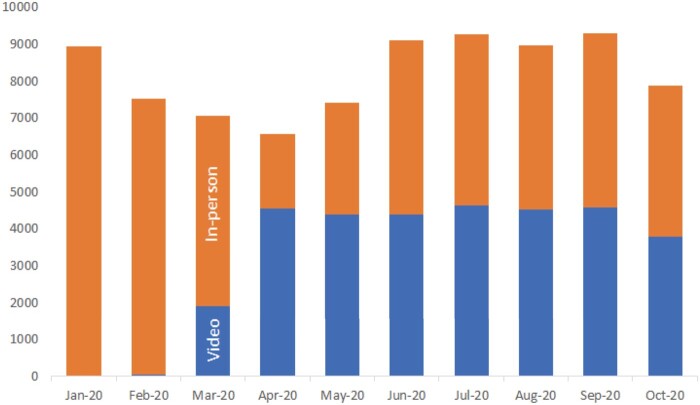
At the onset of the COVID-19 (coronavirus disease 2019) pandemic, telemedicine was rapidly implemented to protect patients and healthcare providers from infection. It is unlikely that care delivery will fully return to the pre-COVID form. Telemedicine offers many opportunities to improve care efficiency, accessibility, and patient outcomes, but many challenges exist related to technology interoperability, the digital divide, and usability. We propose that telemedicine evolve to support continuity of care throughout the patient journey, including multidisciplinary care teams and the seamless integration of data into the clinical workflow to support a learning healthcare system. Importantly, evidence is needed to support this paradigm shift in care delivery to ensure the quality and efficacy of care delivered via telemedicine. Here, we highlight gaps and opportunities that need to be addressed by the biomedical informatics community to move forward with safe and effective healthcare delivery via telemedicine.
在 COVID-19(2019 年冠状病毒病)大流行开始时,迅速实施了远程医疗以保护患者和医疗保健提供者免受感染。护理服务不太可能完全恢复到 COVID 之前的形式。远程医疗提供了许多机会来提高护理效率、可及性和患者结果,但在技术互操作性、数字鸿沟和可用性方面存在许多挑战。我们提出远程医疗发展以支持患者就诊过程中的连续性护理,包括多学科护理团队以及将数据无缝集成到临床工作流程中以支持学习型医疗保健系统。重要的是,需要有证据支持这种护理模式的转变,以确保通过远程医疗提供的护理的质量和效果。在这里,我们强调了生物医学信息学社区需要解决的差距和机会,以通过远程医疗安全有效地提供医疗服务。