• 文献检索
  • 文档翻译
  • 深度研究
  • 学术资讯
  • Suppr Zotero 插件Zotero 插件
  • 邀请有礼
  • 套餐&价格
  • 历史记录
应用&插件
Suppr Zotero 插件Zotero 插件浏览器插件Mac 客户端Windows 客户端微信小程序
定价
高级版会员购买积分包购买API积分包
服务
文献检索文档翻译深度研究API 文档MCP 服务
关于我们
关于 Suppr公司介绍联系我们用户协议隐私条款
关注我们

Suppr 超能文献

核心技术专利:CN118964589B侵权必究
粤ICP备2023148730 号-1Suppr @ 2026

文献检索

告别复杂PubMed语法,用中文像聊天一样搜索,搜遍4000万医学文献。AI智能推荐,让科研检索更轻松。

立即免费搜索

文件翻译

保留排版,准确专业,支持PDF/Word/PPT等文件格式,支持 12+语言互译。

免费翻译文档

深度研究

AI帮你快速写综述,25分钟生成高质量综述,智能提取关键信息,辅助科研写作。

立即免费体验

监测和调节心脏骤停后处于缺氧缺血性脑损伤风险中的患者的脑氧合。

Monitoring and modifying brain oxygenation in patients at risk of hypoxic ischaemic brain injury after cardiac arrest.

机构信息

Department of Emergency Care and Services, Helsinki University Hospital and University of Helsinki, Helsinki, Finland.

Division of Critical Care Medicine, Department of Medicine, Faculty of Medicine, University of British Columbia, Vancouver, BC, Canada.

出版信息

Crit Care. 2021 Aug 31;25(1):312. doi: 10.1186/s13054-021-03678-3.

DOI:10.1186/s13054-021-03678-3
PMID:34461973
原文链接:https://pmc.ncbi.nlm.nih.gov/articles/PMC8406909/
Abstract

This article is one of ten reviews selected from the Annual Update in Intensive Care and Emergency Medicine 2021. Other selected articles can be found online at https://www.biomedcentral.com/collections/annualupdate2021 . Further information about the Annual Update in Intensive Care and Emergency Medicine is available from https://link.springer.com/bookseries/8901 .

摘要

本文选自《2021 年重症监护和急诊医学年度更新》的十篇综述之一。其他选定的文章可以在 https://www.biomedcentral.com/collections/annualupdate2021 在线找到。有关《重症监护和急诊医学年度更新》的更多信息,请访问 https://link.springer.com/bookseries/8901 。
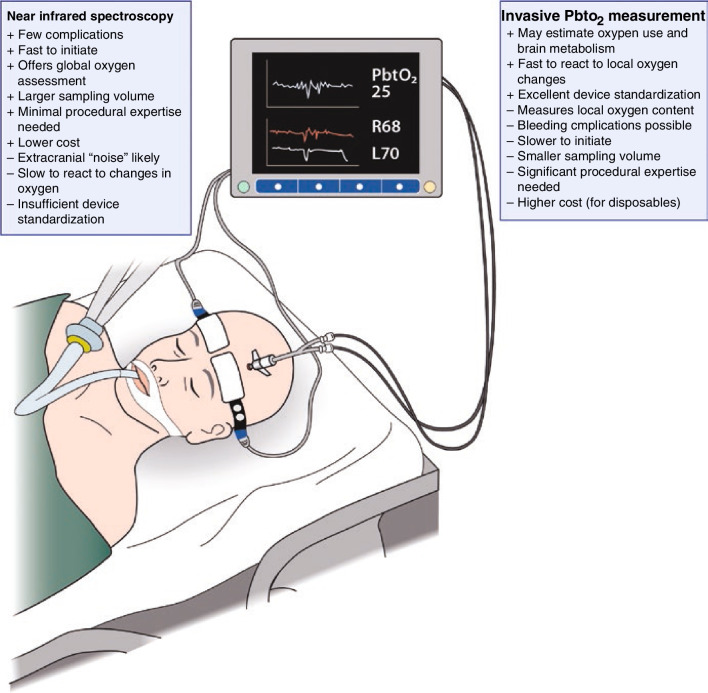
https://cdn.ncbi.nlm.nih.gov/pmc/blobs/fc62/8406909/221453c8edf0/13054_2021_3678_Fig1_HTML.jpg

相似文献

1
Monitoring and modifying brain oxygenation in patients at risk of hypoxic ischaemic brain injury after cardiac arrest.监测和调节心脏骤停后处于缺氧缺血性脑损伤风险中的患者的脑氧合。
Crit Care. 2021 Aug 31;25(1):312. doi: 10.1186/s13054-021-03678-3.
2
Pathophysiology and clinical implications of the veno-arterial PCO gap.动静脉 PCO 差的病理生理学和临床意义。
Crit Care. 2021 Aug 31;25(1):318. doi: 10.1186/s13054-021-03671-w.
3
To prone or not to prone ARDS patients on ECMO.ARDS 患者在体外膜肺氧合(ECMO)治疗时是否采用俯卧位。
Crit Care. 2021 Aug 31;25(1):315. doi: 10.1186/s13054-021-03675-6.
4
Management of acute metabolic acidosis in the ICU: sodium bicarbonate and renal replacement therapy.重症监护病房急性代谢性酸中毒的管理:碳酸氢钠和肾脏替代治疗。
Crit Care. 2021 Aug 31;25(1):314. doi: 10.1186/s13054-021-03677-4.
5
Brain Injury Biomarkers for Predicting Outcome After Cardiac Arrest.用于预测心脏骤停后预后的脑损伤生物标志物。
Crit Care. 2022 Mar 22;26(1):81. doi: 10.1186/s13054-022-03913-5.
6
Advanced management of intermediate-high risk pulmonary embolism.中高危肺栓塞的高级管理。
Crit Care. 2021 Aug 31;25(1):311. doi: 10.1186/s13054-021-03679-2.
7
Continuous Electroencephalography Monitoring in Adults in the Intensive Care Unit.重症监护成人连续脑电图监测。
Crit Care. 2018 Mar 20;22(1):75. doi: 10.1186/s13054-018-1997-x.
8
Essential Noninvasive Multimodality Neuromonitoring for the Critically Ill Patient.危重症患者必备的无创多模态神经监测。
Crit Care. 2020 Mar 24;24(1):100. doi: 10.1186/s13054-020-2781-2.
9
Acute kidney injury in ECMO patients.体外膜肺氧合患者的急性肾损伤。
Crit Care. 2021 Aug 31;25(1):313. doi: 10.1186/s13054-021-03676-5.
10
Setting and Monitoring of Mechanical Ventilation During Venovenous ECMO.在静脉-静脉体外膜肺氧合期间的机械通气设置和监测。
Crit Care. 2023 Mar 21;27(1):95. doi: 10.1186/s13054-023-04372-2.

引用本文的文献

1
The association between regional cerebral oxygen saturation and neurological outcomes in cardiac arrest survivors.心脏骤停幸存者局部脑氧饱和度与神经功能结局之间的关联。
Medicine (Baltimore). 2025 Jun 20;104(25):e42992. doi: 10.1097/MD.0000000000042992.
2
Decreased cold-inducible RNA-binding protein (CIRP) binding to GluRl on neuronal membranes mediates memory impairment resulting from prolonged hypobaric hypoxia exposure.冷诱导 RNA 结合蛋白(CIRP)与神经元膜上的 GluRl 结合减少介导了长时间低氧暴露导致的记忆障碍。
CNS Neurosci Ther. 2024 Sep;30(9):e70059. doi: 10.1111/cns.70059.
3
Time-Series Modeling and Forecasting of Cerebral Pressure-Flow Physiology: A Scoping Systematic Review of the Human and Animal Literature.

本文引用的文献

1
Near-Infrared Spectroscopy Assessments of Regional Cerebral Oxygen Saturation for the Prediction of Clinical Outcomes in Patients With Cardiac Arrest: A Review of Clinical Impact, Evolution, and Future Directions.近红外光谱法评估心脏骤停患者局部脑氧饱和度以预测临床结局:临床影响、进展及未来方向综述
Front Med (Lausanne). 2020 Oct 29;7:587930. doi: 10.3389/fmed.2020.587930. eCollection 2020.
2
Near-Infrared Spectroscopy to Assess Cerebral Autoregulation and Optimal Mean Arterial Pressure in Patients With Hypoxic-Ischemic Brain Injury: A Prospective Multicenter Feasibility Study.近红外光谱法评估缺氧缺血性脑损伤患者的脑自动调节功能和最佳平均动脉压:一项前瞻性多中心可行性研究。
Crit Care Explor. 2020 Sep 25;2(10):e0217. doi: 10.1097/CCE.0000000000000217. eCollection 2020 Oct.
3
时间序列建模与脑压力-血流生理学预测:人类和动物文献的系统性综述。
Sensors (Basel). 2024 Feb 23;24(5):1453. doi: 10.3390/s24051453.
4
Neuromonitoring after Pediatric Cardiac Arrest: Cerebral Physiology and Injury Stratification.小儿心脏骤停后的神经监测:脑生理与损伤分层。
Neurocrit Care. 2024 Feb;40(1):99-115. doi: 10.1007/s12028-023-01685-6. Epub 2023 Apr 1.
5
Skin pigmentation bias in regional brain oximetry measurements?区域脑血氧饱和度测量中的皮肤色素沉着偏差?
Crit Care. 2023 Jan 10;27(1):10. doi: 10.1186/s13054-022-04295-4.
6
Current state of high-fidelity multimodal monitoring in traumatic brain injury.创伤性脑损伤中高保真多模态监测的现状。
Acta Neurochir (Wien). 2022 Dec;164(12):3091-3100. doi: 10.1007/s00701-022-05383-8. Epub 2022 Oct 19.
7
Cerebral oxygen saturation as outcome predictor after transfemoral transcatheter aortic valve implantation.经股动脉经导管主动脉瓣植入术后脑氧饱和度作为结局预测指标。
Clin Res Cardiol. 2022 Aug;111(8):955-965. doi: 10.1007/s00392-022-02019-w. Epub 2022 May 4.
Conservative or liberal oxygen therapy in adults after cardiac arrest: An individual-level patient data meta-analysis of randomised controlled trials.心脏骤停后成人的保守或宽松氧疗:一项随机对照试验的个体水平患者数据荟萃分析。
Resuscitation. 2020 Dec;157:15-22. doi: 10.1016/j.resuscitation.2020.09.036. Epub 2020 Oct 12.
4
Neurofilament light as an outcome predictor after cardiac arrest: a post hoc analysis of the COMACARE trial.神经丝轻链作为心搏骤停后结局的预测指标:COMACARE 试验的事后分析。
Intensive Care Med. 2021 Jan;47(1):39-48. doi: 10.1007/s00134-020-06218-9. Epub 2020 Aug 27.
5
Optimum Blood Pressure in Patients With Shock After Acute Myocardial Infarction and Cardiac Arrest.急性心肌梗死后合并心搏骤停休克患者的最佳血压。
J Am Coll Cardiol. 2020 Aug 18;76(7):812-824. doi: 10.1016/j.jacc.2020.06.043.
6
Differential pathophysiologic phenotypes of hypoxic ischemic brain injury: considerations for post-cardiac arrest trials.缺氧缺血性脑损伤的不同病理生理表型:心脏骤停后试验的考量
Intensive Care Med. 2020 Oct;46(10):1969-1971. doi: 10.1007/s00134-020-06200-5. Epub 2020 Aug 6.
7
Lack of agreement between optimal mean arterial pressure determination using pressure reactivity index versus cerebral oximetry index in hypoxic ischemic brain injury after cardiac arrest.心脏骤停后缺氧缺血性脑损伤中,使用压力反应性指数与脑氧饱和度指数测定最佳平均动脉压时缺乏一致性。
Resuscitation. 2020 Jul;152:184-191. doi: 10.1016/j.resuscitation.2020.03.016. Epub 2020 Mar 27.
8
Parameters Influencing Brain Oxygen Measurement by Regional Oxygen Saturation in Postcardiac Arrest Patients with Targeted Temperature Management.影响接受目标温度管理的心脏骤停后患者局部氧饱和度测量脑氧的参数
Ther Hypothermia Temp Manag. 2020 Mar;10(1):71-75. doi: 10.1089/ther.2019.0032. Epub 2019 Dec 11.
9
Brain Hypoxia Secondary to Diffusion Limitation in Hypoxic Ischemic Brain Injury Postcardiac Arrest.心脏骤停后缺氧缺血性脑损伤中因弥散受限导致的脑缺氧。
Crit Care Med. 2020 Mar;48(3):378-384. doi: 10.1097/CCM.0000000000004138.
10
Cerebrovascular autoregulation following cardiac arrest: Protocol for a post hoc analysis of the randomised COMACARE pilot trial.心脏骤停后脑血管自动调节的研究:COMACARE 先导试验事后分析的方案。
Acta Anaesthesiol Scand. 2019 Oct;63(9):1272-1277. doi: 10.1111/aas.13435. Epub 2019 Aug 15.