The Vascular Biology Unit, Queensland Research Centre for Peripheral Vascular Disease, College of Medicine and Dentistry, James Cook University, Townsville, QLD, 4811, Australia.
School of Applied and Biomedical Sciences, Faculty of Science and Technology, Federation University Australia, Horsham, VIC, Australia.
Sci Rep. 2021 Aug 31;11(1):17451. doi: 10.1038/s41598-021-97042-8.
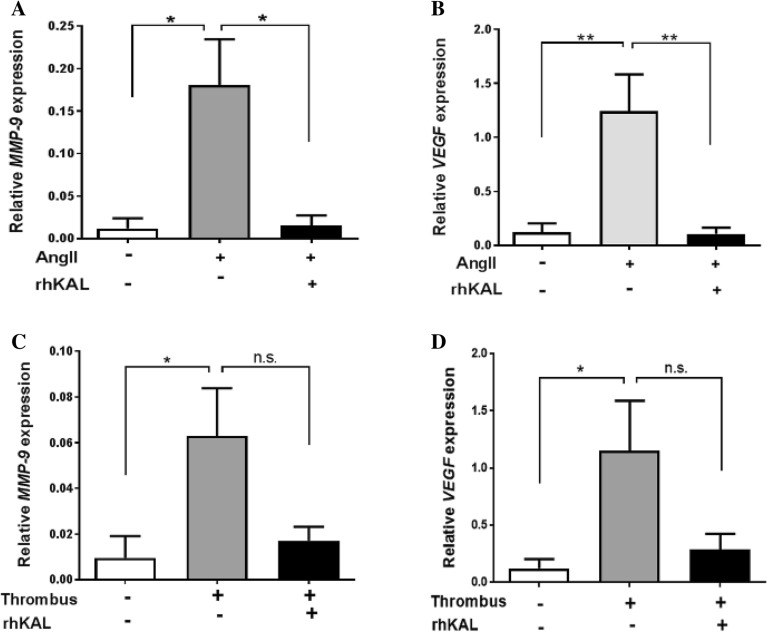
Inflammation, vascular smooth muscle cell apoptosis and oxidative stress are believed to play important roles in abdominal aortic aneurysm (AAA) pathogenesis. Human kallistatin (KAL; gene SERPINA4) is a serine proteinase inhibitor previously shown to inhibit inflammation, apoptosis and oxidative stress. The aim of this study was to investigate the role of KAL in AAA through studies in experimental mouse models and patients. Serum KAL concentration was negatively associated with the diagnosis and growth of human AAA. Transgenic overexpression of the human KAL gene (KS-Tg) or administration of recombinant human KAL (rhKAL) inhibited AAA in the calcium phosphate (CaPO) and subcutaneous angiotensin II (AngII) infusion mouse models. Upregulation of KAL in both models resulted in reduction in the severity of aortic elastin degradation, reduced markers of oxidative stress and less vascular smooth muscle apoptosis within the aorta. Administration of rhKAL to vascular smooth muscle cells incubated in the presence of AngII or in human AAA thrombus-conditioned media reduced apoptosis and downregulated markers of oxidative stress. These effects of KAL were associated with upregulation of Sirtuin 1 activity within the aortas of both KS-Tg mice and rodents receiving rhKAL. These results suggest KAL-Sirtuin 1 signalling limits aortic wall remodelling and aneurysm development through reductions in oxidative stress and vascular smooth muscle cell apoptosis. Upregulating KAL may be a novel therapeutic strategy for AAA.
炎症、血管平滑肌细胞凋亡和氧化应激被认为在腹主动脉瘤(AAA)发病机制中起重要作用。人激肽释放酶抑制剂(KAL;基因 SERPINA4)是一种丝氨酸蛋白酶抑制剂,先前已被证明可抑制炎症、凋亡和氧化应激。本研究的目的是通过在实验性小鼠模型和患者中研究,探讨 KAL 在 AAA 中的作用。血清 KAL 浓度与人类 AAA 的诊断和生长呈负相关。人 KAL 基因的转基因过表达(KS-Tg)或重组人 KAL(rhKAL)的给药抑制了磷酸钙(CaPO)和皮下血管紧张素 II(AngII)输注小鼠模型中的 AAA。两种模型中 KAL 的上调导致主动脉弹性蛋白降解的严重程度降低,氧化应激标志物减少,血管平滑肌细胞凋亡减少。在 AngII 存在或人 AAA 血栓条件培养基中孵育的血管平滑肌细胞中给予 rhKAL 可减少细胞凋亡并下调氧化应激标志物。KAL 的这些作用与 KS-Tg 小鼠和接受 rhKAL 的啮齿动物主动脉中 Sirtuin 1 活性的上调有关。这些结果表明,KAL-Sirtuin 1 信号通过减少氧化应激和血管平滑肌细胞凋亡来限制主动脉壁重塑和动脉瘤发展。上调 KAL 可能是 AAA 的一种新的治疗策略。