
利用地面遥感中的归一化植被指数(NDVI)估算大田作物叶片水势——提高预测精度的机遇
Leaf water potential of field crops estimated using NDVI in ground-based remote sensing-opportunities to increase prediction precision.
作者信息
Dong Xuejun, Peng Bin, Sieckenius Shane, Raman Rahul, Conley Matthew M, Leskovar Daniel I
机构信息
Texas A&M AgriLife Research and Extension Center at Uvalde, Uvalde, TX, United States.
Yancheng Institute of Technology, Yancheng City, Jiangsu, China.
出版信息
PeerJ. 2021 Aug 18;9:e12005. doi: 10.7717/peerj.12005. eCollection 2021.
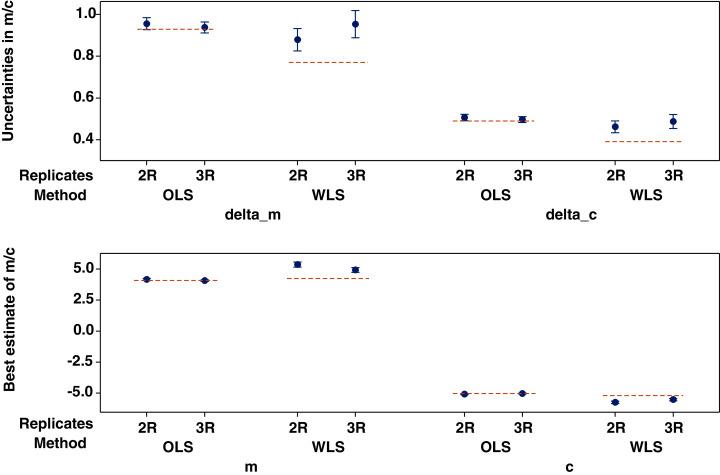
Remote-sensing using normalized difference vegetation index (NDVI) has the potential of rapidly detecting the effect of water stress on field crops. However, this detection has typically been accomplished only after the stress effect led to significant changes in crop green biomass, leaf area index, angle and position, and few studies have attempted to estimate the uncertainties of the regression models. These have limited the informed interpretation of NDVI data in agricultural applications. We built a ground-based sensing cart and used it to calibrate the relationships between NDVI and leaf water potential (LWP) for wheat, corn, and cotton growing under field conditions. Both the methods of ordinary least-squares (OLS) and weighted least-squares (WLS) were employed in data analysis, and measurement errors in both LWP and NDVI were considered. We also used statistical resampling to test the effect of measurement errors of LWP on the uncertainties of model coefficients. Our data showed that obtaining a high value of the coefficient of determination did not guarantee a high prediction precision in the obtained regression models. Large prediction uncertainties were estimated for all three crops, and the regressions obtained were not always significant. The best models were obtained for cotton with a prediction uncertainty of 27%. We found that considering measurement errors for both LWP and NDVI led to reduced uncertainties in model coefficients. Also, reducing the sample size of LWP measurement led to significantly increased uncertainties in the coefficients of the linear models describing the LWP-NDVI relationship. Finally, potential strategies for reducing the uncertainty relative to the range of NDVI measurement are discussed.
利用归一化植被指数(NDVI)进行遥感监测,具有快速检测水分胁迫对田间作物影响的潜力。然而,通常只有在胁迫效应导致作物绿色生物量、叶面积指数、角度和位置发生显著变化之后,才能完成这种检测,而且很少有研究尝试估计回归模型的不确定性。这些都限制了在农业应用中对NDVI数据进行明智的解读。我们搭建了一个地面传感车,并利用它来校准田间种植的小麦、玉米和棉花的NDVI与叶片水势(LWP)之间的关系。数据分析采用了普通最小二乘法(OLS)和加权最小二乘法(WLS),并考虑了LWP和NDVI的测量误差。我们还使用统计重采样来测试LWP测量误差对模型系数不确定性的影响。我们的数据表明,获得较高的决定系数值并不能保证所得到的回归模型具有较高的预测精度。估计所有三种作物的预测不确定性都很大,而且所得到的回归并不总是显著的。棉花得到了最佳模型,预测不确定性为27%。我们发现,考虑LWP和NDVI的测量误差会降低模型系数的不确定性。此外,减少LWP测量的样本量会导致描述LWP-NDVI关系的线性模型系数的不确定性显著增加。最后,讨论了相对于NDVI测量范围降低不确定性的潜在策略。


 Zotero 插件