Schröder Johanna, Mints Vladislav A, Bornet Aline, Berner Etienne, Fathi Tovini Mohammad, Quinson Jonathan, Wiberg Gustav K H, Bizzotto Francesco, El-Sayed Hany A, Arenz Matthias
Department of Chemistry, Biochemistry and Pharmaceutical Sciences, University of Bern, Freiestrasse 3, 3012 Bern, Switzerland.
Chair of Technical Electrochemistry, Department of Chemistry and Catalysis Research Center, Technical University Munich, Lichtenbergstrasse 4, 85748 Garching, Germany.
JACS Au. 2021 Feb 17;1(3):247-251. doi: 10.1021/jacsau.1c00015. eCollection 2021 Mar 22.
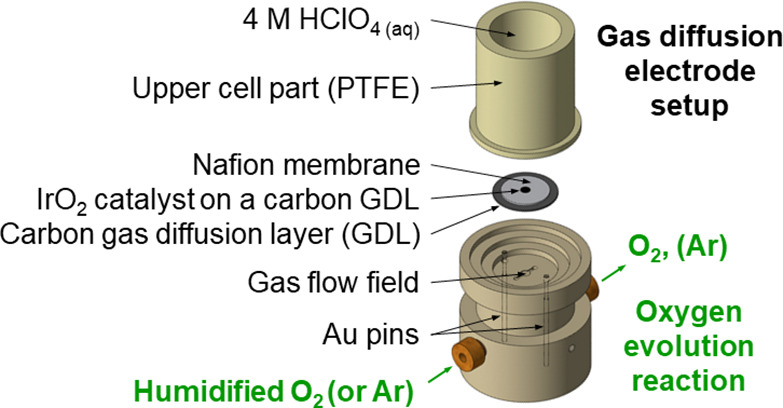
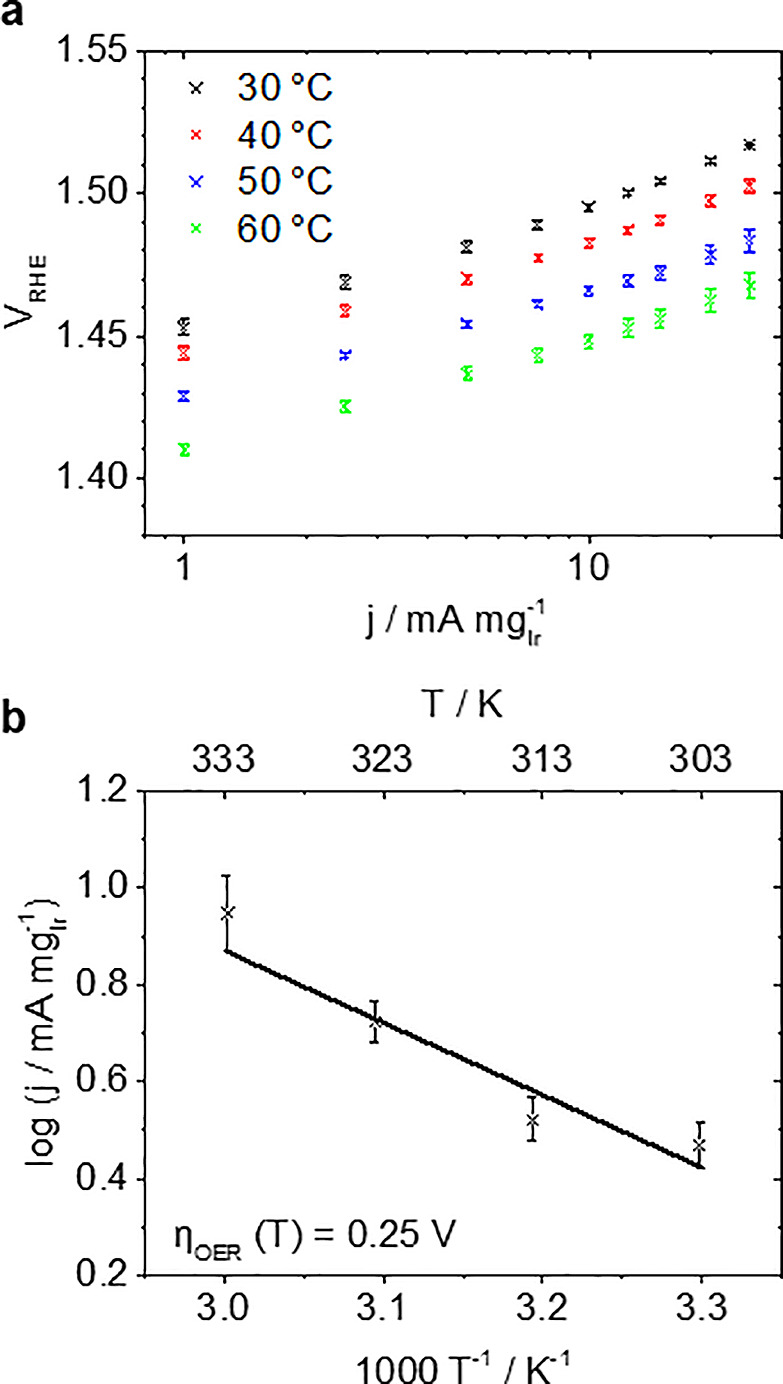
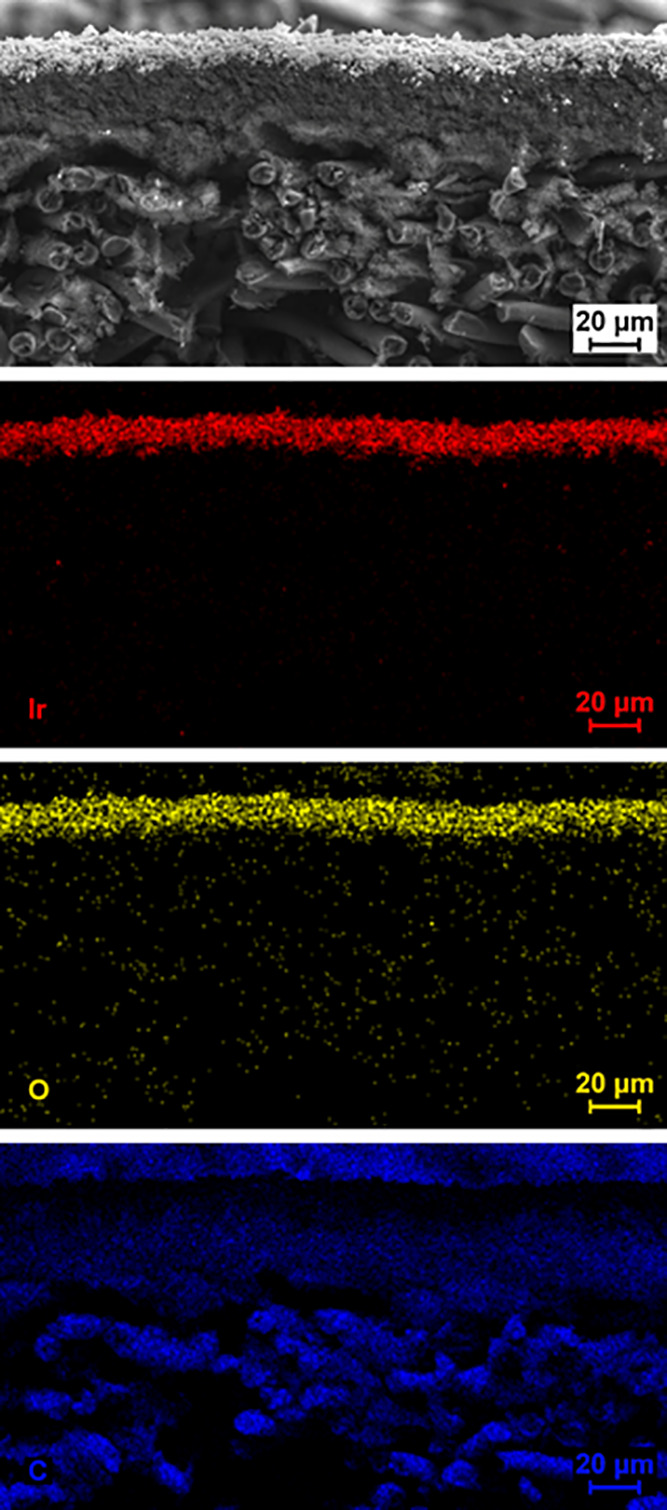
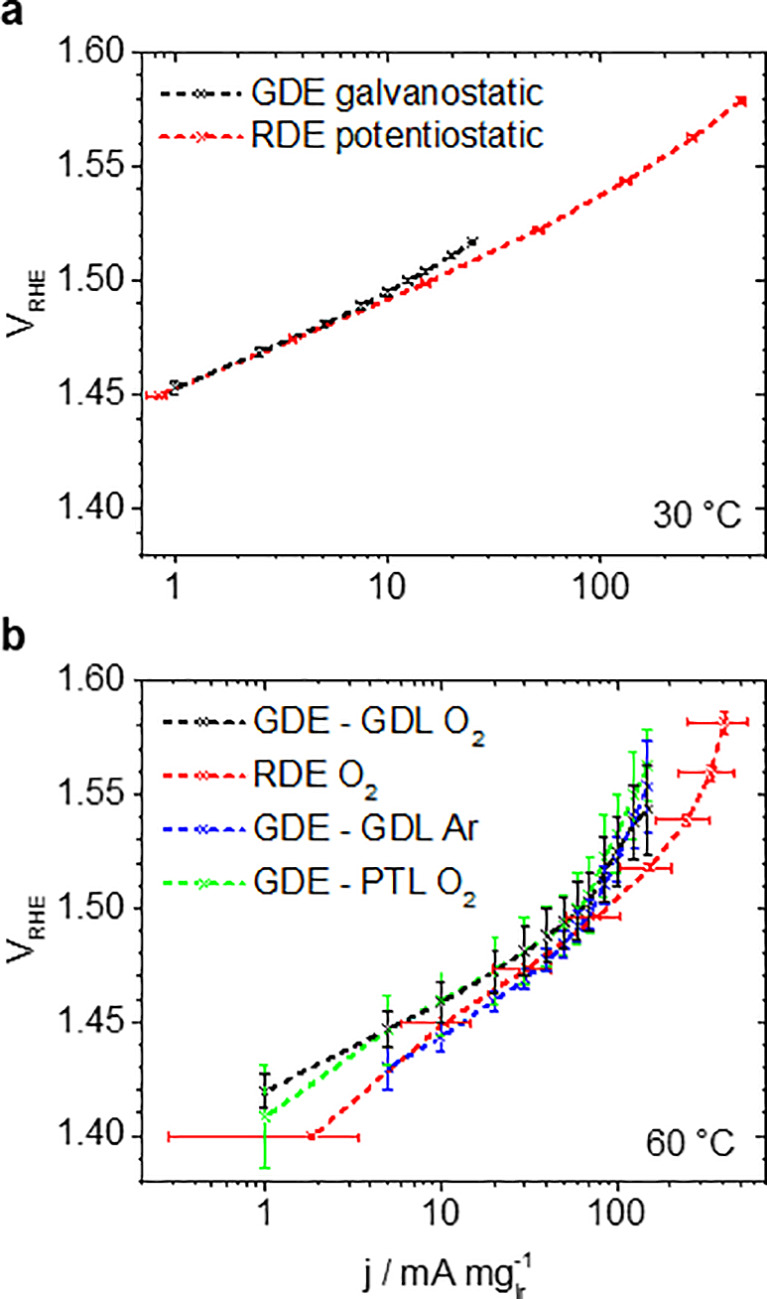
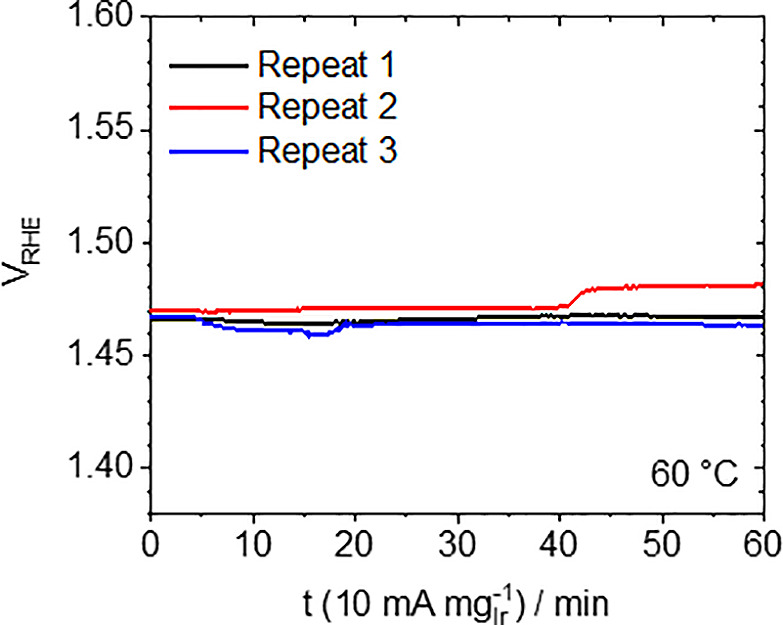
Hydrogen production from renewable resources and its reconversion into electricity are two important pillars toward a more sustainable energy use. The efficiency and viability of these technologies heavily rely on active and stable electrocatalysts. Basic research to develop superior electrocatalysts is commonly performed in conventional electrochemical setups such as a rotating disk electrode (RDE) configuration or H-type electrochemical cells. These experiments are easy to set up; however, there is a large gap to real electrochemical conversion devices such as fuel cells or electrolyzers. To close this gap, gas diffusion electrode (GDE) setups were recently presented as a straightforward technique for testing fuel cell catalysts under more realistic conditions. Here, we demonstrate for the first time a GDE setup for measuring the oxygen evolution reaction (OER) of catalysts for proton exchange membrane water electrolyzers (PEMWEs). Using a commercially available benchmark IrO catalyst deposited on a carbon gas diffusion layer (GDL), it is shown that key parameters such as the OER mass activity, the activation energy, and even reasonable estimates of the exchange current density can be extracted in a realistic range of catalyst loadings for PEMWEs. It is furthermore shown that the carbon-based GDL is not only suitable for activity determination but also short-term stability testing. Alternatively, the GDL can be replaced by Ti-based porous transport layers (PTLs) typically used in commercial PEMWEs. Here a simple preparation is shown involving the hot-pressing of a Nafion membrane onto a drop-cast glycerol-based ink on a Ti-PTL.
利用可再生资源制氢并将其再转化为电能是实现更可持续能源利用的两个重要支柱。这些技术的效率和可行性在很大程度上依赖于活性和稳定的电催化剂。开发优质电催化剂的基础研究通常在传统的电化学装置中进行,如旋转圆盘电极(RDE)配置或H型电化学池。这些实验易于设置;然而,与燃料电池或电解槽等实际电化学转换装置存在很大差距。为了弥合这一差距,气体扩散电极(GDE)装置最近被提出,作为在更实际条件下测试燃料电池催化剂的一种直接技术。在此,我们首次展示了一种用于测量质子交换膜水电解槽(PEMWE)催化剂析氧反应(OER)的GDE装置。使用沉积在碳气体扩散层(GDL)上的市售基准IrO催化剂,结果表明,在PEMWE催化剂负载的实际范围内,可以提取关键参数,如OER质量活性、活化能,甚至交换电流密度的合理估计值。此外还表明,碳基GDL不仅适用于活性测定,也适用于短期稳定性测试。另外,GDL可以被商业PEMWE中通常使用的钛基多孔传输层(PTL)替代。这里展示了一种简单的制备方法,即将Nafion膜热压到钛基多孔传输层上滴铸的甘油基墨水上。