Hunan Soil and Fertilizer Institute, Changsha, China.
PLoS One. 2021 Sep 1;16(9):e0256754. doi: 10.1371/journal.pone.0256754. eCollection 2021.
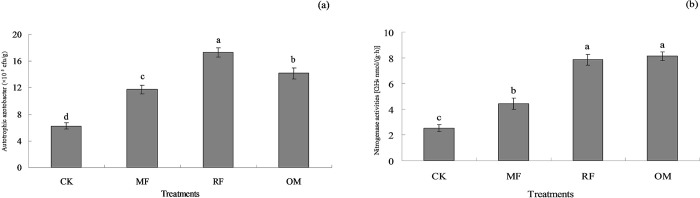
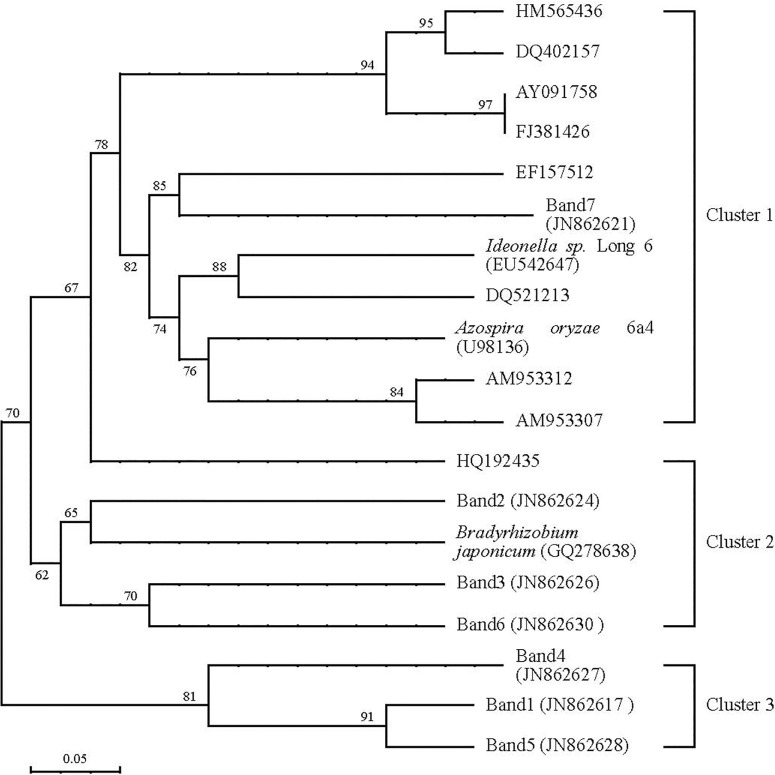
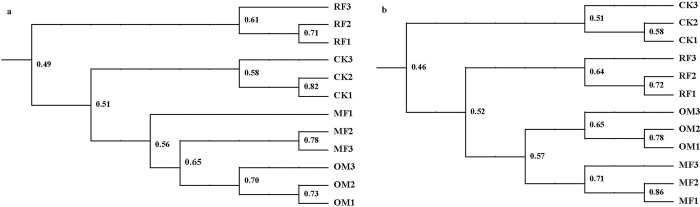
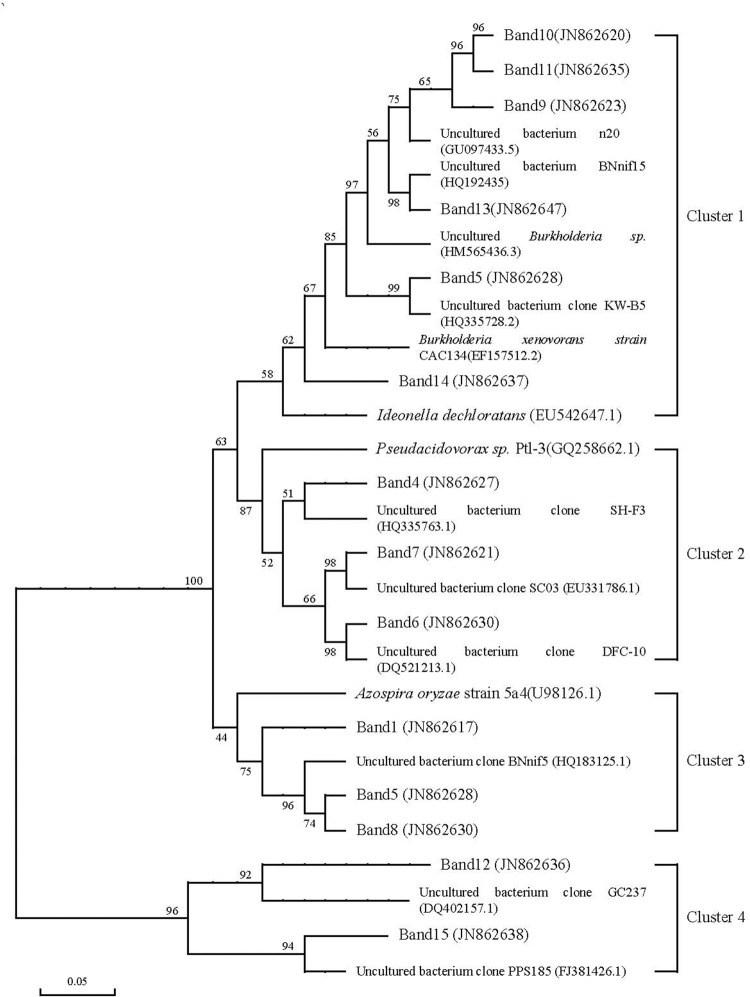
Soil microorganism plays an important role in nitrogen (N) fixation process of paddy field, but the related information about how soil microorganism that drive N fixation process response to change of soil phy-chemical characteristics under the double-cropping rice (Oryza sativa L.) paddy field in southern of China is need to further study. Therefore, the impacts of 34-years different long-term fertilization system on soil N-fixing bacteria community under the double-cropping rice paddy field in southern of China were investigated by taken chain reaction-denaturing gradient gel electrophoresis (PCR-DGGE) method in this paper. The field experiment were set up four different fertilizer treatments: chemical fertilizer alone (MF), rice straw and chemical fertilizer (RF), 30% organic manure and 70% chemical fertilizer (OM), and unfertilized as a control (CK). This results showed that compared with CK treatment, the diversity index of cbbLR and nifH genes with OM and RF treatments were significantly increased (p<0.05), respectively. Meanwhile, the abundance of cbbLR gene with OM, RF and MF treatments were increased by 23.94, 12.19 and 6.70×10⁷ copies g-1 compared to CK treatment, respectively. Compared with CK treatment, the abundance of nifH gene with OM, RF and MF treatments were increased by 23.90, 8.82 and 5.40×10⁹ copies g-1, respectively. This results indicated that compared with CK treatment, the soil autotrophic azotobacter and nitrogenase activities with OM and RF treatments were also significantly increased (p<0.05), respectively. There were an obvious difference in features of soil N-fixing bacteria community between application of inorganic fertilizer and organic manure treatments. Therefore, this results demonstrated that abundance of soil N-fixing bacteria community in the double-cropping rice paddy field were increased by long-term applied with organic manure and crop residue managements.
土壤微生物在稻田氮(N)固定过程中起着重要作用,但需要进一步研究驱动 N 固定过程的土壤微生物如何响应中国南方双季稻田土壤理化特性的变化。因此,本文采用聚合酶链反应-变性梯度凝胶电泳(PCR-DGGE)方法,研究了中国南方双季稻田 34 年不同长期施肥制度对土壤固氮菌群落的影响。田间试验设置了 4 种不同施肥处理:化肥单施(MF)、稻草与化肥配施(RF)、30%有机肥与 70%化肥配施(OM)和不施肥作为对照(CK)。结果表明,与 CK 处理相比,OM 和 RF 处理的 cbbLR 和 nifH 基因多样性指数显著增加(p<0.05)。同时,OM、RF 和 MF 处理的 cbbLR 基因丰度分别比 CK 处理增加了 23.94、12.19 和 6.70×10⁷ 拷贝 g-1。与 CK 处理相比,OM、RF 和 MF 处理的 nifH 基因丰度分别增加了 23.90、8.82 和 5.40×10⁹ 拷贝 g-1。结果表明,与 CK 处理相比,OM 和 RF 处理的土壤自养固氮菌和氮酶活性也显著增加(p<0.05)。与无机肥和有机肥处理相比,土壤固氮菌群落特征存在明显差异。因此,本研究表明,长期施用有机肥和作物秸秆管理可增加双季稻田土壤固氮菌群落的丰度。