Physical Sciences, Sunnybrook Research Institute, Toronto, ON, Canada.
Department of Radiation Oncology, Sunnybrook Health Sciences Centre, Toronto, ON, Canada.
BMC Cancer. 2021 Sep 3;21(1):991. doi: 10.1186/s12885-021-08706-7.
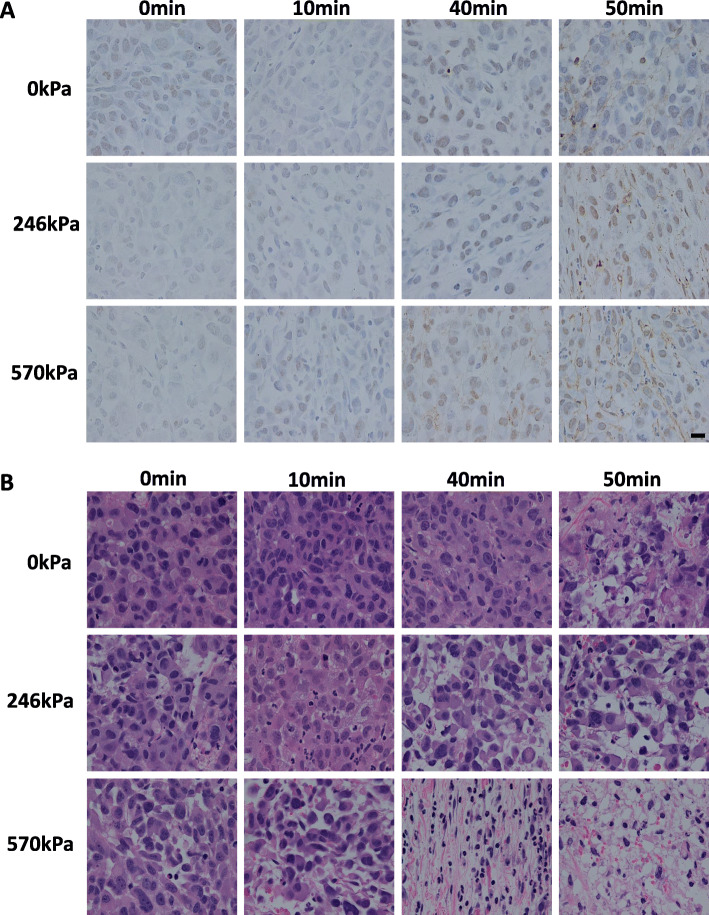
The study here investigated quantitative ultrasound (QUS) parameters to assess tumour response to ultrasound-stimulated microbubbles (USMB) and hyperthermia (HT) treatment in vivo. Mice bearing prostate cancer xenografts were exposed to various treatment conditions including 1% (v/v) Definity microbubbles stimulated at ultrasound pressures 246 kPa and 570 kPa and HT duration of 0, 10, 40, and 50 min. Ultrasound radiofrequency (RF) data were collected using an ultrasound transducer with a central frequency of 25 MHz. QUS parameters based on form factor models were used as potential biomarkers of cell death in prostate cancer xenografts.
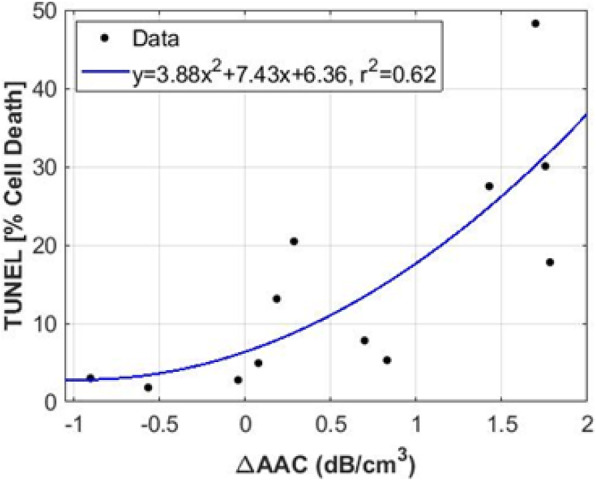
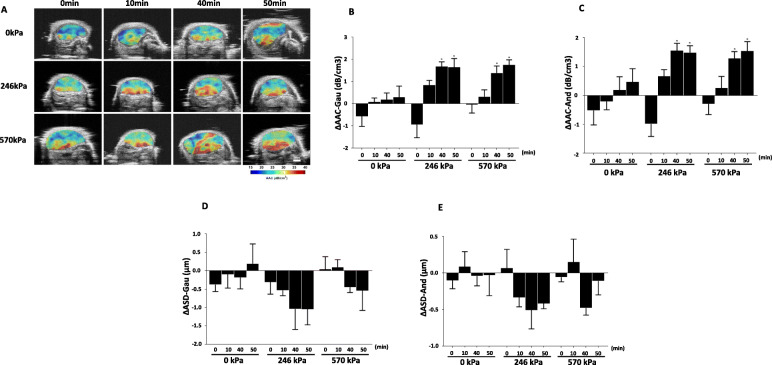
The average acoustic concentration (AAC) parameter from spherical gaussian and the fluid-filled spherical models were the most efficient imaging biomarker of cell death. Statistical significant increases of AAC were found in the combined treatment groups: 246 kPa + 40 min, 246 kPa + 50 min, and 570 kPa + 50 min, in comparison with control tumours (0 kPa + 0 min). Changes in AAC correlates strongly (r = 0.62) with cell death fraction quantified from the histopathological analysis.
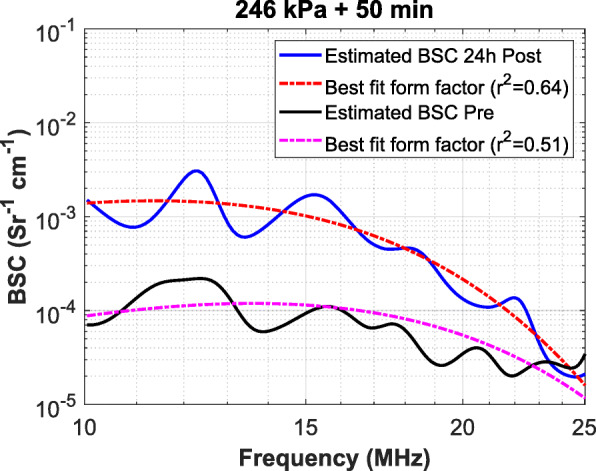
Scattering property estimates from spherical gaussian and fluid-filled spherical models are useful imaging biomarkers for assessing tumour response to treatment. Our observation of changes in AAC from high ultrasound frequencies was consistent with previous findings where parameters related to the backscatter intensity (AAC) increased with cell death.
本研究通过定量超声(QUS)参数来评估超声刺激微泡(USMB)和热疗(HT)联合治疗体内肿瘤的反应。研究中使用携带前列腺癌异种移植的小鼠作为研究对象,对其施加不同的治疗条件,包括在超声压力 246 kPa 和 570 kPa 下分别使用 1%(v/v)浓度的 Definity 微泡,以及 0、10、40 和 50 min 的 HT 处理时长。使用中心频率为 25 MHz 的超声换能器采集超声射频(RF)数据。基于形态因子模型的 QUS 参数被用作前列腺癌异种移植细胞死亡的潜在生物标志物。
基于球形高斯和充满液体的球形模型的平均声强(AAC)参数是最有效的细胞死亡成像生物标志物。在联合治疗组中,246 kPa+40 min、246 kPa+50 min 和 570 kPa+50 min,与对照组肿瘤(0 kPa+0 min)相比,AAC 参数均有统计学显著增加。AAC 的变化与组织病理学分析量化的细胞死亡分数密切相关(r=0.62)。
球形高斯和充满液体的球形模型的散射特性估计值是评估肿瘤对治疗反应的有用成像生物标志物。我们观察到高频超声下 AAC 的变化与之前的发现一致,即与反向散射强度(AAC)相关的参数随着细胞死亡而增加。