Black Dog Institute, Faculty of Medicine, University of New South Wales, Randwick, NSW, Australia.
Center for Communication and Disparities Research, Department of Family Medicine, University of Rochester School of Medicine and Dentistry, Rochester, NY, USA.
Lancet. 2021 Sep 4;398(10303):920-930. doi: 10.1016/S0140-6736(21)01596-8.
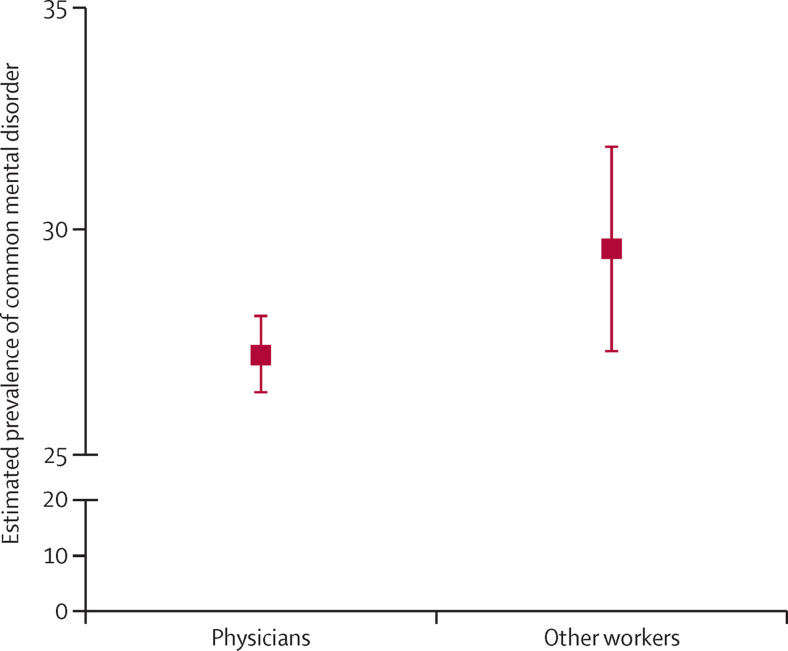
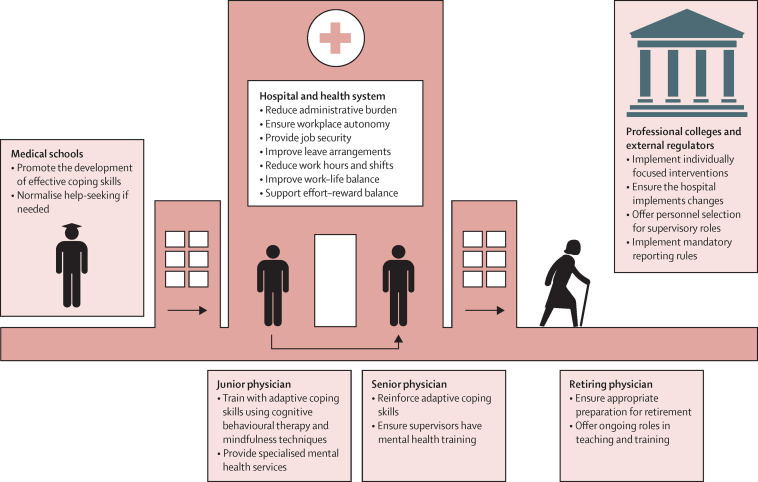
The COVID-19 pandemic has heightened interest in how physician mental health can be protected and optimised, but uncertainty and misinformation remain about some key issues. In this Review, we discuss the current literature, which shows that despite what might be inferred during training, physicians are not immune to mental illness, with between a quarter and a third reporting increased symptoms of mental ill health. Physicians, particularly female physicians, are at an increased risk of suicide. An emerging consensus exists that some aspects of physician training, working conditions, and organisational support are unacceptable. Changes in medical training and health systems, and the additional strain of working through a pandemic, might have amplified these problems. A new evidence-informed framework for how individual and organisational interventions can be used in an integrated manner in medical schools, in health-care settings, and by professional colleagues is proposed. New initiatives are required at each of these levels, with an urgent need for organisational-level interventions, to better protect the mental health and wellbeing of physicians.
COVID-19 大流行提高了人们对保护和优化医生心理健康的兴趣,但一些关键问题仍然存在不确定性和信息错误。在这篇综述中,我们讨论了当前的文献,这些文献表明,尽管在培训过程中可能会有这样的推断,但医生并非不易患精神疾病,四分之一到三分之一的医生报告称心理健康症状增加。医生,特别是女医生,自杀的风险增加。一个新的共识是,医生培训、工作条件和组织支持的某些方面是不可接受的。医学培训和医疗体系的变化,以及通过大流行工作的额外压力,可能放大了这些问题。提出了一个新的循证框架,说明如何在医学院、医疗机构和专业同事中以综合的方式使用个人和组织干预措施。需要在这些层面上采取新的举措,迫切需要组织层面的干预措施,以更好地保护医生的心理健康和幸福感。