Boehringer Ingelheim RCV, GmbH & Co KG, Cancer Pharmacology and Disease Positioning, Vienna, Austria.
Boehringer Ingelheim RCV, GmbH & Co KG, Drug Discovery Sciences, Vienna, Austria.
Mol Cancer Ther. 2021 Nov;20(11):2250-2261. doi: 10.1158/1535-7163.MCT-21-0107. Epub 2021 Sep 4.
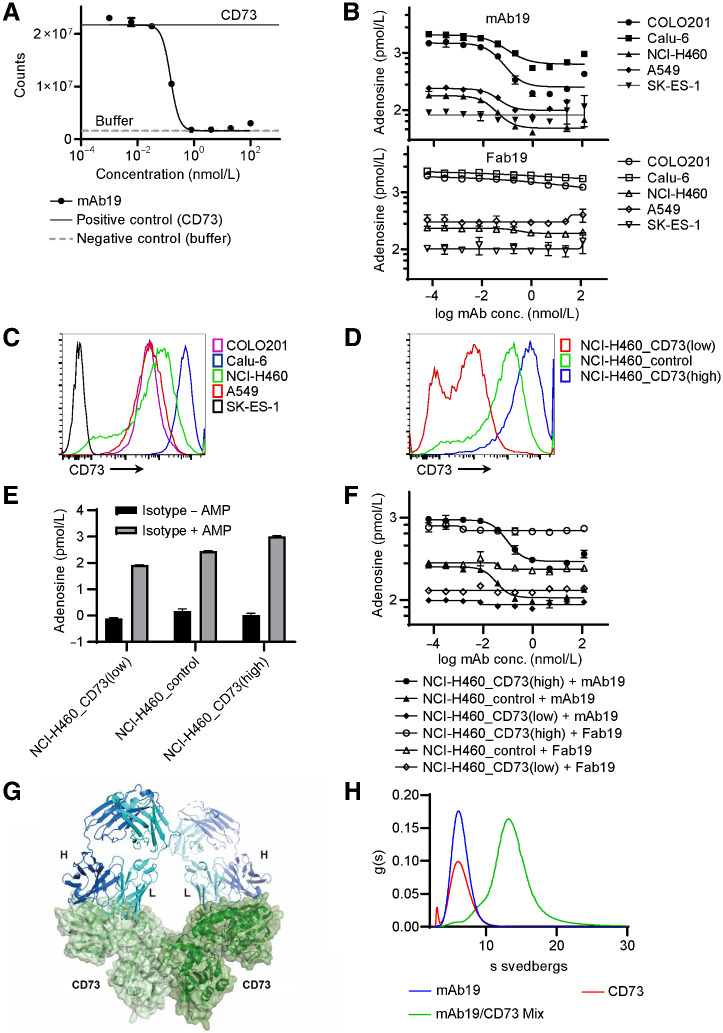
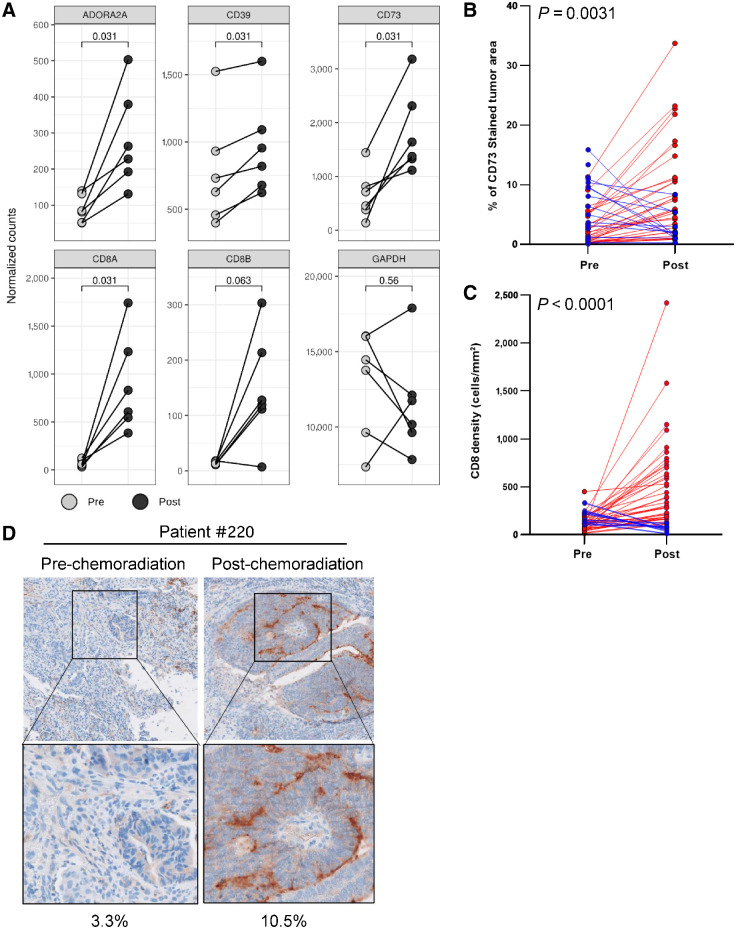
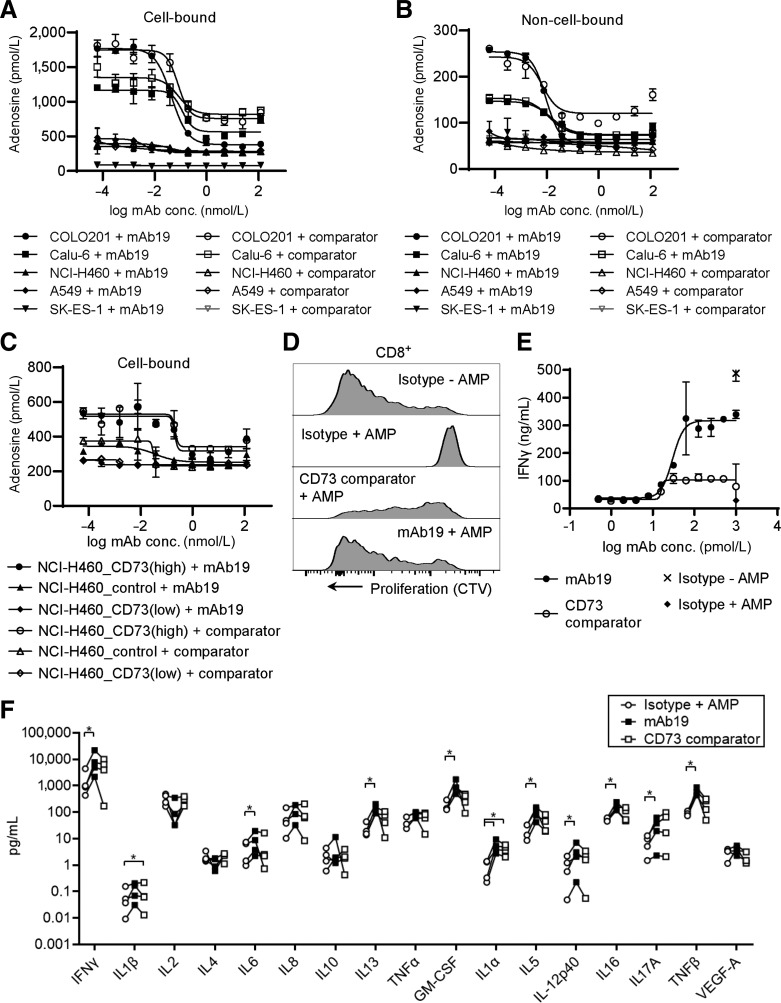
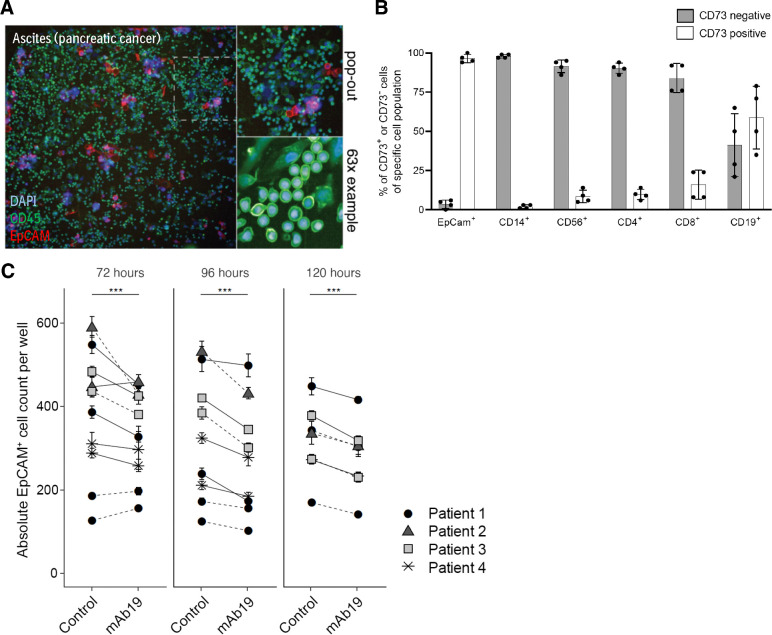
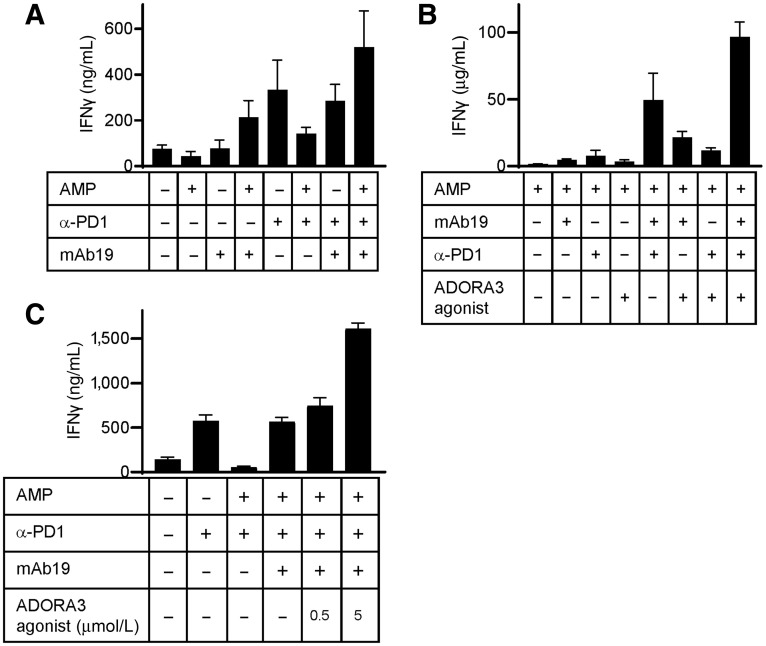
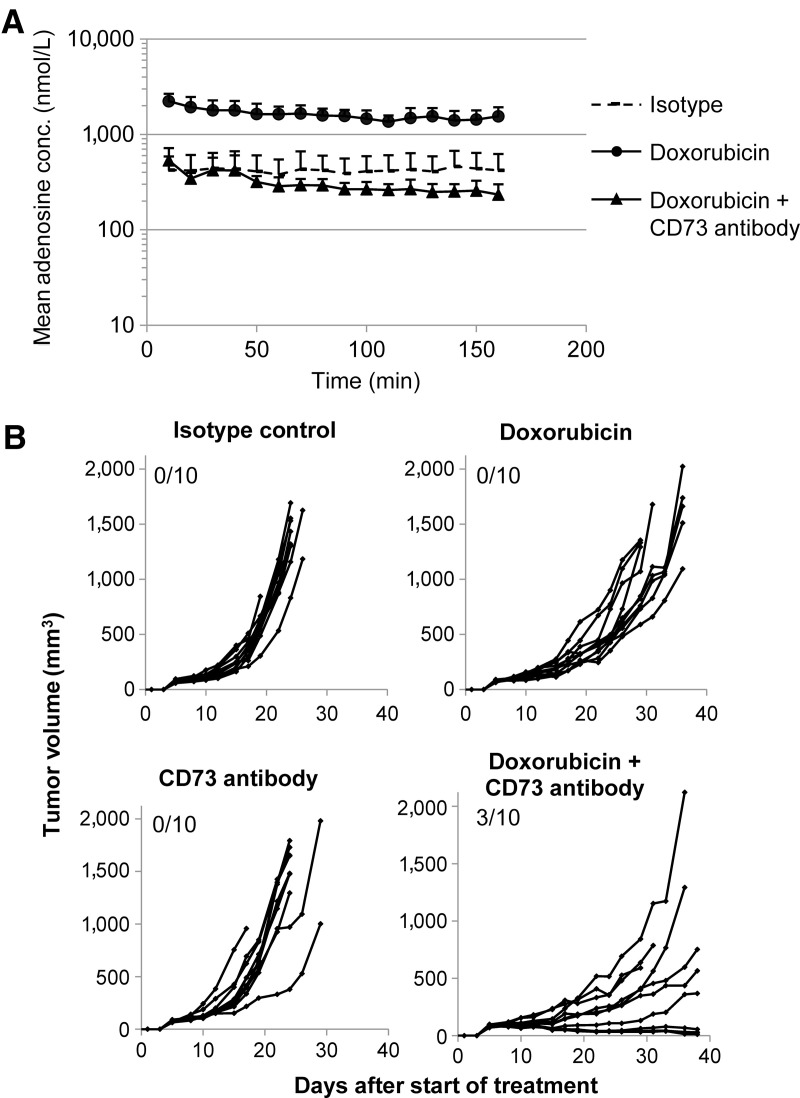
Despite some impressive clinical results with immune checkpoint inhibitors, the majority of patients with cancer do not respond to these agents, in part due to immunosuppressive mechanisms in the tumor microenvironment. High levels of adenosine in tumors can suppress immune cell function, and strategies to target the pathway involved in its production have emerged. CD73 is a key enzyme involved in adenosine production. This led us to identify a novel humanized antagonistic CD73 antibody, mAb19, with distinct binding properties. mAb19 potently inhibits the enzymatic activity of CD73 , resulting in an inhibition of adenosine formation and enhanced T-cell activation. We then investigated the therapeutic potential of combining CD73 antagonism with other immune modulatory and chemotherapeutic agents. Combination of mAb19 with a PD-1 inhibitor increased T-cell activation Interestingly, this effect could be further enhanced with an agonist of the adenosine receptor ADORA3. Adenosine levels were found to be elevated upon doxorubicin treatment , which could be blocked by CD73 inhibition. Combining CD73 antagonism with doxorubicin resulted in superior responses Furthermore, a retrospective analysis of rectal cancer patient samples demonstrated an upregulation of the adenosine pathway upon chemoradiation, providing further rationale for combining CD73 inhibition with chemotherapeutic agents.This study demonstrates the ability of a novel CD73 antibody to enhance T-cell function through the potent suppression of adenosine levels. In addition, the data highlight combination opportunities with standard of care therapies as well as with an ADORA3 receptor agonist to treat patients with solid tumors.
尽管免疫检查点抑制剂在临床上取得了一些令人印象深刻的结果,但大多数癌症患者对这些药物没有反应,部分原因是肿瘤微环境中的免疫抑制机制。肿瘤中高水平的腺苷可以抑制免疫细胞的功能,因此出现了靶向其产生途径的策略。CD73 是参与腺苷产生的关键酶。这促使我们鉴定出一种新型的人源化拮抗 CD73 抗体 mAb19,其具有独特的结合特性。mAb19 可强力抑制 CD73 的酶活性,导致腺苷形成受到抑制和 T 细胞激活增强。然后,我们研究了将 CD73 拮抗作用与其他免疫调节和化疗药物联合使用的治疗潜力。mAb19 与 PD-1 抑制剂联合使用可增强 T 细胞激活。有趣的是,用腺苷受体 ADORA3 的激动剂可进一步增强这种作用。阿霉素治疗后发现腺苷水平升高,可通过 CD73 抑制阻断。CD73 拮抗作用与阿霉素联合使用可产生更好的反应。此外,对直肠癌患者样本的回顾性分析表明,在放化疗后,腺苷途径上调,为 CD73 抑制与化疗药物联合使用提供了进一步的依据。本研究证明了一种新型 CD73 抗体通过强力抑制腺苷水平来增强 T 细胞功能的能力。此外,数据突出了与标准治疗方法以及 ADORA3 受体激动剂联合使用的联合机会,以治疗实体瘤患者。