Department of Orthopaedic Surgery and Traumatology, Kantonsspital Baselland (Bruderholz, Liestal, Laufen), 4101, Bruderholz, Switzerland.
University of Basel, Basel, Switzerland.
Knee Surg Sports Traumatol Arthrosc. 2022 Feb;30(2):397-406. doi: 10.1007/s00167-021-06717-2. Epub 2021 Sep 5.
The purpose of this study was to investigate whether specific bone tracer uptake (BTU) patterns on preoperative SPECT/CT could predict which patients with varus alignment and medial overload would particularly benefit from medial opening-wedge high tibial osteotomy (MOWHTO). It was the hypothesis that an increased preoperative BTU relative to the reference BTU of the femur on SPECT/CT in the lateral and patellar compartments of the knee are predictive factors for inferior clinical outcome and that the clinical outcome correlates with the extent of alignment correction.
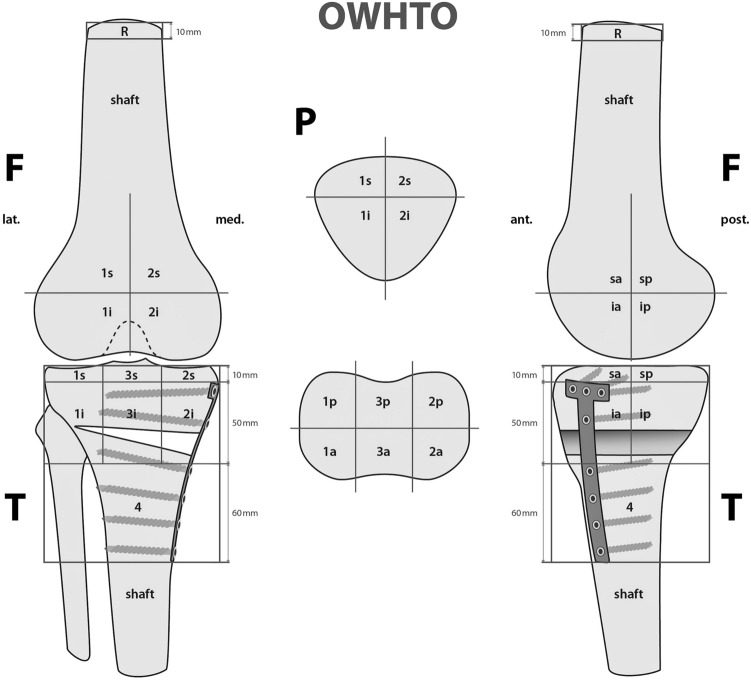
Twenty-three knees from 22 patients who underwent MOWHTO for medial compartment overload were investigated preoperatively using Tc-99m-SPECT/CT. BTU was quantified and localised to specific joint areas according to a previously validated scheme. Pre- and postoperative mechanical alignment was measured. Clinical outcome was assessed at a median of 24 months (range 11-30) after MOWHTO by collecting the WOMAC score.
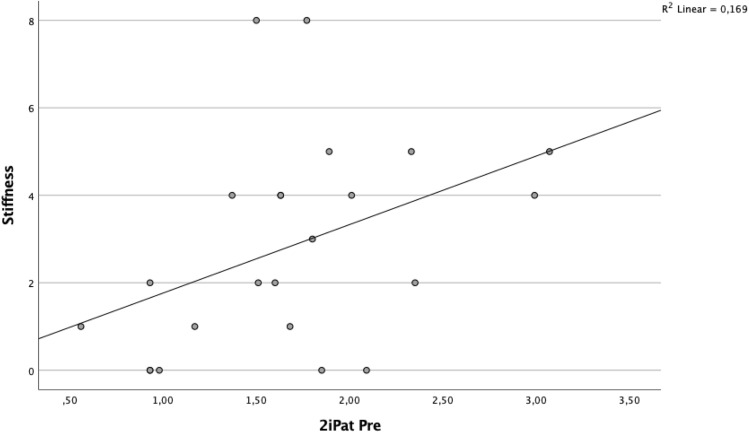
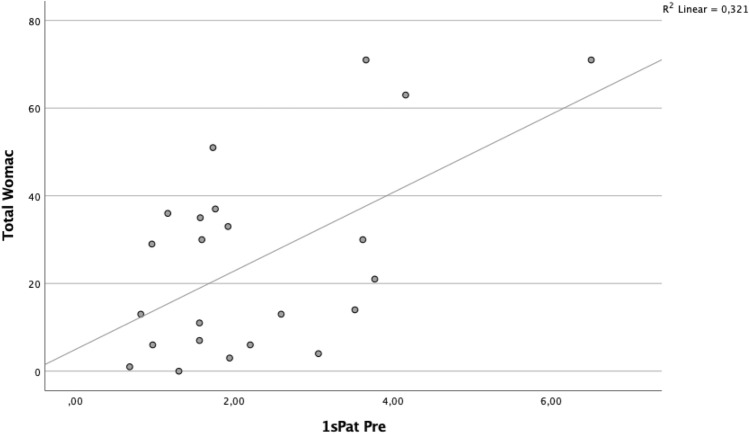
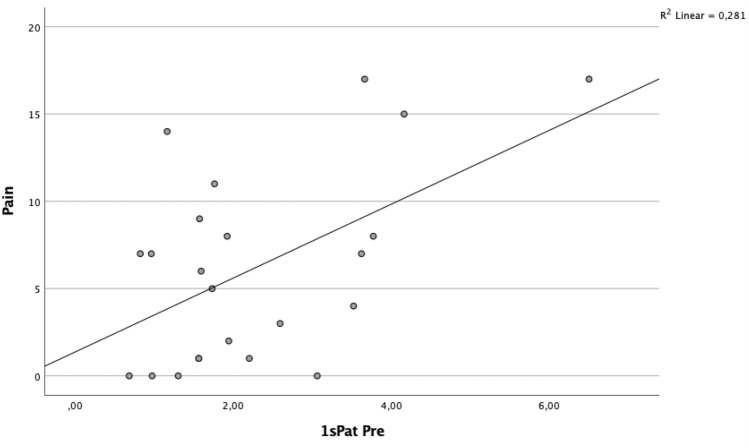
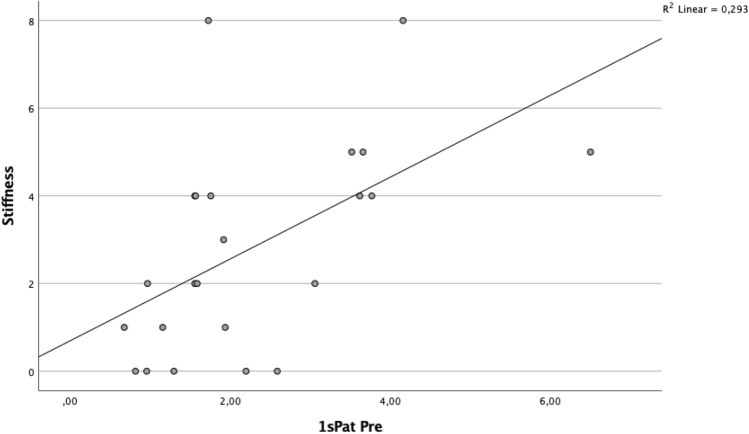
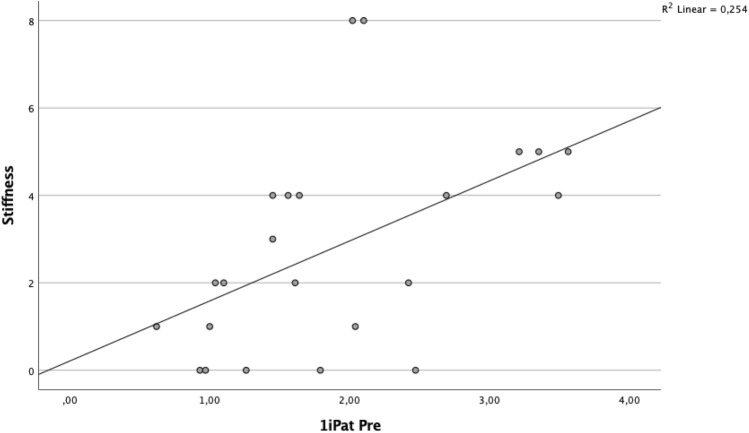
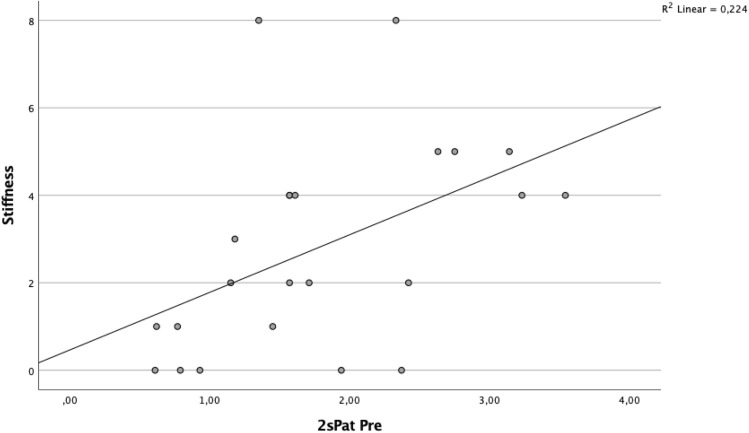
Significant correlations between BTU in the patellar area and the total WOMAC score and its subcategories pain and stiffness were found. Thus, BTU in the 1sPat area (superior lateral patellar compartment) correlated with total WOMAC (rho = 0.43, p = 0.04), pain subcategory (rho = 0.43, p = 0.04), and stiffness subcategory (rho = 0.59, p = 0.003). No significant correlations were found between alignment correction, age, gender and WOMAC.
This study highlights the role of preoperative SPECT in modern knee surgery to obtain information about the loading pattern on different compartments of the knee. Despite the limited number of participants, the present study shows that a preoperative SPECT/CT scan can help the treating surgeons to identify patients who may be at risk of inferior clinical outcome if an MOWHTO is considered, as an elevated BTU in the patellar region on preoperative SPECT/CT appears to be a potential risk factor for postoperative pain and stiffness.
Level III.
本研究旨在探讨术前 SPECT/CT 上特定骨示踪剂摄取(BTU)模式是否可预测哪些存在内翻畸形和内侧负荷过重的患者将特别受益于内侧开放楔形胫骨高位截骨术(MOWHTO)。假设在膝关节外侧和髌旁间隙的 SPECT/CT 上,与股骨参考 BTU 相比,术前 BTU 增加是临床结果较差的预测因素,且临床结果与对线校正程度相关。
对 22 例因内侧间隙负荷过重而行 MOWHTO 的 23 膝患者进行术前 Tc-99m-SPECT/CT 检查。根据先前验证的方案对 BTU 进行定量并定位到特定关节区域。测量术前和术后的机械对线。MOWHTO 后中位数为 24 个月(11-30 个月)进行临床评估,通过收集 WOMAC 评分。
发现髌旁区 BTU 与 WOMAC 总分及其疼痛和僵硬亚组之间存在显著相关性。因此,1sPat 区(髌骨外侧上间隙)的 BTU 与 WOMAC 总分(rho=0.43,p=0.04)、疼痛亚组(rho=0.43,p=0.04)和僵硬亚组(rho=0.59,p=0.003)相关。对线校正、年龄、性别与 WOMAC 之间无显著相关性。
本研究强调了术前 SPECT 在现代膝关节手术中的作用,以获取有关膝关节不同间隙负荷模式的信息。尽管参与者数量有限,但本研究表明,术前 SPECT/CT 扫描可帮助治疗医生识别考虑行 MOWHTO 时可能临床结果较差的患者,因为术前 SPECT/CT 上髌旁区的 BTU 升高似乎是术后疼痛和僵硬的潜在危险因素。
III 级。