Winslow Wendy, McDonough Ian, Tallino Savannah, Decker Annika, Vural Austin S, Velazquez Ramon
Arizona State University-Banner Neurodegenerative Disease Research Center at the Biodesign Institute, Arizona State University, Tempe, AZ, United States.
School of Life Sciences, Arizona State University, Tempe, AZ, United States.
Front Aging Neurosci. 2021 Aug 13;13:720214. doi: 10.3389/fnagi.2021.720214. eCollection 2021.
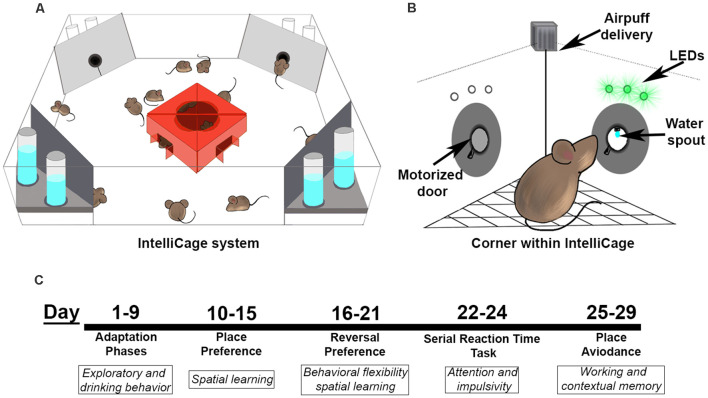
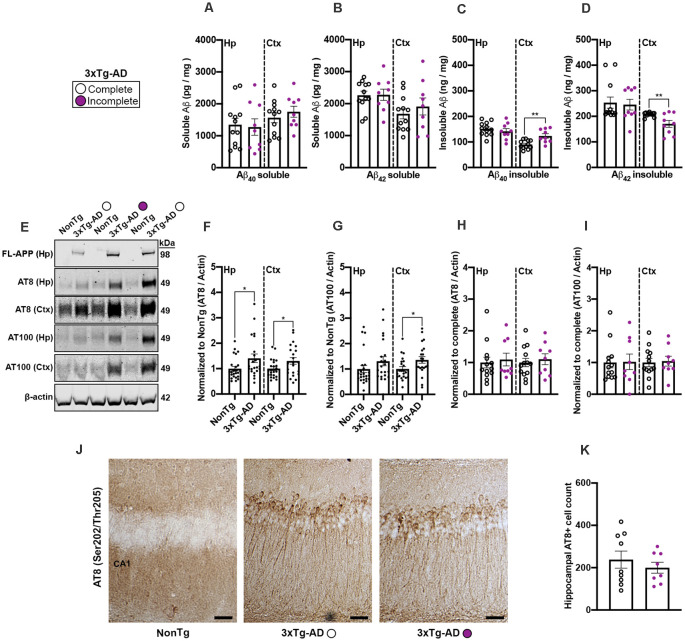
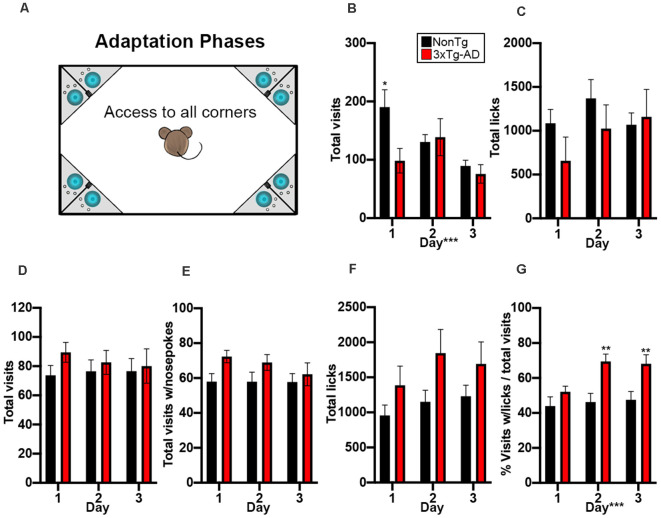
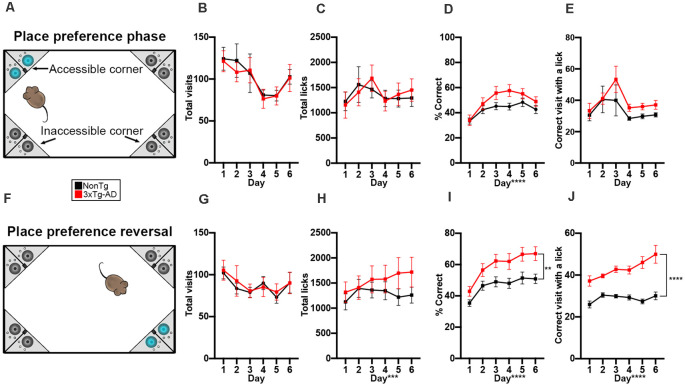
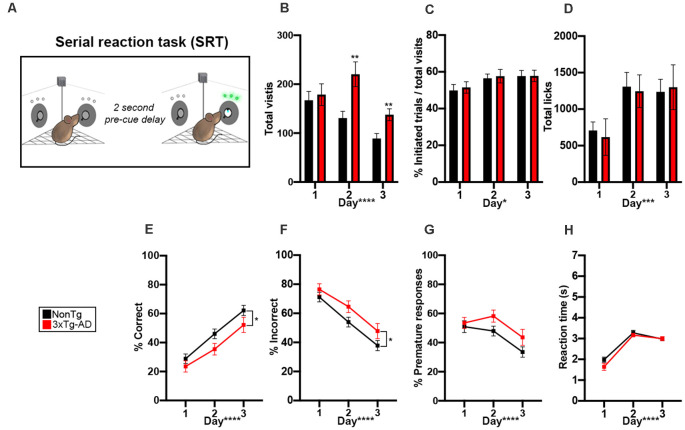
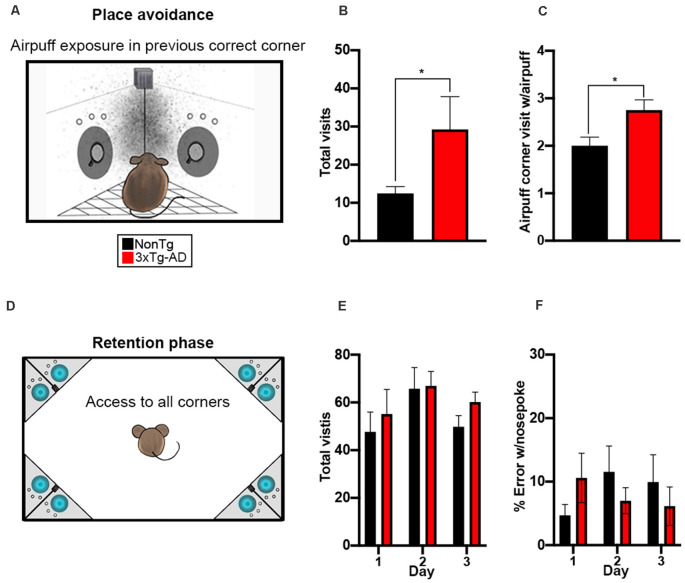
Transgenic rodent models of Alzheimer's disease (AD) were designed to study mechanisms of pathogenesis and connect these mechanisms with cognitive decline. Measurements of cognition in rodents can be confounded, however, by human handling and interaction; the IntelliCage was created to circumvent these issues while measuring various facets of cognition in a social environment with water consumption as the primary motivator for task completion. Here, for the first time, we examined the behavioral performance of 3xTg-AD mice in the IntelliCage. Seven- to 9-month-old female 3xTg-AD and non-transgenic (NonTg) mice were tested for 29 days in the IntelliCage to measure prefrontal cortical and hippocampal function. We found that a higher percentage of NonTg mice (86.96%) were able to successfully complete the training (adaptation) phases compared to their 3xTg-AD (57.14%) counterparts. Furthermore, the 3xTg-AD mice showed impairments in attention and working memory. Interestingly, we found that differences in body and brain weight between NonTg and 3xTg-AD mice were associated with whether mice were able to complete the IntelliCage tasks. 3xTg-AD mice that completed IntelliCage tasks had lower cortical insoluble amyloid-β fractions than their 3xTg-AD counterparts who failed to complete the tasks. Collectively, these results demonstrate deficits in cognition in the 3xTg-AD mouse and inform scientists of important factors to consider when testing this transgenic model in the IntelliCage.
阿尔茨海默病(AD)转基因啮齿动物模型旨在研究发病机制,并将这些机制与认知衰退联系起来。然而,啮齿动物的认知测量可能会因人类处理和互动而受到干扰;IntelliCage的创建是为了在以饮水作为任务完成的主要动机的社交环境中测量认知的各个方面时规避这些问题。在此,我们首次在IntelliCage中检测了3xTg-AD小鼠的行为表现。对7至9月龄的雌性3xTg-AD和非转基因(NonTg)小鼠在IntelliCage中进行了29天的测试,以测量前额叶皮质和海马功能。我们发现,与3xTg-AD小鼠(57.14%)相比,更高比例的NonTg小鼠(86.96%)能够成功完成训练(适应)阶段。此外,3xTg-AD小鼠在注意力和工作记忆方面表现出损伤。有趣的是,我们发现NonTg和3xTg-AD小鼠之间的体重和脑重差异与小鼠是否能够完成IntelliCage任务有关。完成IntelliCage任务的3xTg-AD小鼠的皮质不溶性淀粉样β蛋白组分低于未完成任务的3xTg-AD小鼠。总体而言,这些结果证明了3xTg-AD小鼠存在认知缺陷,并告知科学家在IntelliCage中测试这种转基因模型时需要考虑的重要因素。