Robison Lisa S, Gannon Olivia J, Thomas Melissa A, Salinero Abigail E, Abi-Ghanem Charly, Poitelon Yannick, Belin Sophie, Zuloaga Kristen L
Department of Neuroscience & Experimental Therapeutics, Albany Medical College, 47 New Scotland Avenue, MC-136, Albany, NY, 12208, USA.
J Neuroinflammation. 2020 Sep 29;17(1):285. doi: 10.1186/s12974-020-01956-5.
Hypothalamic dysfunction occurs early in the clinical course of Alzheimer's disease (AD), likely contributing to disturbances in feeding behavior and metabolic function that are often observed years prior to the onset of cognitive symptoms. Late-life weight loss and low BMI are associated with increased risk of dementia and faster progression of disease. However, high-fat diet and metabolic disease (e.g., obesity, type 2 diabetes), particularly in mid-life, are associated with increased risk of AD, as well as exacerbated AD pathology and behavioral deficits in animal models. In the current study, we explored possible relationships between hypothalamic function, diet/metabolic status, and AD. Considering the sex bias in AD, with women representing two-thirds of AD patients, we sought to determine whether these relationships vary by sex.
WT and 3xTg-AD male and female mice were fed a control (10% fat) or high-fat (HF 60% fat) diet from ~ 3-7 months of age, then tested for metabolic and hypothalamic disturbances.
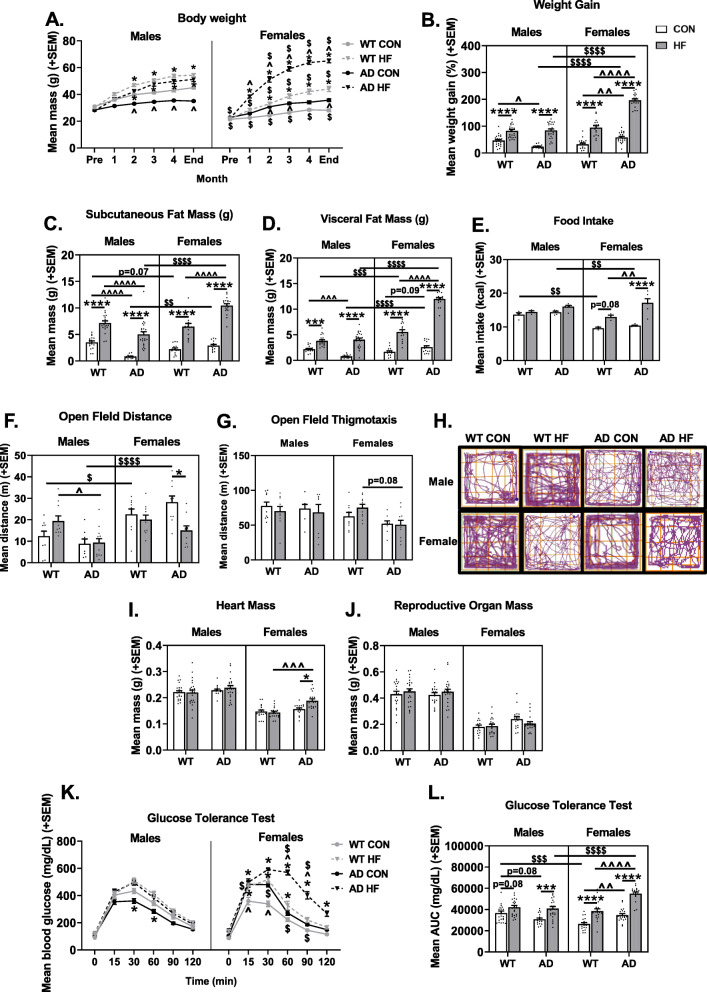
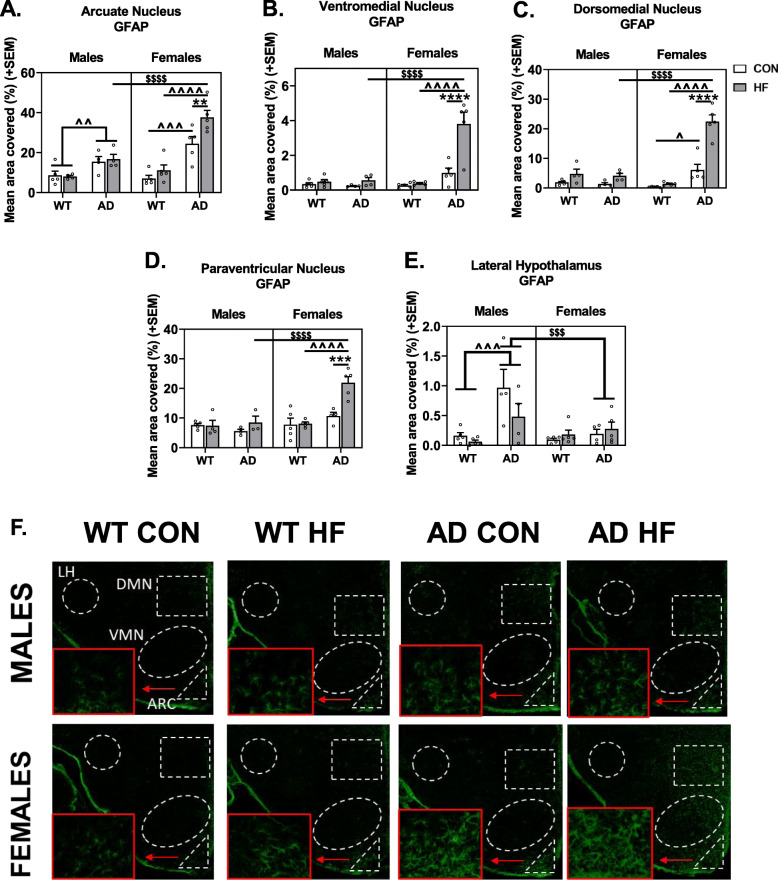
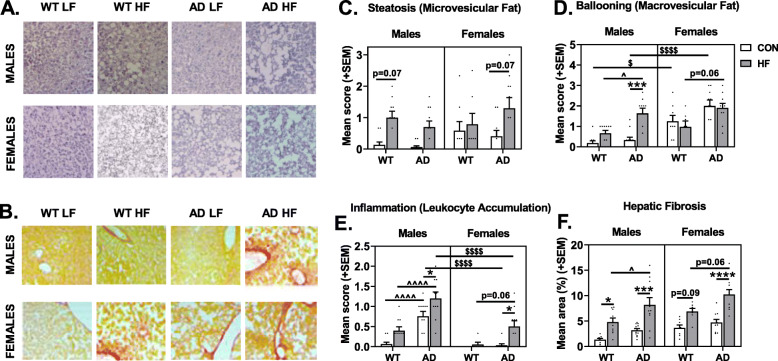
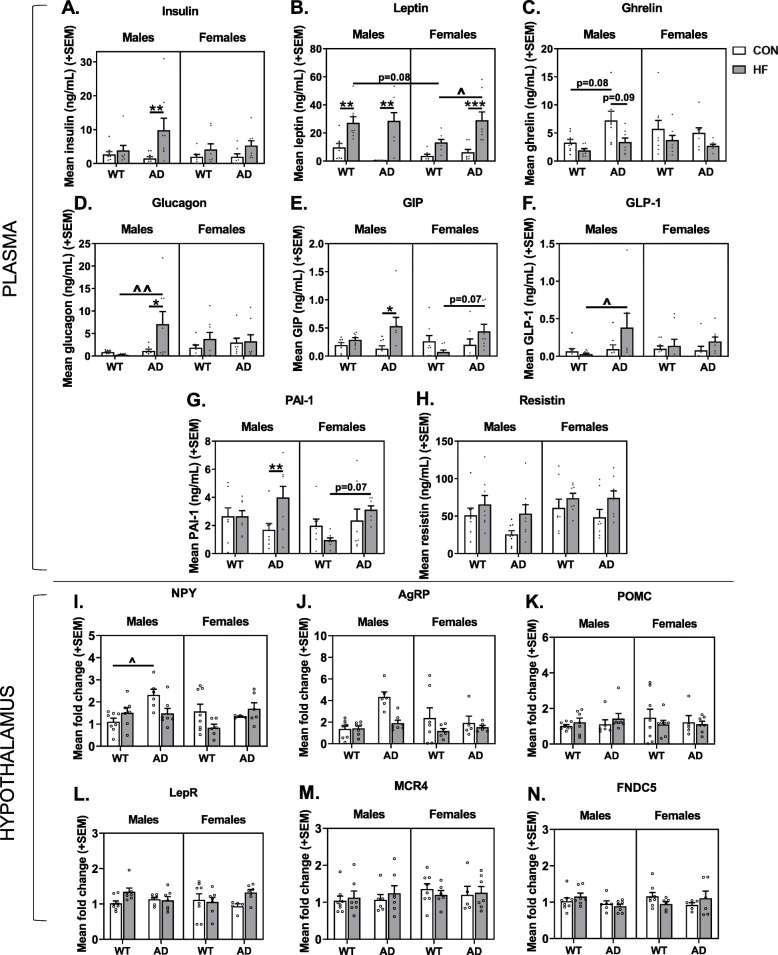
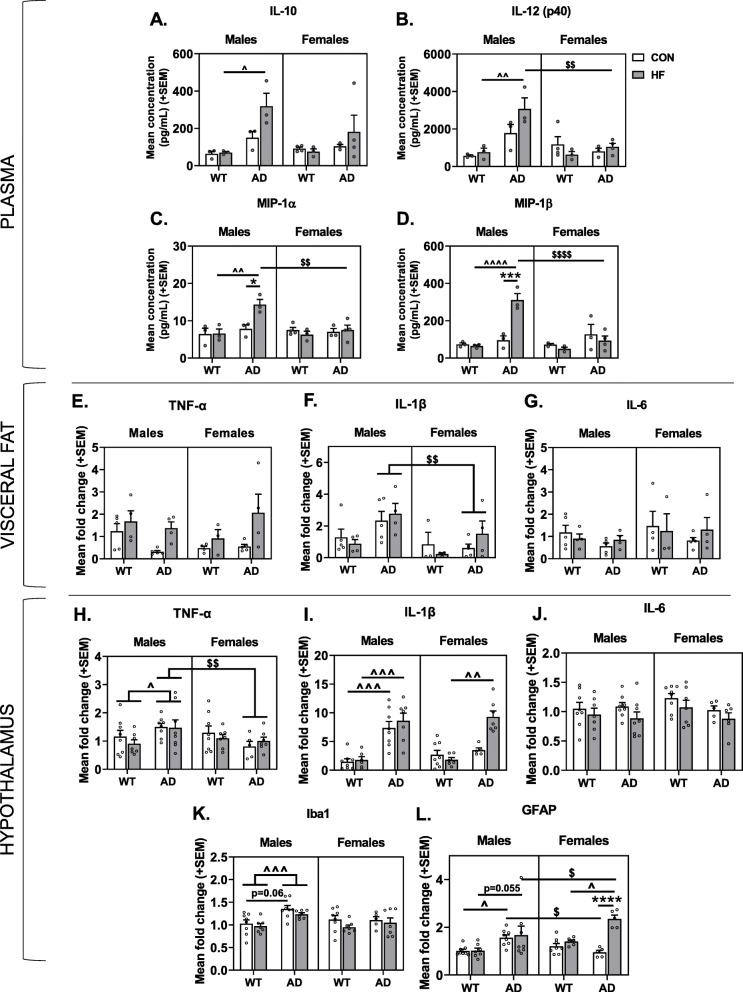
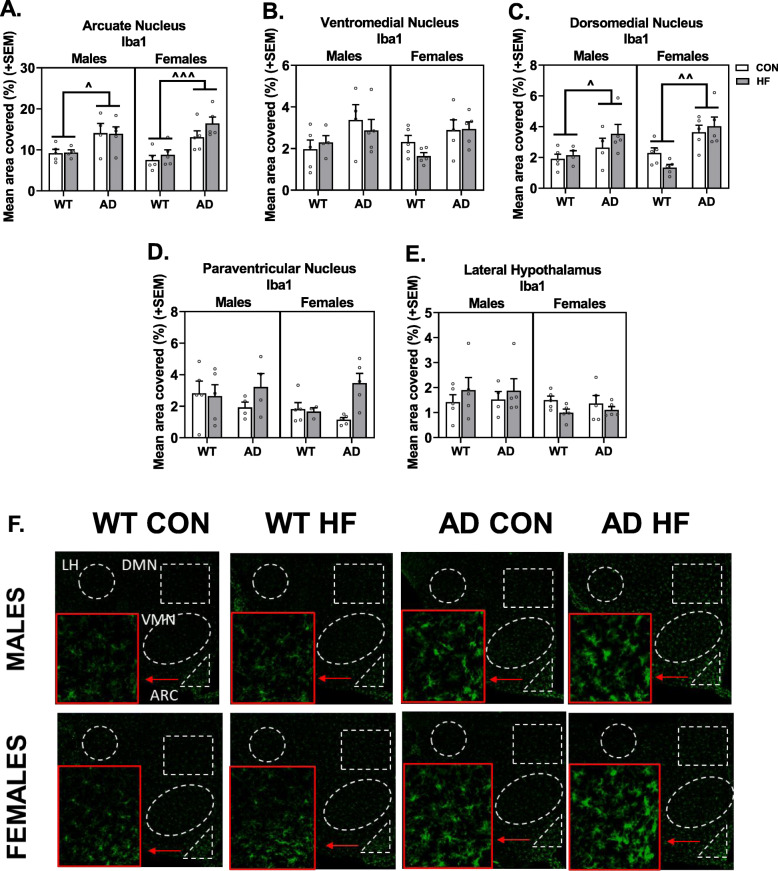
On control diet, male 3xTg-AD mice displayed decreased body weight, reduced fat mass, hypoleptinemia, and mild systemic inflammation, as well as increased expression of gliosis- and inflammation-related genes in the hypothalamus (Iba1, GFAP, TNF-α, IL-1β). In contrast, female 3xTg-AD mice on control diet displayed metabolic disturbances opposite that of 3xTg-AD males (increased body and fat mass, impaired glucose tolerance). HF diet resulted in expected metabolic alterations across groups (increased body and fat mass; glucose intolerance; increased plasma insulin and leptin, decreased ghrelin; nonalcoholic fatty liver disease-related pathology). HF diet resulted in the greatest weight gain, adiposity, and glucose intolerance in 3xTg-AD females, which were associated with markedly increased hypothalamic expression of GFAP and IL-1β, as well as GFAP labeling in several hypothalamic nuclei that regulate energy balance. In contrast, HF diet increased diabetes markers and systemic inflammation preferentially in AD males but did not exacerbate hypothalamic inflammation in this group.
These findings provide further evidence for the roles of hypothalamic and metabolic dysfunction in AD, which in the 3xTg-AD mouse model appears to be dependent on both sex and diet.
下丘脑功能障碍在阿尔茨海默病(AD)临床病程早期就会出现,可能导致进食行为和代谢功能紊乱,这些紊乱在认知症状出现前数年就经常被观察到。晚年体重减轻和低体重指数与痴呆风险增加及疾病进展加快有关。然而,高脂肪饮食和代谢疾病(如肥胖、2型糖尿病),尤其是在中年时,与AD风险增加以及动物模型中AD病理加重和行为缺陷有关。在本研究中,我们探讨了下丘脑功能、饮食/代谢状态与AD之间的可能关系。考虑到AD存在性别差异,女性占AD患者的三分之二,我们试图确定这些关系是否因性别而异。
从约3至7月龄开始,给野生型(WT)和3xTg-AD雄性及雌性小鼠喂食对照(10%脂肪)或高脂肪(HF,60%脂肪)饮食,然后检测其代谢和下丘脑紊乱情况。
在对照饮食条件下,雄性3xTg-AD小鼠体重下降、脂肪量减少、瘦素血症降低、全身炎症轻微,下丘脑(离子钙结合衔接分子1、胶质纤维酸性蛋白、肿瘤坏死因子-α、白细胞介素-1β)中与胶质增生和炎症相关基因的表达增加。相比之下,对照饮食条件下的雌性3xTg-AD小鼠表现出与3xTg-AD雄性小鼠相反的代谢紊乱(体重和脂肪量增加、糖耐量受损)。HF饮食导致各实验组出现预期的代谢改变(体重和脂肪量增加、葡萄糖不耐受、血浆胰岛素和瘦素增加、胃饥饿素减少、非酒精性脂肪性肝病相关病理改变)。HF饮食导致3xTg-AD雌性小鼠体重增加、肥胖和葡萄糖不耐受最为明显,这与下丘脑胶质纤维酸性蛋白和白细胞介素-1β的表达显著增加以及几个调节能量平衡的下丘脑核团中的胶质纤维酸性蛋白标记有关。相比之下,HF饮食优先增加了AD雄性小鼠的糖尿病标志物和全身炎症,但并未加重该组小鼠的下丘脑炎症。
这些发现为下丘脑和代谢功能障碍在AD中的作用提供了进一步证据,在3xTg-AD小鼠模型中,这似乎取决于性别和饮食。