Zhang Guozhuang, Wei Guangfei, Wei Fugang, Chen Zhongjian, He Mingjun, Jiao Shuo, Wang Yong, Dong Linlin, Chen Shilin
Key Laboratory of Beijing for Identification and Safety Evaluation of Chinese Medicine, Institute of Chinese Materia Medica, China Academy of Chinese Medical Sciences, Beijing, China.
Wenshan Miaoxiang Notoginseng Technology, Co., Ltd., Wenshan, China.
Front Microbiol. 2021 Aug 16;12:713523. doi: 10.3389/fmicb.2021.713523. eCollection 2021.
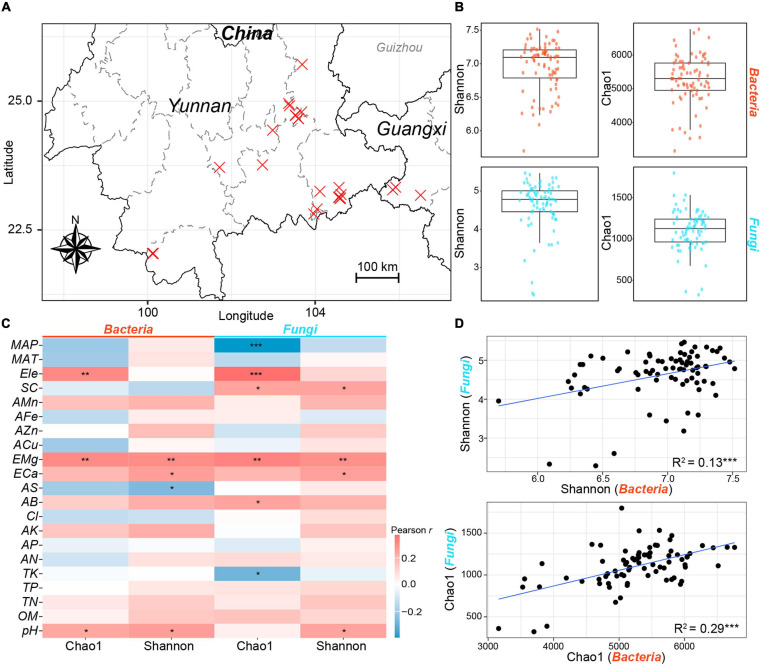
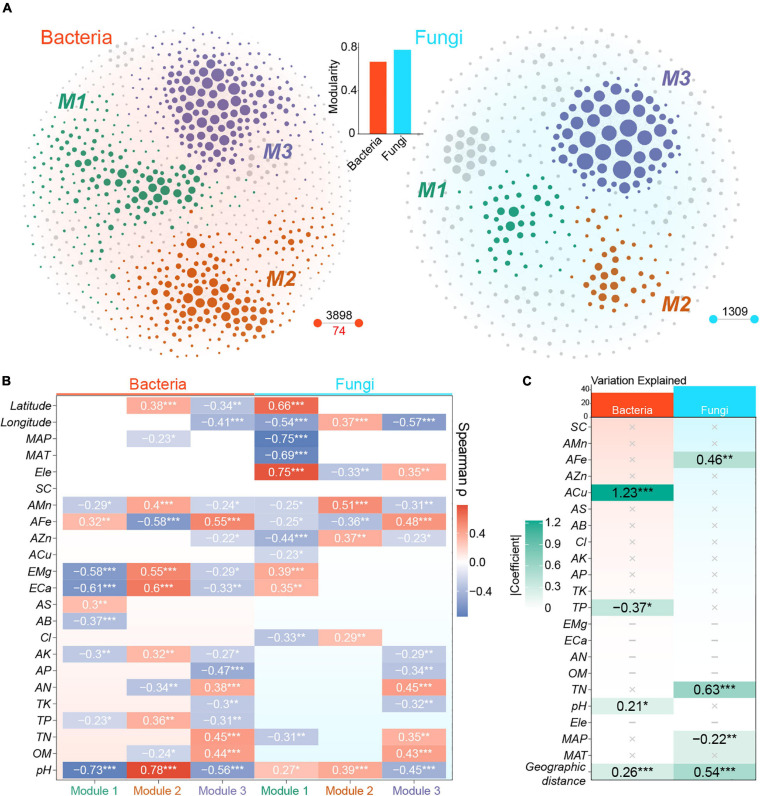
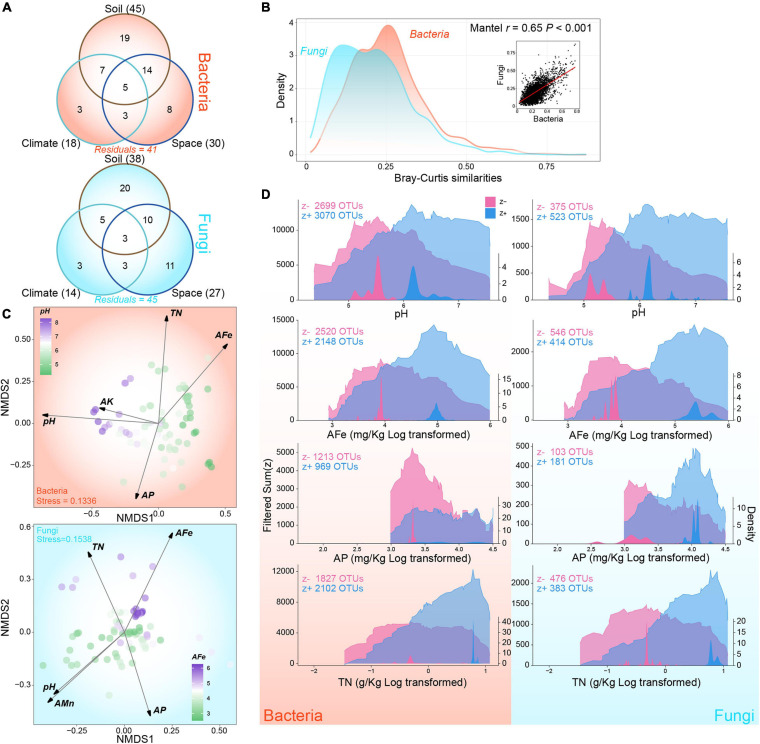
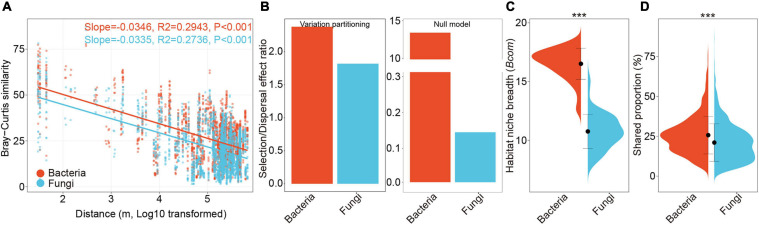
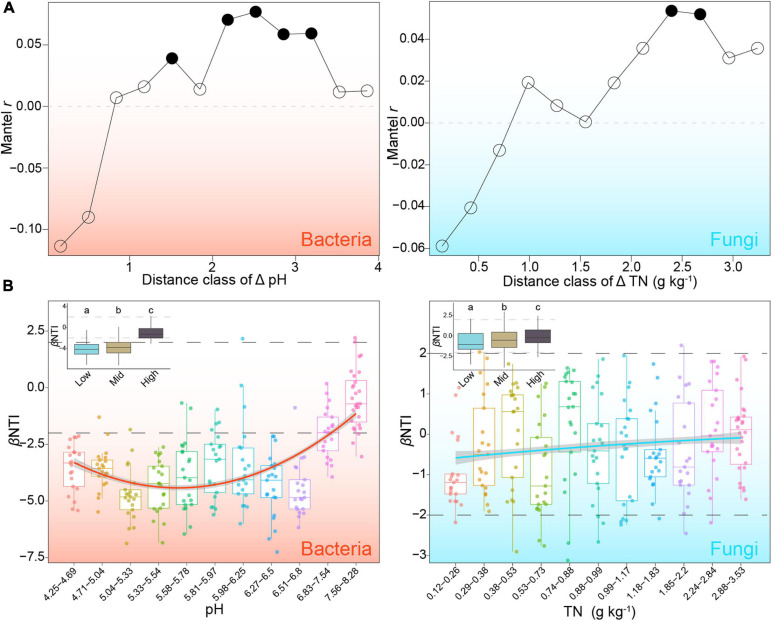
Understanding the ecological patterns of rhizosphere microbial communities is critical for propelling sustainable agriculture and managing ecosystem functions by exploiting microorganisms. However, this knowledge is still unclear, especially under host-associated large-scale and regarding the comparison between bacteria and fungi. We examined community assembly processes and community characters including environmental thresholds and co-occurrence patterns across the cultivatable area of for bacteria and fungi. Both are vital members of the rhizosphere but differ considerably in their life history and dispersal potentiality. Edaphic factors drove the parallel variations of bacterial and fungal communities. Although bacterial and fungal communities exhibited similar biogeographic patterns, the assembly of fungi was more driven by dispersal limitation than selection compared with bacteria. This finding supported the 'size-dispersal' hypothesis. pH and total nitrogen respectively mediated the relative importance of deterministic and stochastic processes in shaping bacterial and fungal communities. In addition, fungal communities exhibited potentially broader environmental thresholds and more modular co-occurrence patterns than bacteria (bacteria: 0.67; fungi: 0.78). These results emphasized the importance of dispersal limitation in structuring rhizosphere microbiota and shaping community features of ecologically distinct microorganisms. This study provides insights into the improved prediction and management of the key functions of rhizosphere microbiota.
了解根际微生物群落的生态模式对于推动可持续农业发展以及通过利用微生物来管理生态系统功能至关重要。然而,这方面的知识仍不明确,尤其是在宿主相关的大规模环境下以及细菌和真菌之间的比较方面。我们研究了细菌和真菌在可培养区域内的群落组装过程以及群落特征,包括环境阈值和共现模式。细菌和真菌都是根际的重要成员,但它们的生活史和扩散潜力差异很大。土壤因子驱动了细菌和真菌群落的平行变化。虽然细菌和真菌群落表现出相似的生物地理模式,但与细菌相比,真菌群落的组装更多地受扩散限制而非选择的驱动。这一发现支持了“大小 - 扩散”假说。pH值和总氮分别介导了确定性和随机过程在塑造细菌和真菌群落中的相对重要性。此外,真菌群落比细菌表现出更广泛的潜在环境阈值和更模块化的共现模式(细菌:0.67;真菌:0.78)。这些结果强调了扩散限制在构建根际微生物群和塑造生态上不同的微生物群落特征方面的重要性。本研究为改进根际微生物群关键功能的预测和管理提供了见解。