Liang Sitai, Yadav Mukesh, Vogel Kristine S, Habib Samy L
Department of Cell Systems and Anatomy The University of Texas Health Science Center San Antonio Texas USA.
South Texas, Veterans Healthcare System San Antonio Texas USA.
FASEB Bioadv. 2021 Jul 8;3(9):730-743. doi: 10.1096/fba.2020-00134. eCollection 2021 Sep.
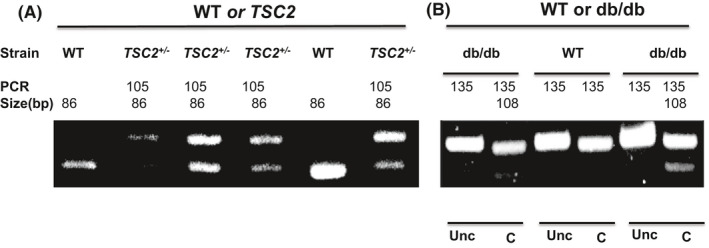
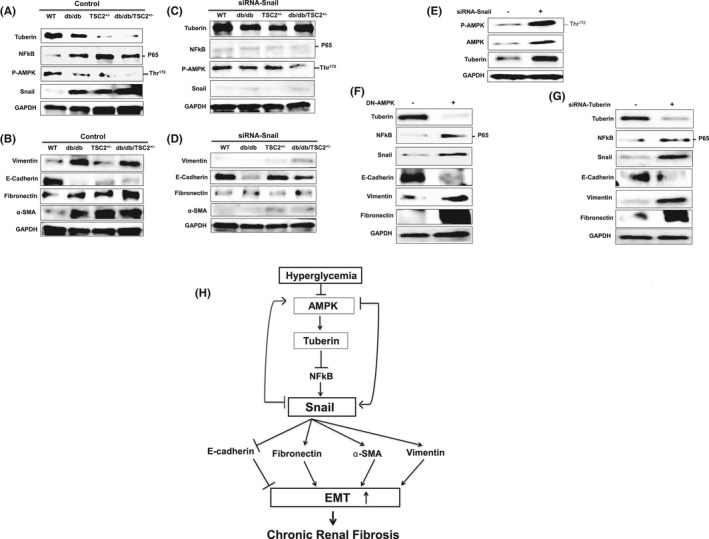
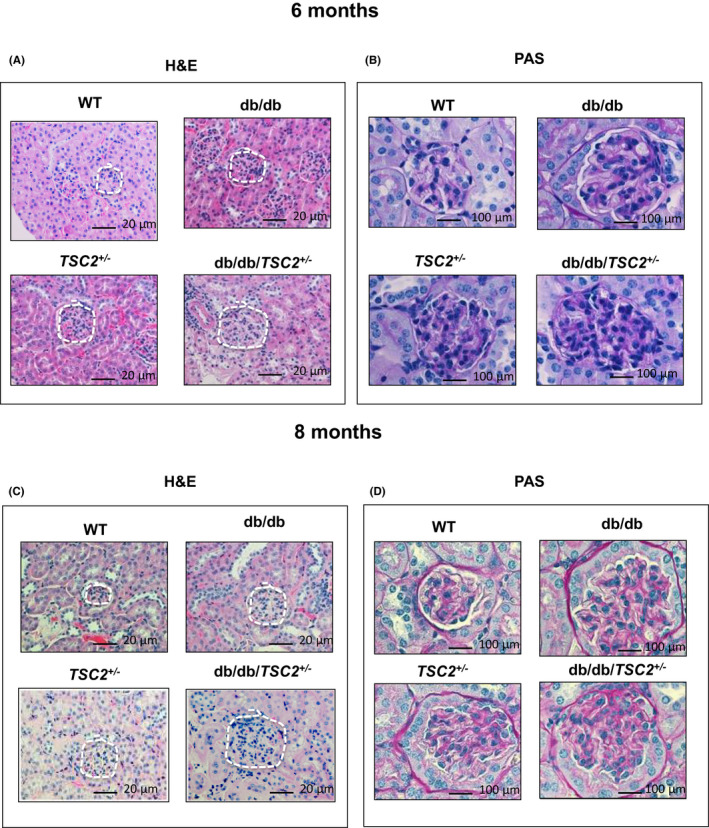
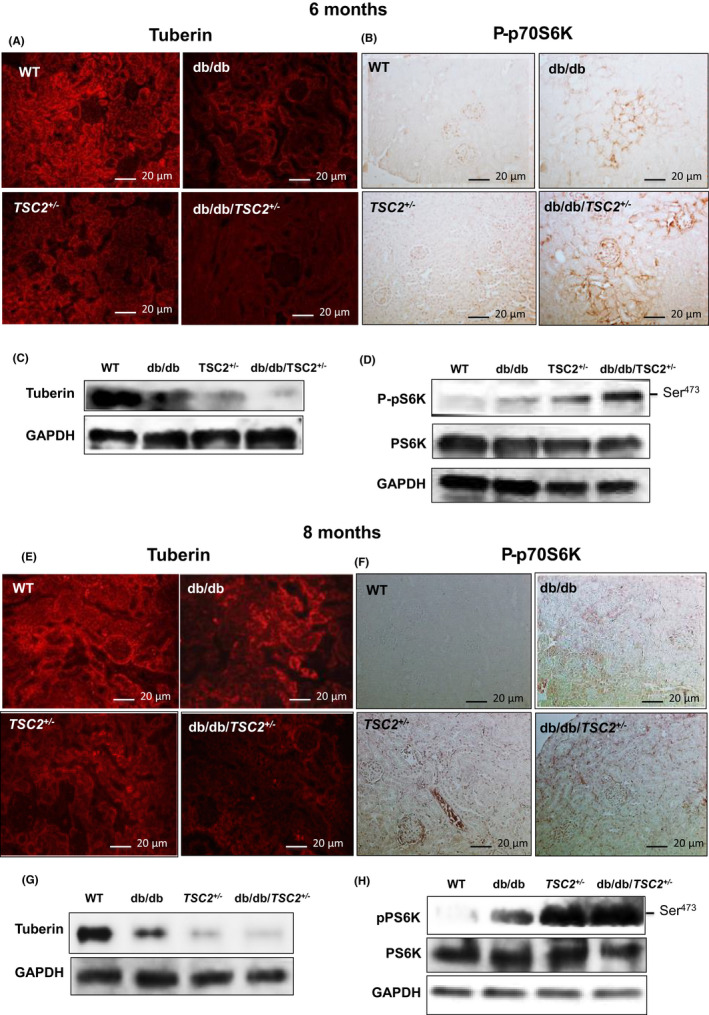
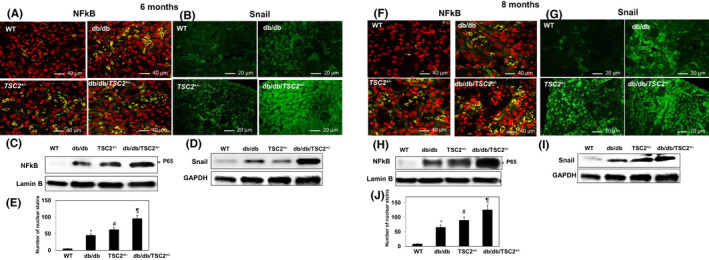
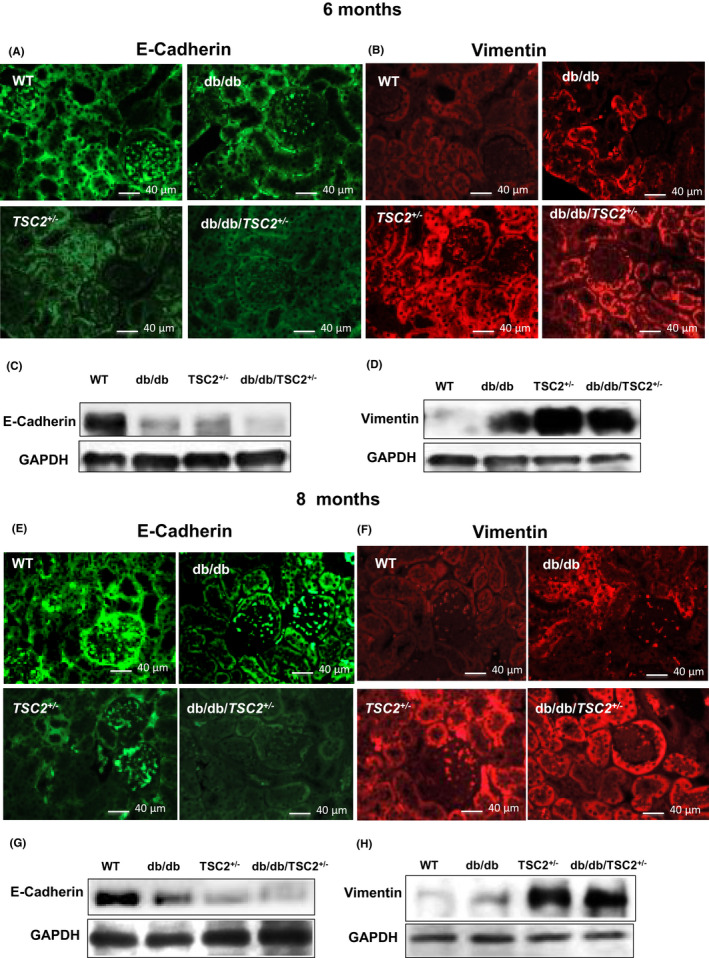
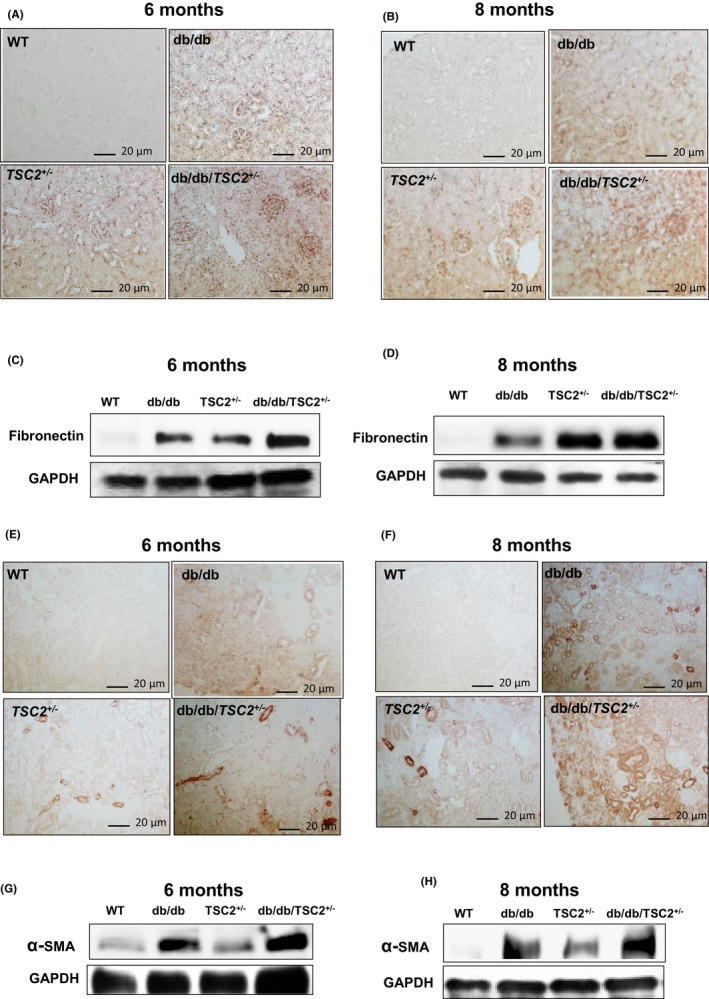
Epithelial-mesenchymal transition (EMT) plays an important role in tissue fibrosis following chronic exposure to hyperglycemia. This study investigates the role of chronic diabetes in regulating tuberin/snail/AMPK to enhance EMT and increase renal fibrosis. A new mouse model of db/db/ was generated by backcrossing db/db mice and mice. Wild type (WT), db/db, and dbdb/ mice were sacrificed at ages 6 and 8 months old. Tuberin protein level was significantly decreased in kidneys from diabetic compared to WT mice at both ages. In addition, tuberin and E-cadherin protein levels were significantly decreased in dbdb/ compared to and db/db mice. In contrast, p-PS6K, NFkB, snail, vimentin, fibronectin, and α-SMA protein levels were significantly increased in dbdb/ compared to db/db and mice at ages 6 and 8 months. Both downregulation of AMPK by DN-AMPK and downregulation of tuberin by siRNA resulted in increased NFkB, snail, and fibronectin protein expression and decreased E-cadherin protein expression in mouse primary renal proximal tubular cells. Interestingly, downregulation of snail by siRNA increased tuberin expression via feedback through activation of AMPK and reversed the expression of epithelial proteins such as E-cadherin as well as mesenchymal proteins such as fibronectin, NF-KB, vimentin, and α-SMA in mouse primary renal proximal tubular cells isolated from kidneys of four mice genotypes. The data show that chronic diabetes significantly decreases tuberin expression and that provides strong evidence that tuberin is a major key protein involved in regulating EMT. These data also demonstrated a novel role for snail in regulating of AMPK/tuberin to enhance EMT and renal cell fibrosis in diabetes.
上皮-间质转化(EMT)在长期暴露于高血糖后的组织纤维化过程中起重要作用。本研究调查慢性糖尿病在调节结节性硬化蛋白/蜗牛蛋白/AMPK以增强EMT和增加肾纤维化中的作用。通过将db/db小鼠与[未提及的小鼠品系]小鼠回交产生了一种新的db/db/[未提及的小鼠品系]小鼠模型。野生型(WT)、db/db、[未提及的小鼠品系]和db/db/[未提及的小鼠品系]小鼠在6个月和8个月龄时被处死。与WT小鼠相比,两个年龄段的糖尿病小鼠肾脏中结节性硬化蛋白水平均显著降低。此外,与[未提及的小鼠品系]和db/db小鼠相比,db/db/[未提及的小鼠品系]小鼠中结节性硬化蛋白和E-钙黏蛋白水平显著降低。相反,在6个月和8个月龄时,与db/db和[未提及的小鼠品系]小鼠相比,db/db/[未提及的小鼠品系]小鼠中p-PS6K、NFκB、蜗牛蛋白、波形蛋白、纤连蛋白和α-SMA蛋白水平显著升高。通过DN-AMPK下调AMPK以及通过siRNA下调结节性硬化蛋白,均导致小鼠原代肾近端小管细胞中NFκB、蜗牛蛋白和纤连蛋白蛋白表达增加,E-钙黏蛋白蛋白表达减少。有趣的是,通过siRNA下调蜗牛蛋白可通过激活AMPK的反馈作用增加结节性硬化蛋白表达,并逆转从小鼠四个基因型肾脏分离的小鼠原代肾近端小管细胞中上皮蛋白(如E-钙黏蛋白)以及间充质蛋白(如纤连蛋白、NF-κB、波形蛋白和α-SMA)的表达。数据表明慢性糖尿病显著降低结节性硬化蛋白表达,这提供了强有力的证据表明结节性硬化蛋白是参与调节EMT的主要关键蛋白。这些数据还证明了蜗牛蛋白在调节AMPK/结节性硬化蛋白以增强糖尿病中的EMT和肾细胞纤维化方面的新作用。