Division of Nephrology, Department of Medicine, University of Maryland School of Medicine, Baltimore, Maryland, USA.
Division of Gastroenterology, Department of Medicine, The Johns Hopkins University School of Medicine, Baltimore, Maryland, USA.
FASEB J. 2021 Oct;35(10):e21865. doi: 10.1096/fj.202100325RR.
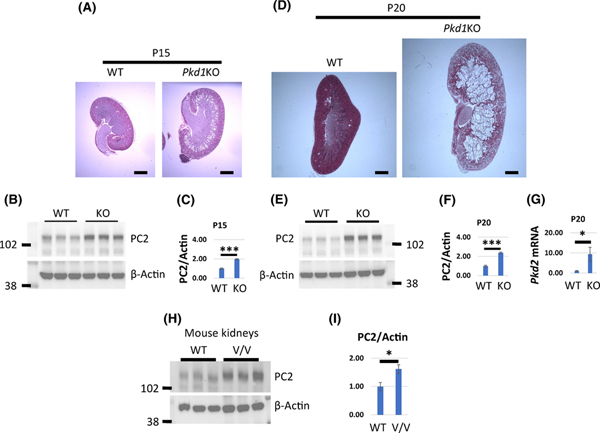
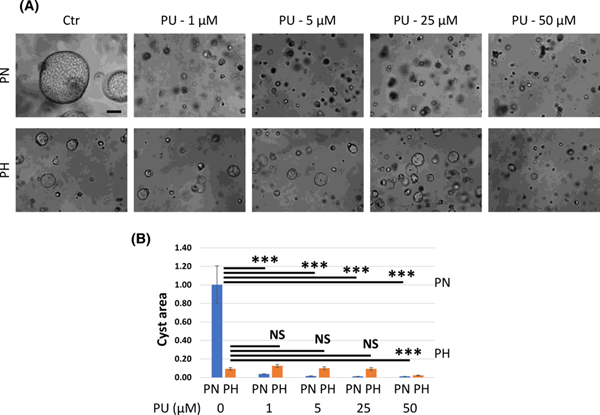
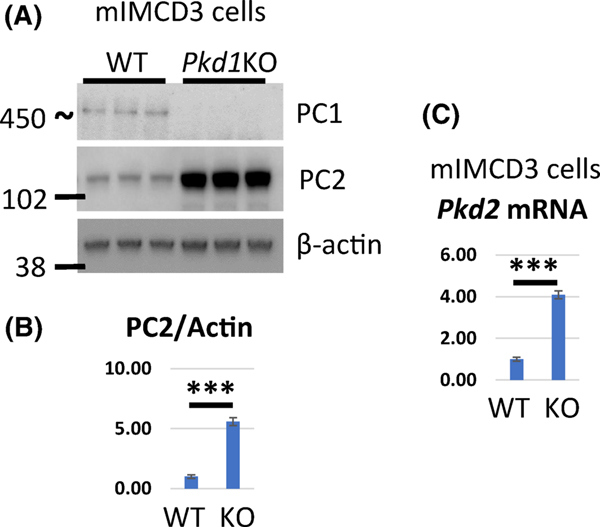
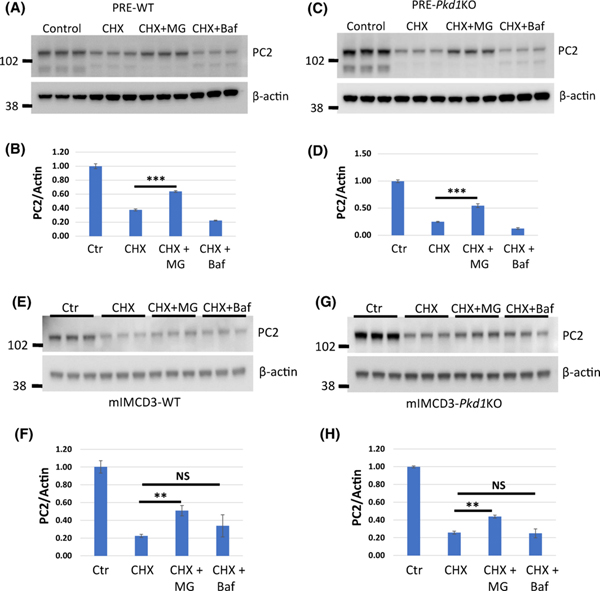
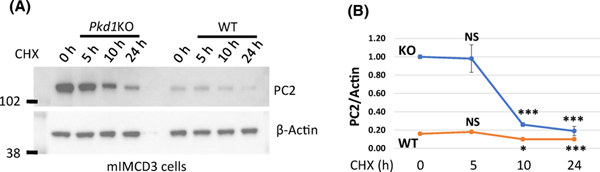
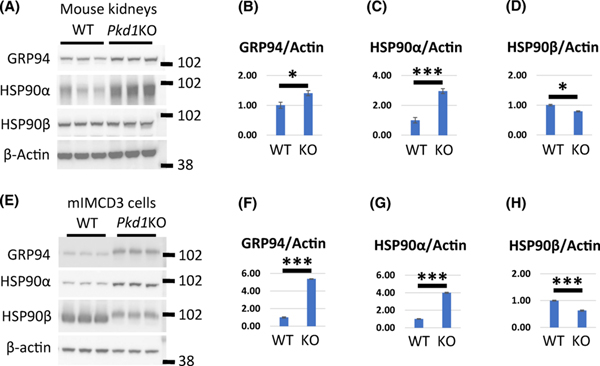
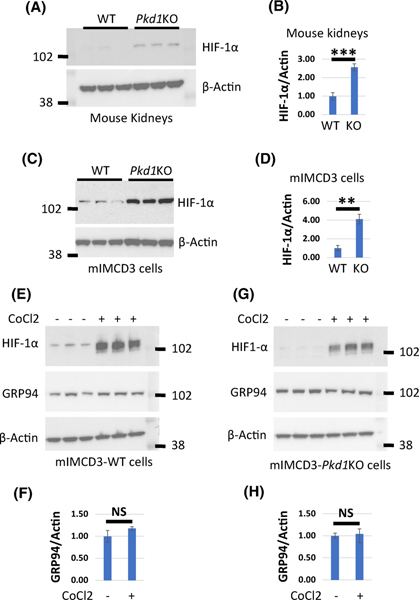
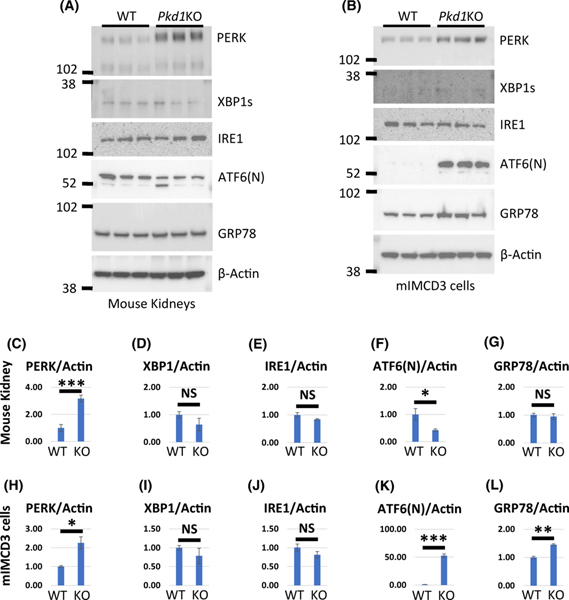
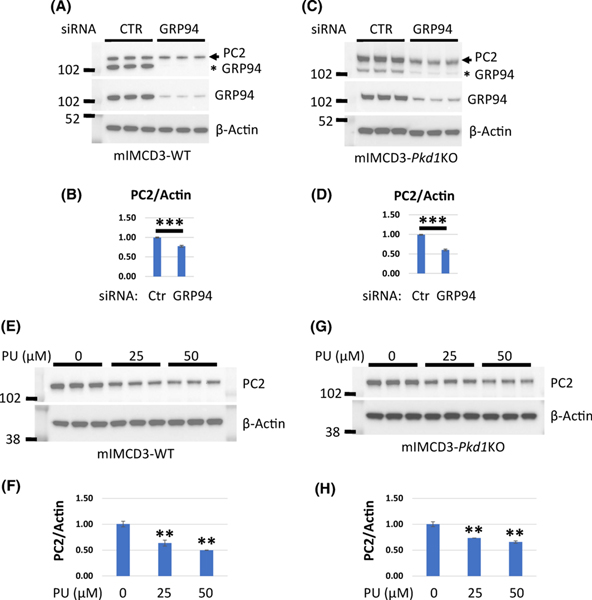
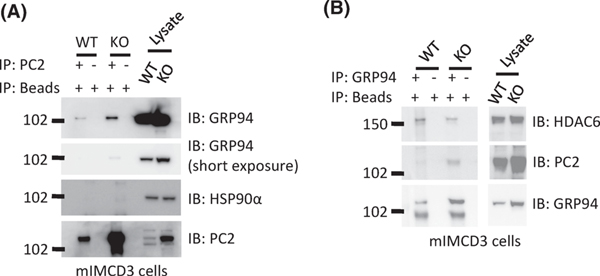
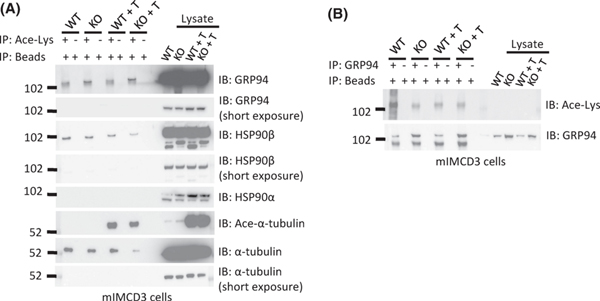
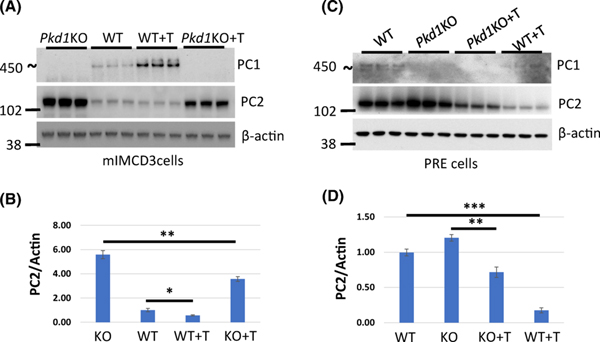
Autosomal dominant polycystic kidney disease is a common inherited renal disorder that results from mutations in either PKD1 or PKD2, encoding polycystin-1 (PC1) and polycystin-2 (PC2), respectively. Downregulation or overexpression of PKD1 or PKD2 in mouse models results in renal cyst formation, suggesting that the quantity of PC1 and PC2 needs to be maintained within a tight functional window to prevent cystogenesis. Here we show that enhanced PC2 expression is a common feature of PKD1 mutant tissues, in part due to an increase in Pkd2 mRNA. However, our data also suggest that more effective protein folding contributes to the augmented levels of PC2. We demonstrate that the unfolded protein response is activated in Pkd1 knockout kidneys and in Pkd1 mutant cells and that this is coupled with increased levels of GRP94, an endoplasmic reticulum protein that is a member of the HSP90 family of chaperones. GRP94 was found to physically interact with PC2 and depletion or chemical inhibition of GRP94 led to a decrease in PC2, suggesting that GRP94 serves as its chaperone. Moreover, GRP94 is acetylated and binds to histone deacetylase 6 (HDAC6), a known deacetylase and activator of HSP90 proteins. Inhibition of HDAC6 decreased PC2 suggesting that HDAC6 and GRP94 work together to regulate PC2 levels. Lastly, we showed that inhibition of GRP94 prevents cAMP-induced cyst formation in vitro. Taken together our data uncovered a novel HDAC6-GRP94-related axis that likely participates in maintaining elevated PC2 levels in Pkd1 mutant cells.
常染色体显性多囊肾病是一种常见的遗传性肾脏疾病,由 PKD1 或 PKD2 基因突变引起,分别编码多囊蛋白-1(PC1)和多囊蛋白-2(PC2)。在小鼠模型中下调或过表达 PKD1 或 PKD2 会导致肾脏囊肿形成,这表明 PC1 和 PC2 的数量需要维持在一个紧密的功能窗口内,以防止囊肿形成。在这里,我们表明增强的 PC2 表达是 PKD1 突变组织的一个共同特征,部分原因是 Pkd2 mRNA 的增加。然而,我们的数据还表明,更有效的蛋白质折叠有助于增加 PC2 的水平。我们证明未折叠蛋白反应在 Pkd1 敲除肾脏和 Pkd1 突变细胞中被激活,并且这与 GRP94 水平的增加有关,GRP94 是内质网蛋白,是 HSP90 家族伴侣蛋白的成员。发现 GRP94 与 PC2 物理相互作用,并且 GRP94 的耗竭或化学抑制导致 PC2 减少,表明 GRP94 作为其伴侣蛋白。此外,GRP94 被乙酰化并与组蛋白去乙酰化酶 6(HDAC6)结合,HDAC6 是 HSP90 蛋白的已知去乙酰化酶和激活剂。HDAC6 的抑制降低了 PC2 的水平,表明 HDAC6 和 GRP94 共同作用以调节 PC2 水平。最后,我们表明抑制 GRP94 可防止 cAMP 诱导的体外囊肿形成。综上所述,我们的数据揭示了一种新的 HDAC6-GRP94 相关轴,该轴可能参与维持 Pkd1 突变细胞中升高的 PC2 水平。