Department of Radiotherapy, Maria Sklodowska-Curie National Research Institute of Oncology, Cracow Branch, Garncarska 11, 31-115, Cracow, Poland.
Department of Radiotherapy for Children and Adults, University Children's Hospital of Cracow, Wielicka 265, 30-663, Cracow, Poland.
Sci Rep. 2021 Sep 6;11(1):17717. doi: 10.1038/s41598-021-96146-5.
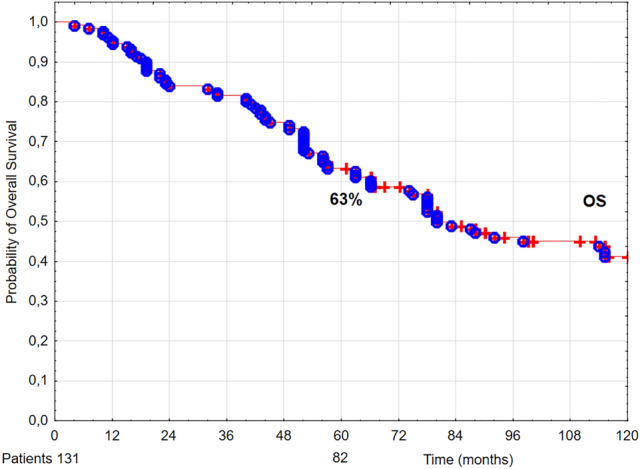
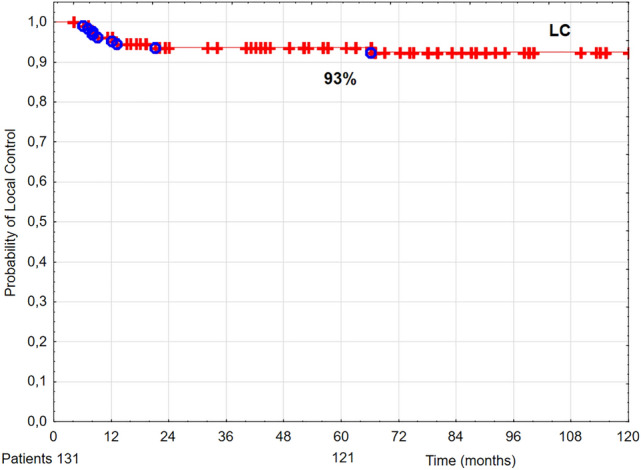
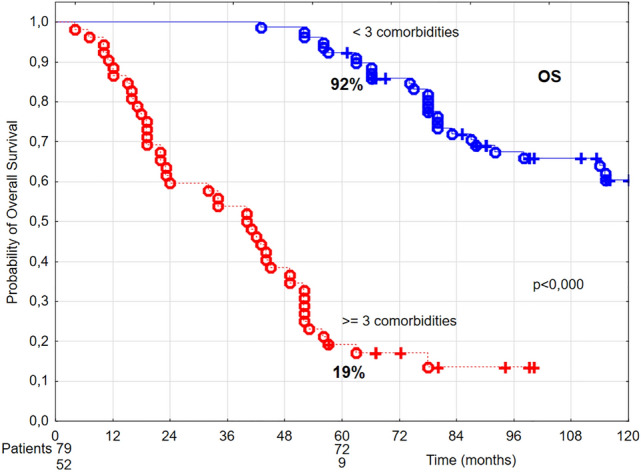
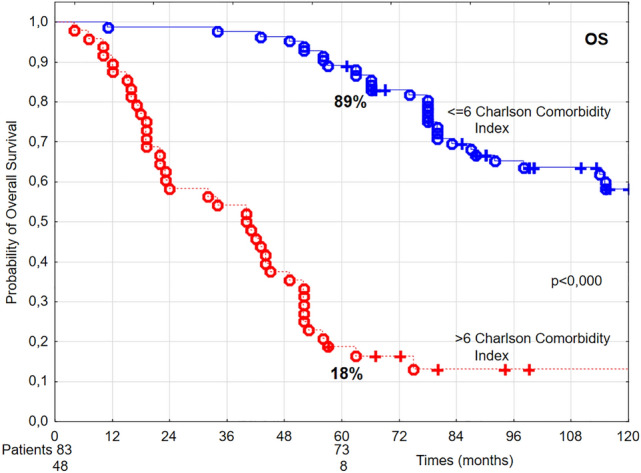
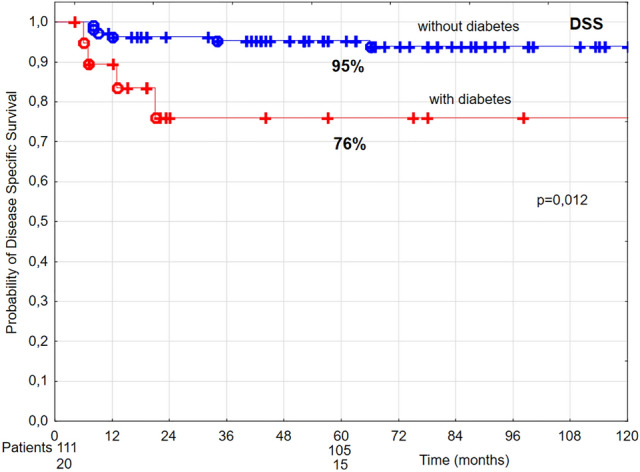
The aim of the study was the evaluation of the effectiveness of radiotherapy in elderly T1 glottic cancer patients and prognostic factors with particular focus on comorbidities. Five-year overall survival, disease-specific survival, and local control rates were 63%, 92%, and 93%, respectively. Multivariate analysis showed that the following factors had statistically significant impact on local relapse risk and cancer death risk: diabetes, underweight, and fraction dose of 2 Gy. High number of comorbidities, high CCI, and underweight negatively influenced overall survival. A retrospective analysis was performed in a group of 131 T1N0M0 glottic cancer patients aged 70 and above treated with irradiation at the National Institute of Oncology in Cracow between 1977 and 2007. In the analyzed group men prevailed (92%) of mean age of 74 years. Each patient was diagnosed with at least one comorbidity with the following comorbid conditions being most frequent: hypertension, ischemic heart disease, and chronic obstructive pulmonary disease. In the studied group, the effect of comorbidities on overall survival was evaluated using Charlson Comorbidity Index (CCI). Twenty five (19%) patients showed underweight. All patients were irradiated once daily, 5 days a week, to a total dose of 60-70 Gy with a fraction dose of 2 or 2.5 Gy. Radiotherapy is an effective treatment modality in elderly T1 glottic cancer patients. Diabetes as comorbidity, underweight, and conventional dose fractionation decrease the probability of curative effect of radiotherapy in this group of patients, while high number of comorbidities diminishes the probability of long-term survival.
本研究的目的是评估放疗在老年 T1 声门型癌症患者中的疗效和预后因素,尤其关注合并症。5 年总生存率、疾病特异性生存率和局部控制率分别为 63%、92%和 93%。多因素分析表明,以下因素对局部复发风险和癌症死亡风险有统计学显著影响:糖尿病、体重不足和 2Gy 分次剂量。合并症数量多、CCI 高和体重不足对总生存率有负面影响。对 1977 年至 2007 年在克拉科夫国家肿瘤研究所接受放疗的 131 名 70 岁及以上 T1N0M0 声门型癌症患者进行回顾性分析。在分析组中,男性(92%)占优势,平均年龄为 74 岁。每位患者至少诊断有一种合并症,最常见的合并症有:高血压、缺血性心脏病和慢性阻塞性肺疾病。在研究组中,使用 Charlson 合并症指数(CCI)评估合并症对总生存率的影响。25 例(19%)患者表现为体重不足。所有患者均每天接受一次放疗,每周 5 天,总剂量为 60-70Gy,分次剂量为 2 或 2.5Gy。放射治疗是老年 T1 声门型癌症患者的有效治疗方法。糖尿病作为合并症、体重不足和常规剂量分割降低了该组患者放疗疗效的可能性,而合并症数量多则降低了长期生存的可能性。