Zhai Zhenya, Niu Kai-Min, Liu Yichun, Lin Chong, Wu Xin
Jiangxi Functional Feed Additive Engineering Laboratory, Institute of Biological Resource, Jiangxi Academy of Sciences, Nanchang, China.
CAS Key Laboratory of Agro-ecological Processes in Subtropical Region, Institute of Subtropical Agriculture, Chinese Academy of Sciences, Changsha, China.
Front Microbiol. 2021 Aug 18;12:727681. doi: 10.3389/fmicb.2021.727681. eCollection 2021.
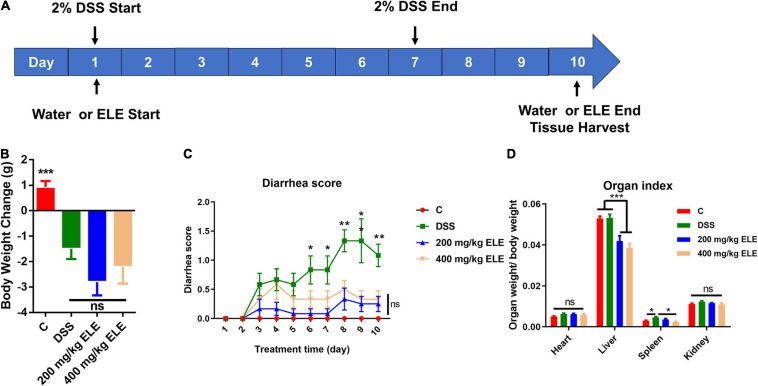
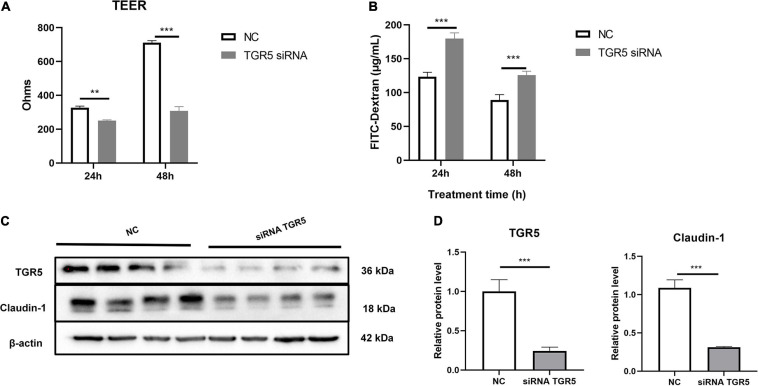
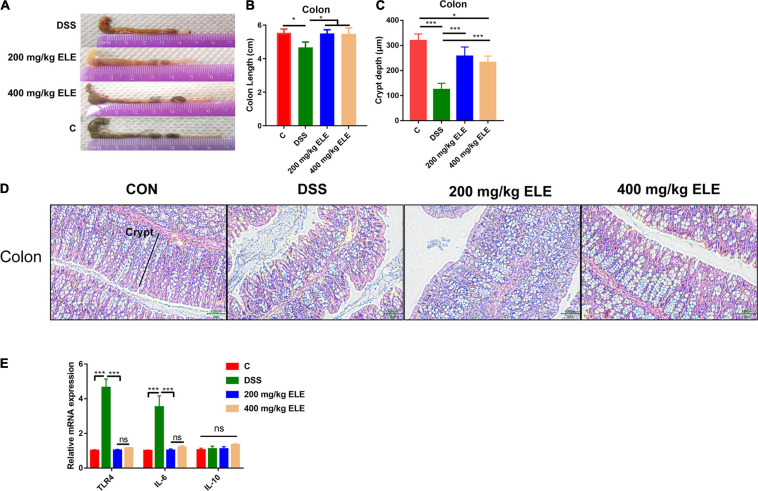
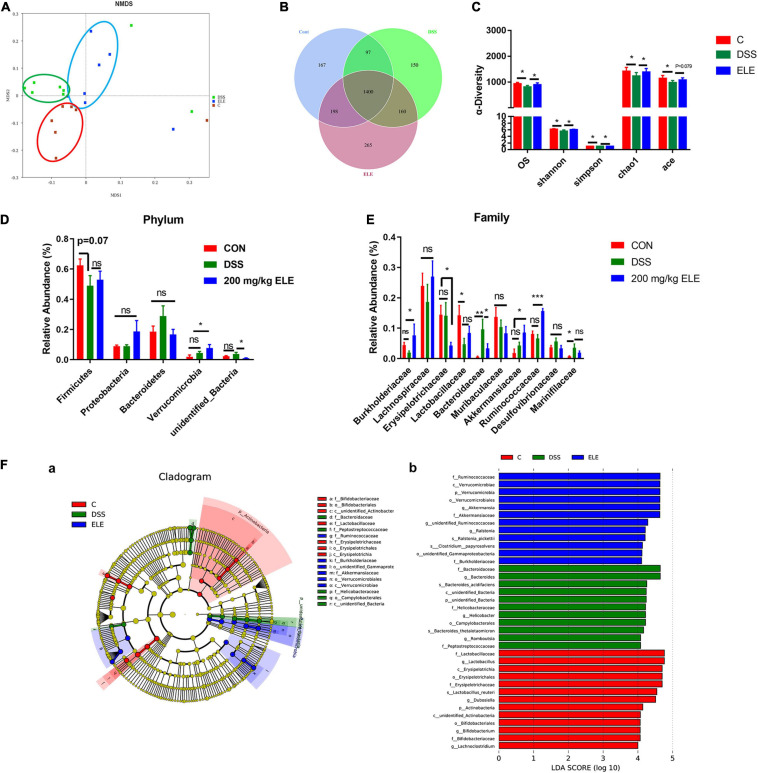
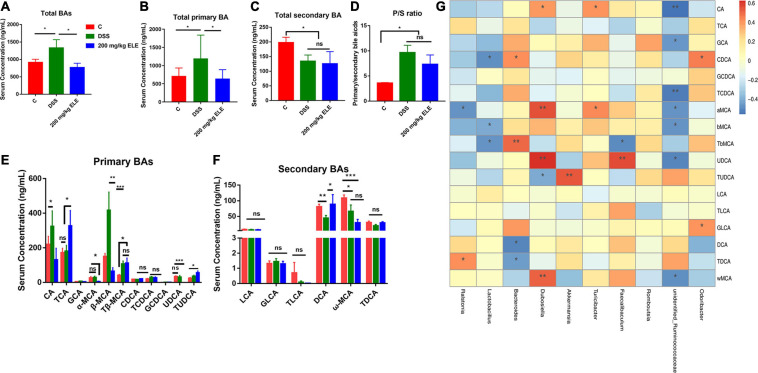
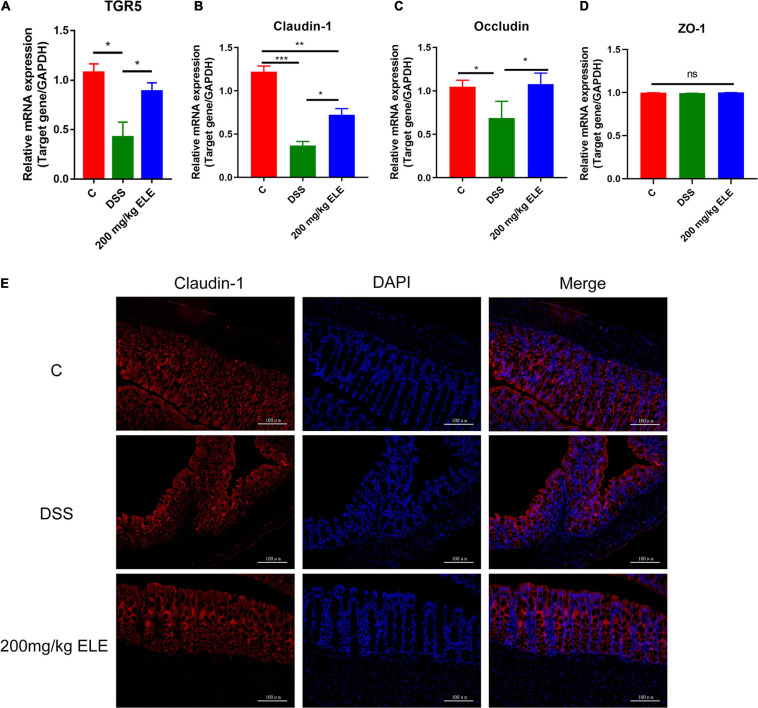
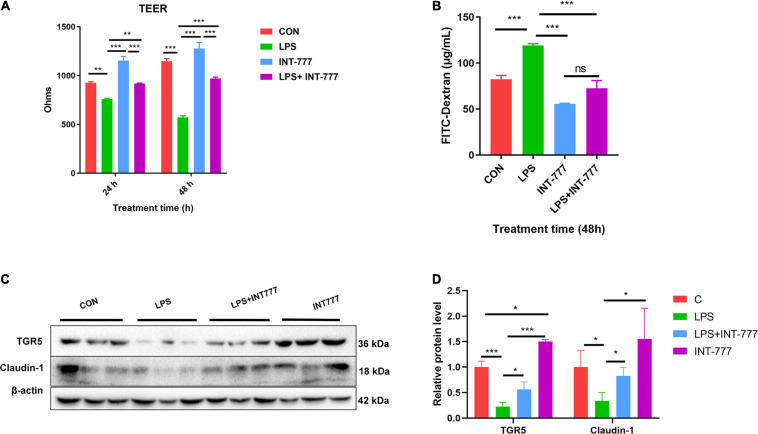
leaves (EL) are rich in phenolic acids and flavonoids, showing enhancing intestinal health effects. The intestinal microbiota-bile acid axis plays important roles in the occurrence and recovery of inflammatory bowel disease (IBD). However, whether EL extract (ELE) has regulatory effects on the intestinal microbiota, bile acid metabolism, and IBD is still unclear. To fill this gap, 2% dextran sulfate sodium (DSS)-induced mild IBD in a C57BL/6J mouse model that was treated with 200 or 400 mg/kg (intake dose/body weight) ELE was used. Oral ELE supplementation alleviated DSS-induced shortening of colon and colonic epithelial injury. Compared with the DSS group, ELE supplementation significantly decreased Toll-like receptor 4 (TLR4) and interlukin-6 (IL-6) and increased occludin and claudin-1 mRNA expression level in the colon ( < 0.05). Combined 16S rRNA gene sequencing and targeted metabolomic analyses demonstrated that ELE significantly improved the diversity and richness of the intestinal microbiota, decreased the abundance of , and increased and abundance ( < 0.05) compared with DSS-induced IBD mice. Moreover, ELE significantly increased the serum contents of deoxycholic acid (DCA) and tauroursodeoxycholic acid (TUDCA), which were highly positively correlated with and unidentified_ relative to the DSS group. We then found that ELE increased Takeda G-protein coupled receptor 5 (TGR5), claudin-1, and occludin mRNA expression levels in the colon. In the Caco-2 cell model, we confirmed that activation of TGR5 improved the reduction in transepithelial electoral resistance (TEER) and decreased the permeability of FITC-dextran on monolayer cells induced by LPS ( < 0.05). siRNA interference assays showed that the decrease in TGR5 expression led to the decrease in TEER, an increase in FITC-dextran permeability, and a decrease in claudin-1 protein expression in Caco-2 cells. In summary, ELE alleviated IBD by influencing the intestinal microbiota structure and composition of bile acids, which in turn activated the colonic gene expression in the colon and promoted the expression of tight junction proteins. These findings provide new insight for using ELE as a functional food with adjuvant therapeutic effects in IBD.
叶(EL)富含酚酸和黄酮类化合物,具有增强肠道健康的作用。肠道微生物群-胆汁酸轴在炎症性肠病(IBD)的发生和恢复中起重要作用。然而,EL提取物(ELE)是否对肠道微生物群、胆汁酸代谢和IBD具有调节作用仍不清楚。为填补这一空白,本研究使用2%葡聚糖硫酸钠(DSS)诱导C57BL/6J小鼠模型发生轻度IBD,并分别用200或400mg/kg(摄入剂量/体重)的ELE进行处理。口服补充ELE可减轻DSS诱导的结肠缩短和结肠上皮损伤。与DSS组相比,补充ELE显著降低了结肠中Toll样受体4(TLR4)和白细胞介素-6(IL-6)的水平,并增加了闭合蛋白和紧密连接蛋白1的mRNA表达水平(P<0.05)。联合16S rRNA基因测序和靶向代谢组学分析表明,与DSS诱导的IBD小鼠相比,ELE显著改善了肠道微生物群的多样性和丰富度,降低了某菌属的丰度,并增加了另两种菌属的丰度(P<0.05)。此外,与DSS组相比,ELE显著增加了血清中脱氧胆酸(DCA)和牛磺熊去氧胆酸(TUDCA)的含量,它们与上述两种菌属呈高度正相关。我们随后发现,ELE增加了结肠中武田G蛋白偶联受体5(TGR5)、紧密连接蛋白1和闭合蛋白的mRNA表达水平。在Caco-2细胞模型中,我们证实激活TGR5可改善脂多糖诱导的单层细胞跨上皮电阻(TEER)降低和FITC-葡聚糖通透性增加(P<0.05)。siRNA干扰试验表明,TGR5表达降低导致Caco-2细胞中TEER降低、FITC-葡聚糖通透性增加以及紧密连接蛋白1蛋白表达降低。综上所述,ELE通过影响肠道微生物群结构和胆汁酸组成来减轻IBD,进而激活结肠中TGR5基因表达并促进紧密连接蛋白的表达。这些发现为将ELE用作具有辅助治疗IBD作用的功能性食品提供了新的见解。