Department of Laboratory Medicine and Pathology, University of Washington, Seattle, Washington, United States of America.
Pathobiology Graduate Program, University of Washington, Seattle, Washington, United States of America.
PLoS Negl Trop Dis. 2021 Sep 7;15(9):e0009753. doi: 10.1371/journal.pntd.0009753. eCollection 2021 Sep.
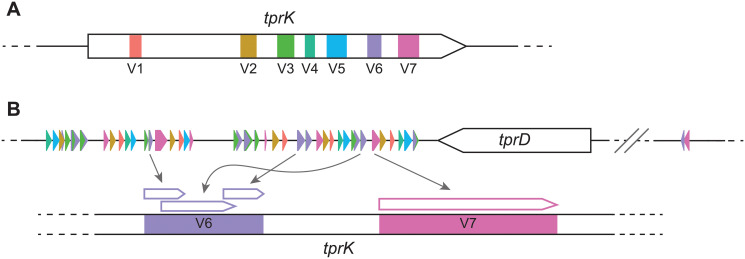
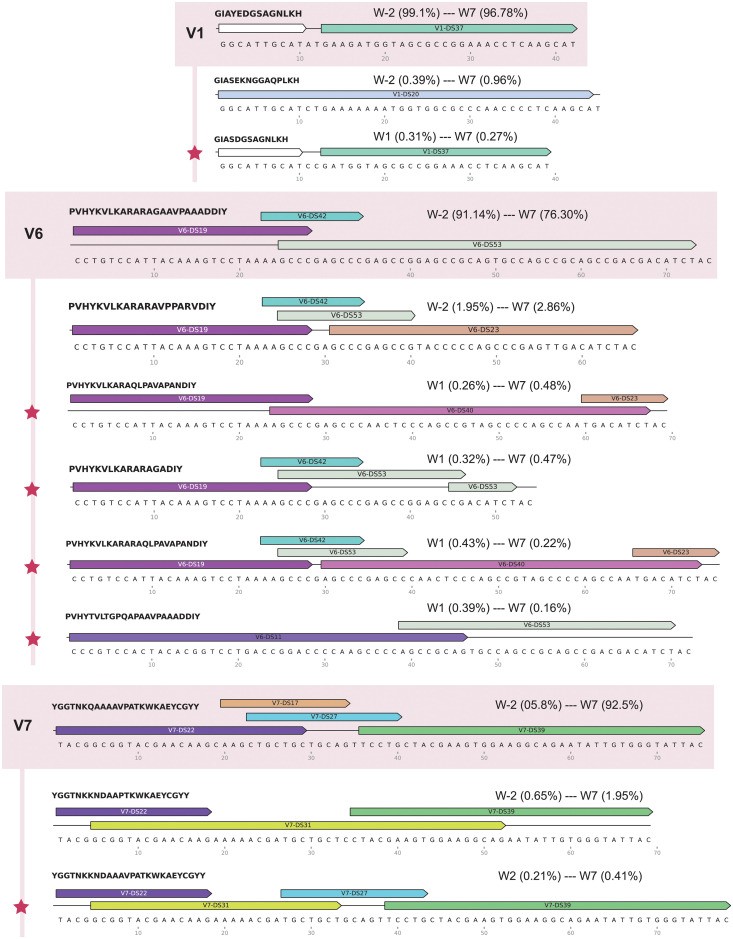
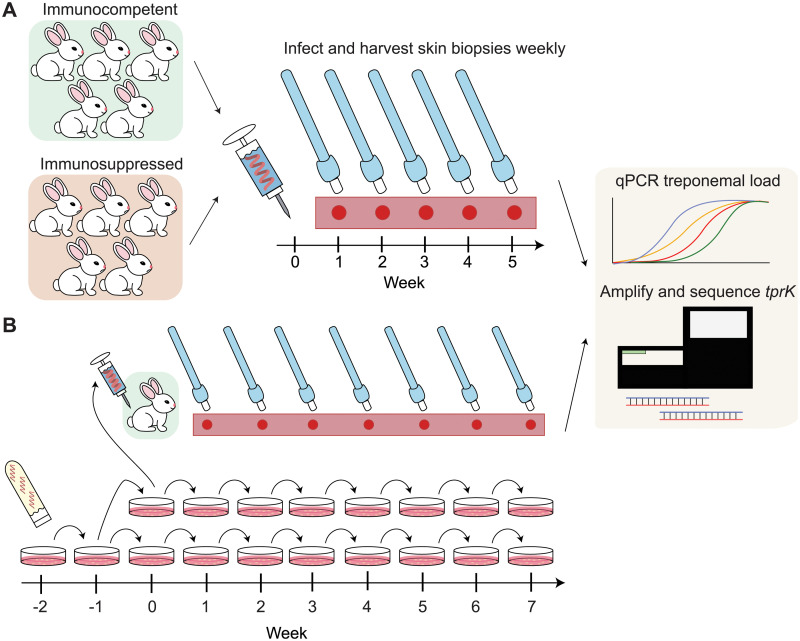
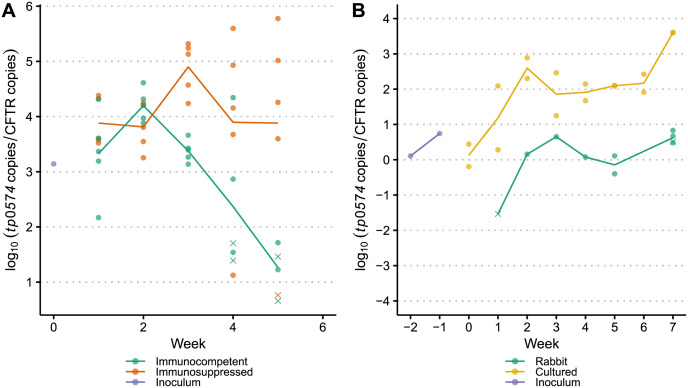
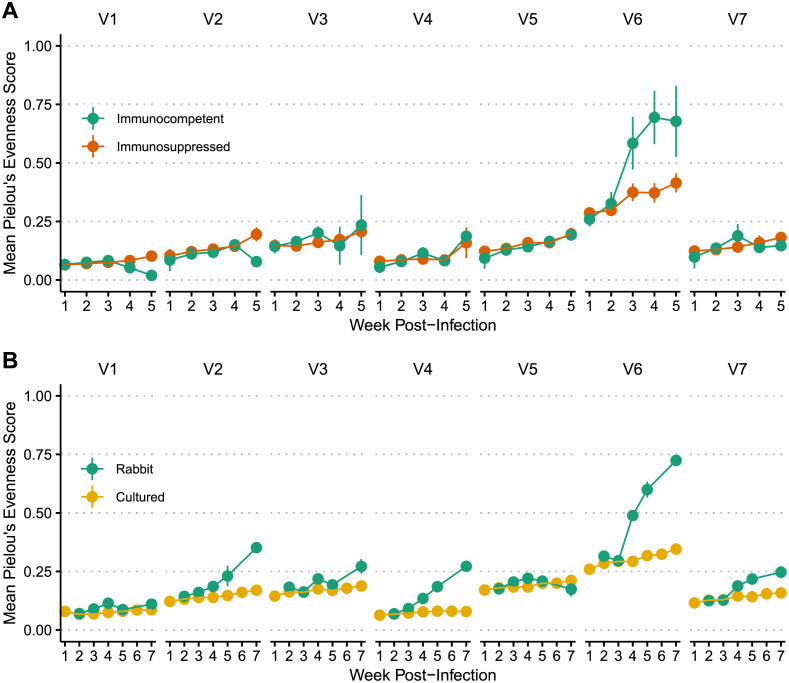
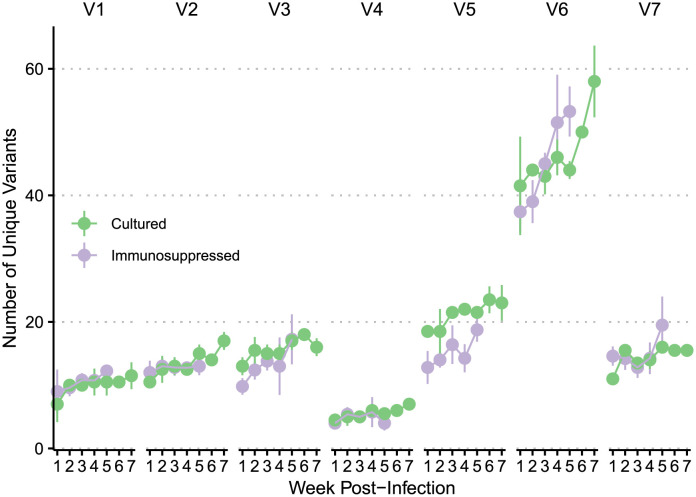
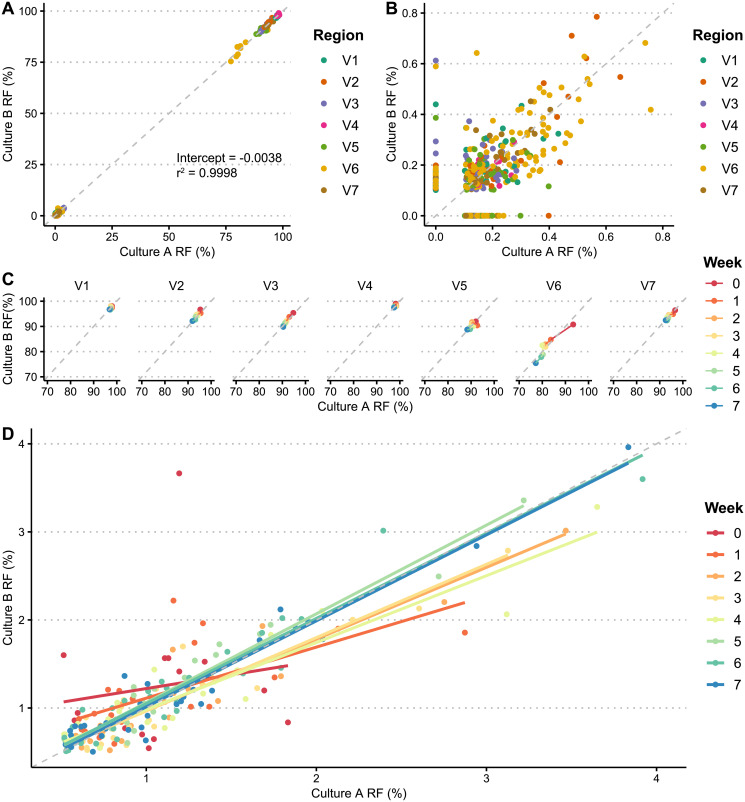
Immune evasion by Treponema pallidum subspecies pallidum (T. pallidum) has been attributed to antigenic variation of its putative outer-membrane protein TprK. In TprK, amino acid diversity is confined to seven variable (V) regions, and generation of sequence diversity within the V regions occurs via a non-reciprocal segmental gene conversion mechanism where donor cassettes recombine into the tprK expression site. Although previous studies have shown the significant role of immune selection in driving accumulation of TprK variants, the contribution of baseline gene conversion activity to variant diversity is less clear. Here, combining longitudinal tprK deep sequencing of near clonal Chicago C from immunocompetent and immunosuppressed rabbits along with the newly developed in vitro cultivation system for T. pallidum, we directly characterized TprK alleles in the presence and absence of immune selection. Our data confirm significantly greater sequence diversity over time within the V6 region during syphilis infection in immunocompetent rabbits compared to immunosuppressed rabbits, consistent with previous studies on the role of TprK in evasion of the host immune response. Compared to strains grown in immunocompetent rabbits, strains passaged in vitro displayed low level changes in allele frequencies of TprK variable region sequences similar to that of strains passaged in immunosuppressed rabbits. Notably, we found significantly increased rates of V6 allele generation relative to other variable regions in in vitro cultivated T, pallidum strains, illustrating that the diversity within these hypervariable regions occurs in the complete absence of immune selection. Together, our results demonstrate antigenic variation in T. pallidum can be studied in vitro and occurs even in the complete absence of immune pressure, allowing the T. pallidum population to continuously evade the immune system of the infected host.
梅毒螺旋体亚种苍白密螺旋体(T. pallidum)的免疫逃逸归因于其假定的外膜蛋白 TprK 的抗原变异。在 TprK 中,氨基酸多样性局限于七个可变(V)区,并且 V 区内部的序列多样性是通过非相互的节段性基因转换机制产生的,其中供体盒重组到 tprK 表达位点。尽管先前的研究表明免疫选择在驱动 TprK 变体积累方面的重要作用,但基线基因转换活性对变体多样性的贡献不太清楚。在这里,我们结合对来自免疫功能正常和免疫抑制兔的近乎克隆芝加哥 C 的 tprK 深度测序的纵向研究,以及新开发的梅毒螺旋体体外培养系统,直接在有免疫选择和无免疫选择的情况下对 TprK 等位基因进行了表征。我们的数据证实,与免疫抑制兔相比,在免疫功能正常兔的梅毒感染过程中,V6 区的序列多样性随时间显著增加,这与先前关于 TprK 在逃避宿主免疫反应中的作用的研究一致。与在免疫功能正常的兔子中生长的菌株相比,在体外传代的菌株的 TprK 可变区序列的等位基因频率变化较低,类似于在免疫抑制的兔子中传代的菌株。值得注意的是,我们发现与其他可变区相比,在体外培养的 T. pallidum 菌株中 V6 等位基因的产生率显著增加,这表明这些高变区的多样性是在完全没有免疫选择的情况下发生的。总之,我们的结果表明,梅毒螺旋体的抗原变异可以在体外进行研究,即使在完全没有免疫压力的情况下也会发生,从而使梅毒螺旋体种群能够持续逃避感染宿主的免疫系统。