Department of Medicine, Bryn Mawr Hospital, Bryn Mawr, PA, USA.
The Sidney Kimmel Medical College, Philadelphia, PA, USA.
Trials. 2021 Sep 7;22(1):603. doi: 10.1186/s13063-021-05537-6.
The World Health Organization declared the outbreak of SARS-CoV-2 a pandemic on February 11, 2020. This organism causes COVID-19 disease and the rapid rise in cases and geographic spread strained healthcare systems. Clinical research trials were hindered by infection control measures discouraging physical contact and diversion of resources to meet emergent requirements. The need for effective treatment and prevention of COVID-19 prompted an untested investigational response. Trial groups adapted approaches using remote enrolment and consenting, newly developed diagnostic tests, delivery of study medications and devices to participants' homes, and remote monitoring to ensure investigator/enrollee safety while preserving ethical integrity, confidentiality, and data accuracy.
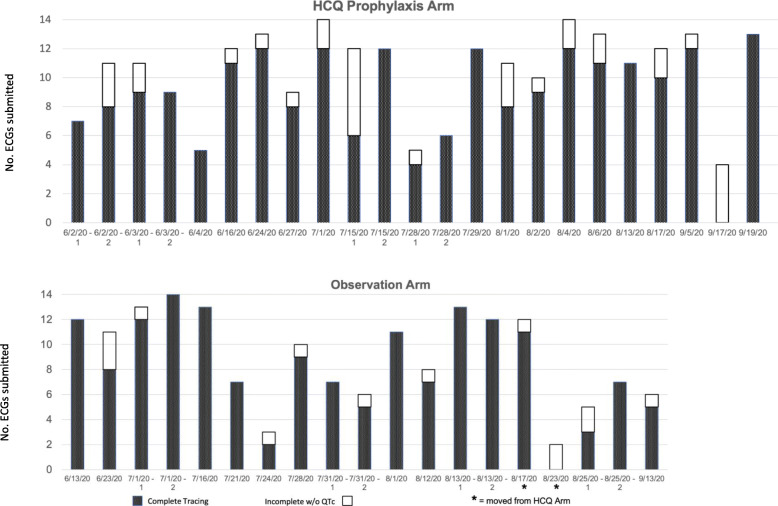
Clinical researchers at our community health system in the USA undertook an outpatient randomized open-label study of hydroxychloroquine (HCQ) prophylaxis versus observation of SARS-CoV-2 infection in household COVID-19 contacts. Designed in March 2020, challenges included COVID-19 infection in the research group, HCQ shortage, and lack of well-established home SARS-CoV-2 tests and remote ECG monitoring protocols in populations naive to these procedures. The study was written, funded, and received ethical committee approval in 4 months and was completed by September 2020 during a period of fluctuating infection rates and conflicting political opinions on HCQ use; results have been published. Singular methodology included the use of a new RNA PCR saliva SARS-CoV-2 home diagnostic test and a remote smartphone-based 6-lead ECG recording system.
Of 483 households contacted regarding trial participation, 209 (43.3%) did not respond to telephone calls/e-mails and 90 (18.6%) declined; others were not eligible by inclusion or exclusion criteria. Ultimately, 54 individuals were enrolled and 42 completed the study. Numbers were too small to determine the efficacy of HCQ prophylaxis. No serious treatment-related adverse events were encountered.
Flexibility in design, a multidisciplinary research team, prompt cooperation among research, funding, ethics review groups, and finding innovative study approaches enabled this work. Concerns were balancing study recruitment against unduly influencing individuals anxious for protection from the pandemic and exclusion of groups based on lack of Internet access and technology. An issue to address going forward is establishing research cooperation across community health systems before emergencies develop.
ClinicalTrials.gov NCT04652648 . Registered on December 3, 2020.
世界卫生组织于 2020 年 2 月 11 日宣布 SARS-CoV-2 爆发为大流行。该病原体引起 COVID-19 疾病,病例的快速增加和地理传播使医疗保健系统不堪重负。临床研究试验因感染控制措施而受阻,这些措施不鼓励身体接触,并将资源转移以满足紧急需求。对 COVID-19 的有效治疗和预防的需求促使进行了未经测试的研究性反应。试验组采用了远程招募和同意、新开发的诊断测试、向参与者家中提供研究药物和设备以及远程监测等方法,以确保调查员/入组者的安全,同时保持伦理完整性、机密性和数据准确性。
我们在美国的社区卫生系统中的临床研究人员进行了一项门诊随机开放标签研究,研究羟氯喹(HCQ)预防与家庭中 COVID-19 接触者 SARS-CoV-2 感染的观察。该研究于 2020 年 3 月设计,面临的挑战包括研究组中的 COVID-19 感染、HCQ 短缺以及缺乏在对这些程序不熟悉的人群中进行家庭 SARS-CoV-2 测试和远程 ECG 监测协议。该研究在 4 个月内完成了书面、资助和获得伦理委员会批准,并于 2020 年 9 月完成,在此期间感染率波动,并且对 HCQ 使用的政治观点存在冲突;研究结果已经发表。独特的方法包括使用新的 RNA PCR 唾液 SARS-CoV-2 家庭诊断测试和基于智能手机的远程 6 导联 ECG 记录系统。
在接触参与试验的 483 户家庭中,209 户(43.3%)未接听电话/电子邮件,90 户(18.6%)拒绝;其他因纳入或排除标准而不合格。最终,有 54 人入组,42 人完成了研究。数量太少,无法确定 HCQ 预防的疗效。未发生与治疗相关的严重不良事件。
设计的灵活性,多学科研究团队,研究,资助,伦理审查小组之间的迅速合作以及寻找创新的研究方法使这项工作得以开展。关注的重点是在不影响渴望免受大流行保护的个人的情况下平衡研究招募,以及基于缺乏互联网访问和技术而排除某些群体。未来需要解决的一个问题是,在紧急情况发生之前,在社区卫生系统之间建立研究合作。
ClinicalTrials.gov NCT04652648。于 2020 年 12 月 3 日注册。