Barts Health NHS Trust, London, United Kingdom.
York Teaching Hospital NHS Foundation Trust, York, United Kingdom.
Int J Surg. 2021 Feb;86:57-63. doi: 10.1016/j.ijsu.2020.12.008. Epub 2021 Jan 12.
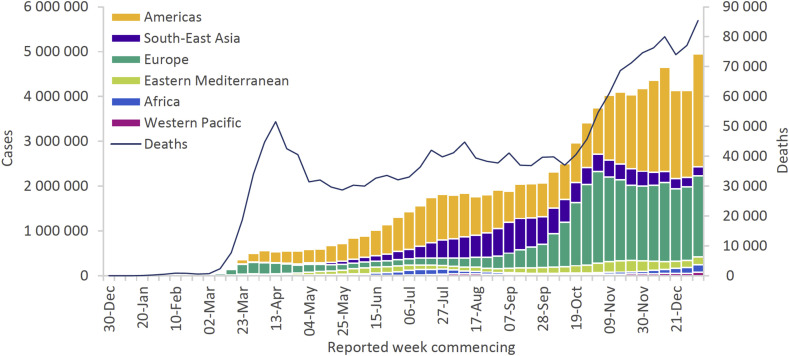
A pneumonia outbreak of unknown aetiology emerged in Wuhan, China in December 2019. The causative organism was identified on 7th January 2020 as a novel coronavirus (nCoV or 2019-nCoV), later renamed severe acute respiratory syndrome coronavirus 2 (SARS-CoV-2). The resulting coronavirus disease (COVID-19) has infected over 88 million individuals, resulted in over 1.9 million deaths, and has led to an unprecedented impact on research activities worldwide. Extraordinary challenges have also been imposed on medical and surgical trainees following redeployment to full-time clinical duties. Moreover, the introduction of travel restrictions and strict lockdown measures have forced the closure of many institutions and laboratories working on research unrelated to the pandemic. The lockdown has similarly stifled supply chains and slowed research and development endeavours, whilst research charities have endured significant financial strains that have since reshaped the allocation and availability of funds. However, worldwide scientific adaptation to the COVID-19 pandemic has been observed through unprecedented levels of international collaboration alongside the uprise of remote telecommunication platforms. Although the long-term consequence of the COVID-19 pandemic on research and academic training is difficult to ascertain, the current crises will inevitably shape working and teaching patterns for years to come. To this end, we provide a comprehensive and critical evaluation of the impact of COVID-19 on scientific research and funding, as well as academic medical and surgical training.
2019 年 12 月,中国武汉爆发了一种病因不明的肺炎疫情。2020 年 1 月 7 日,该病原体被鉴定为一种新型冠状病毒(nCoV 或 2019-nCoV),后更名为严重急性呼吸综合征冠状病毒 2(SARS-CoV-2)。由此引发的冠状病毒病(COVID-19)已感染超过 8800 万人,导致超过 190 万人死亡,并对全球研究活动造成了前所未有的影响。此外,由于部署到全职临床工作,医学和外科学员也面临着巨大的挑战。而且,旅行限制和严格的封锁措施迫使许多与大流行无关的研究机构和实验室关闭。封锁同样扼杀了供应链,减缓了研究和开发工作的步伐,而研究慈善机构则承受了巨大的财务压力,从而重新分配和提供资金。然而,通过空前的国际合作以及远程电信平台的兴起,全球科学界已经适应了 COVID-19 大流行。尽管 COVID-19 大流行对研究和学术培训的长期影响难以确定,但当前的危机必将在未来几年塑造工作和教学模式。为此,我们对 COVID-19 对科学研究和资金以及医学和外科学术培训的影响进行了全面和批判性的评估。