The Division of Ophthalmology and Vision Science, Department of Ophthalmology, The First Affiliated Hospital of Zhengzhou University, Zhengzhou University, Zhengzhou, China.
Department of Medical Genetics and Cell Biology, School of Basic Medical Sciences, Zhengzhou University, Henan 450001, China.
Aging (Albany NY). 2021 Sep 8;13(17):21547-21570. doi: 10.18632/aging.203496.
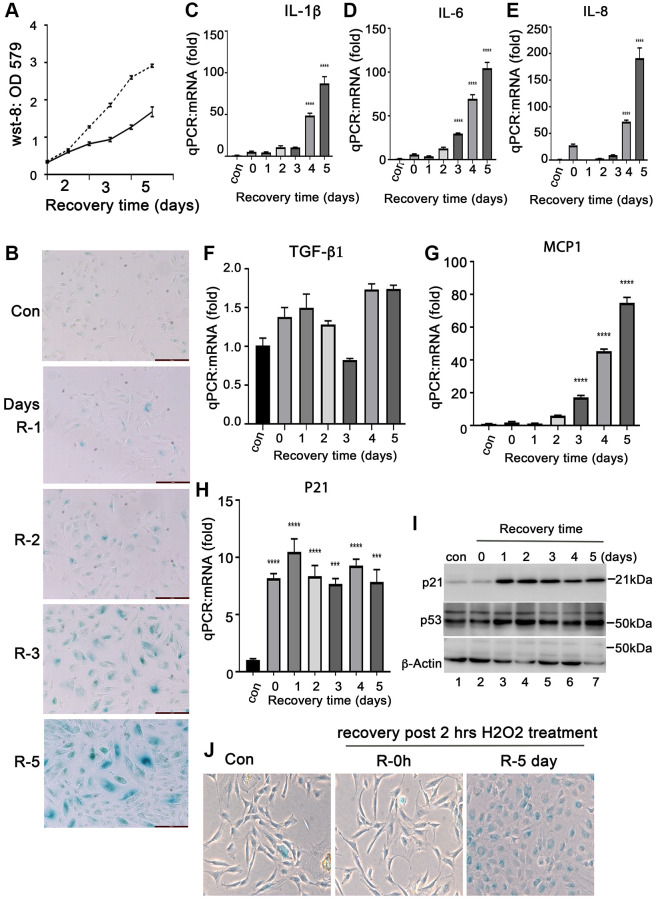
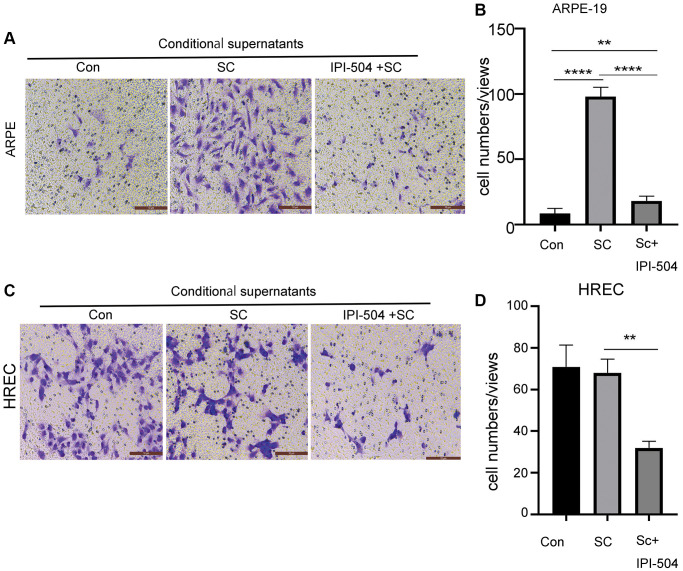
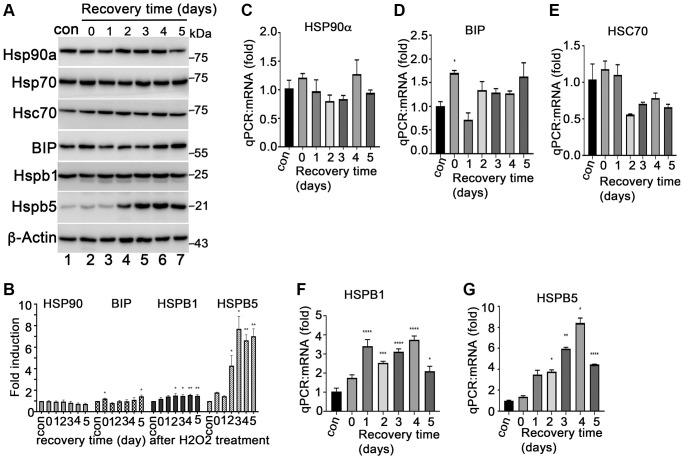
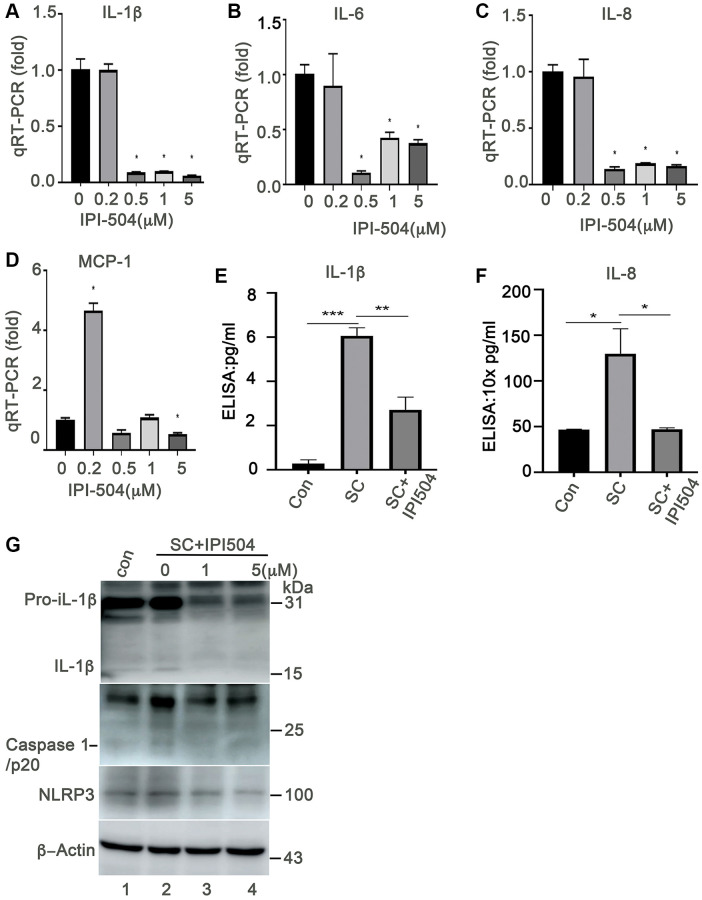
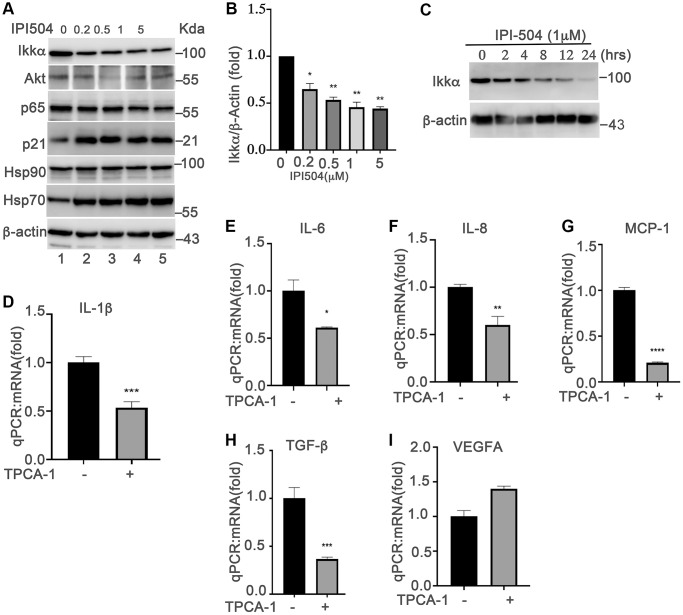
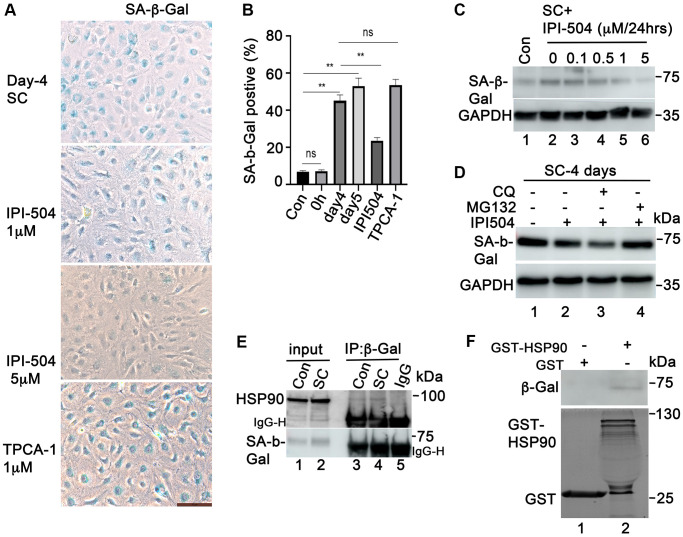
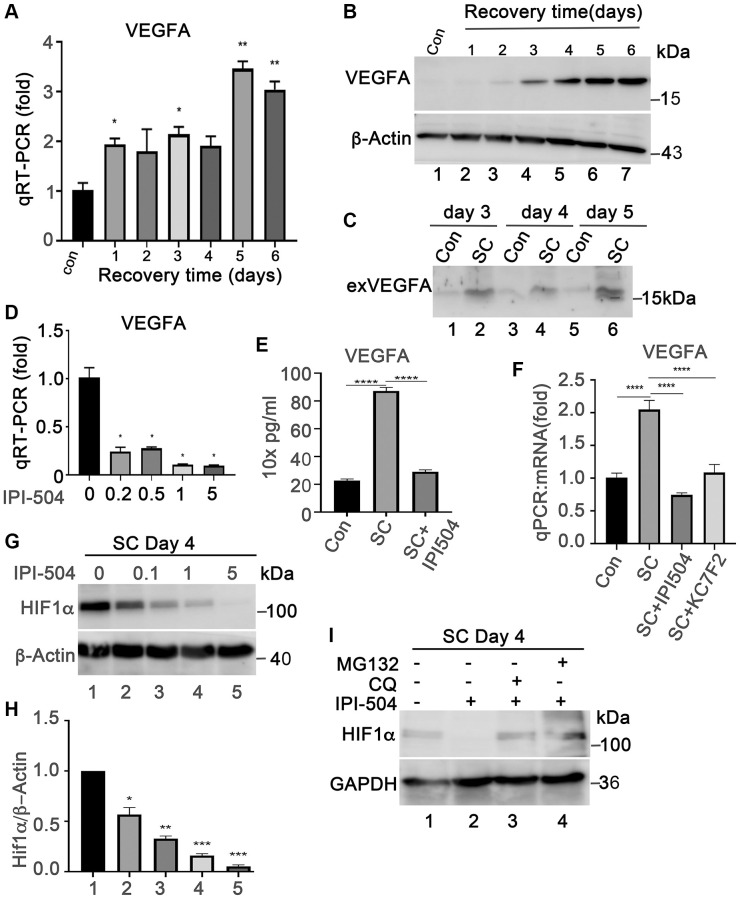
The senescence of retinal pigment epithelial (RPE) cells is associated with age-related macular degeneration (AMD), a leading cause of blindness in the world. HSP90 is a predominant chaperone that regulates cellular homeostasis under divergent physio-pathological conditions including senescence. However, the role of HSP90 in senescent RPE cells still remains unclear. Here, we reported that HSP90 acts as a senomorphic target of senescent RPE cells . Using HO-induced senescent ARPE-19 cells and replicative senescent primary RPE cells from rhesus monkey, we found that HSP90 upregulates the expression of IKKα, and HIF1α in senescent ARPE-19 cells and subsequently controls the induction of distinct senescence-associated inflammatory factors. Senescent ARPE-19 cells are more resistant to the cytotoxic HSP90 inhibitor IPI504 (IC50 = 36.78 μM) when compared to normal ARPE-19 cells (IC50 = 6.16 μM). Administration of IPI504 at 0.5-5 μM can significantly inhibit the induction of IL-1β, IL-6, IL-8, MCP-1 and VEGFA in senescent ARPE-19 and the senescence-mediated migration of retinal capillary endothelial cells . In addition, we found that inhibition of HSP90 by IPI504 reduces SA-β-Gal's protein expression and enzyme activity in a dose-dependent manner. HSP90 interacts with and regulates SA-β-Gal protein stabilization in senescent ARPE-19 cells. Taken together, these results suggest that HSP90 regulates the SASP and SA-β-Gal activity in senescent RPE cells through associating with distinctive mechanism including NF-κB, HIF1α and lysosomal SA-β-Gal. HSP90 inhibitors (e.g. IPI504) could be a promising senomorphic drug candidate for AMD intervention.
视网膜色素上皮 (RPE) 细胞的衰老与年龄相关性黄斑变性 (AMD) 有关,AMD 是世界上导致失明的主要原因。HSP90 是一种主要的伴侣蛋白,可在包括衰老在内的不同生理病理条件下调节细胞内稳态。然而,HSP90 在衰老的 RPE 细胞中的作用仍不清楚。在这里,我们报道 HSP90 是衰老的 RPE 细胞的衰老相关目标。使用 HO 诱导的衰老 ARPE-19 细胞和恒河猴原代衰老 RPE 细胞,我们发现 HSP90 上调了 IKKα 和 HIF1α 在衰老 ARPE-19 细胞中的表达,随后控制了不同衰老相关炎症因子的诱导。与正常 ARPE-19 细胞 (IC50 = 6.16 μM) 相比,衰老的 ARPE-19 细胞对细胞毒性 HSP90 抑制剂 IPI504 (IC50 = 36.78 μM) 的耐药性更高。在 0.5-5 μM 时,IPI504 的给药可以显著抑制衰老的 ARPE-19 中 IL-1β、IL-6、IL-8、MCP-1 和 VEGFA 的诱导以及视网膜毛细血管内皮细胞的衰老介导的迁移。此外,我们发现 IPI504 通过 HSP90 抑制以剂量依赖性方式降低 SA-β-Gal 的蛋白表达和酶活性。HSP90 与衰老的 ARPE-19 细胞中的 SA-β-Gal 蛋白稳定性相互作用并调节其稳定性。总之,这些结果表明,HSP90 通过与包括 NF-κB、HIF1α 和溶酶体 SA-β-Gal 在内的独特机制相互作用,调节衰老的 RPE 细胞中的 SASP 和 SA-β-Gal 活性。HSP90 抑制剂(例如 IPI504)可能是 AMD 干预的有前途的衰老相关药物候选物。