Department of General, Visceral and Transplant Surgery, University Hospital Muenster, Albert-Schweitzer-Campus 1 (W1), 48149, Muenster, Germany.
J Hematol Oncol. 2021 Sep 8;14(1):141. doi: 10.1186/s13045-021-01149-4.
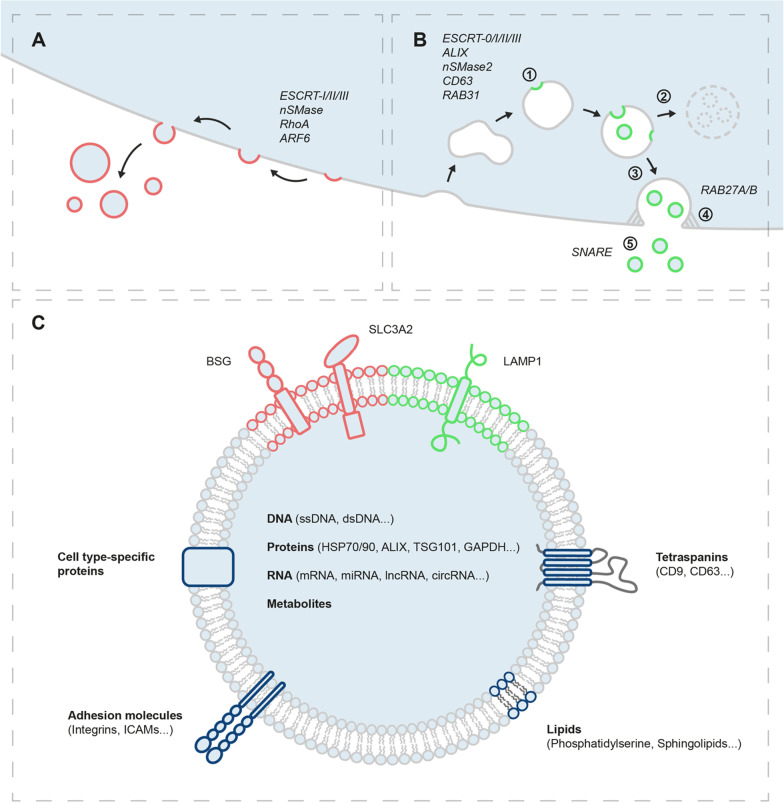
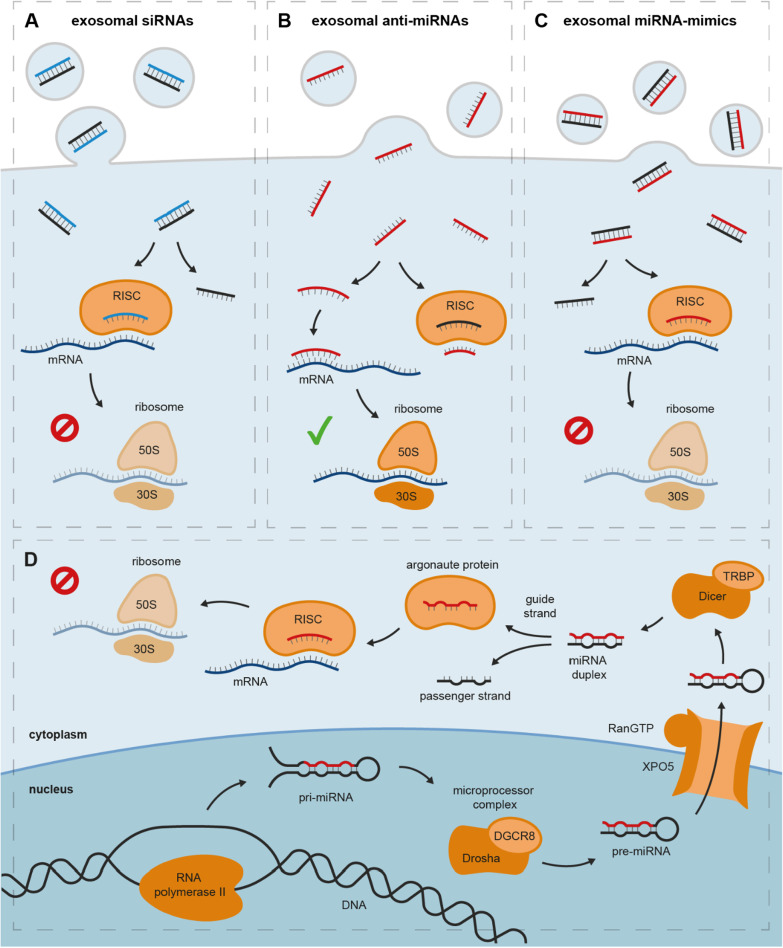
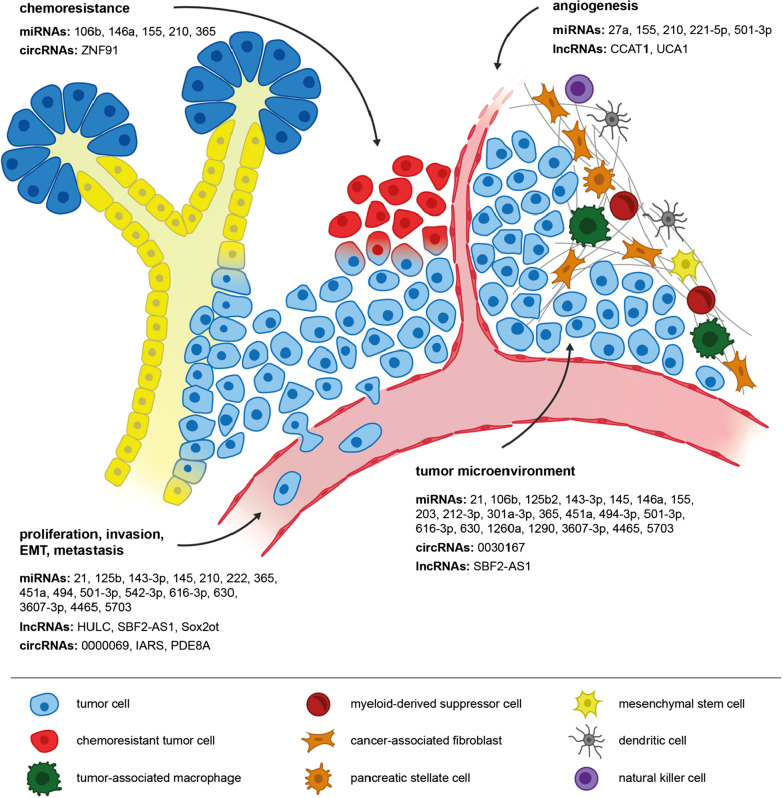
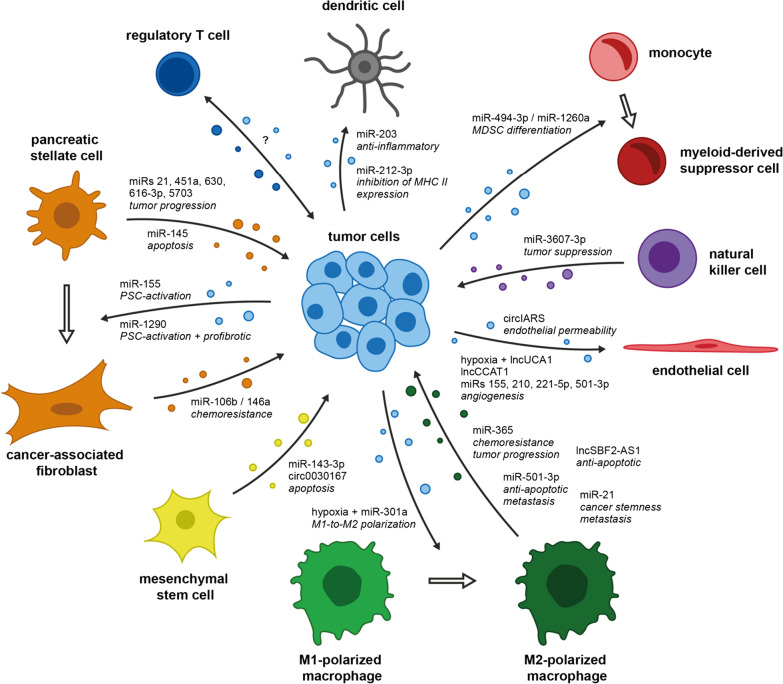
Pancreatic cancer has the worst prognosis among common tumors which is attributed to its aggressive phenotype, diagnosis at advanced, inoperable stages, and resistance to systemic therapy. Non-coding RNAs (ncRNAs) such as microRNAs, long non-coding RNAs, and circular RNAs have been established as important regulators of gene expression and their deregulation has been implicated in multiple diseases and foremost cancer. In the tumor microenvironment, non-coding RNAs can be distributed among cancer cells, stromal cells, and immune cells via small extracellular vesicles (sEVs), thereby facilitating intercellular communication and influencing major cancer hallmarks such as angiogenesis, evasion of the immune system, and metastatic dissemination. Furthermore, sEV-ncRNAs have shown promising potential as liquid biopsies with diagnostic and prognostic significance. In this review, we summarize the role of sEVs as carriers of ncRNAs and underlying molecular mechanisms in pancreatic cancer. Moreover, we review the potential of sEV-ncRNAs as biomarkers and highlight the suitability of sEVs as delivery vehicles for ncRNA-based cancer therapy.
胰腺癌是常见肿瘤中预后最差的一种,其原因是其侵袭性表型、在晚期不可手术阶段诊断、以及对系统治疗的耐药性。非编码 RNA(ncRNA),如 microRNAs、长非编码 RNA 和环状 RNA,已被确定为基因表达的重要调节剂,其失调与多种疾病,尤其是癌症有关。在肿瘤微环境中,ncRNA 可以通过小细胞外囊泡(sEVs)在癌细胞、基质细胞和免疫细胞之间分布,从而促进细胞间通讯,并影响血管生成、免疫系统逃避和转移性扩散等主要癌症特征。此外,sEV-ncRNA 作为具有诊断和预后意义的液体活检具有很大的应用潜力。在这篇综述中,我们总结了 sEV 作为 ncRNA 的载体及其在胰腺癌中的潜在分子机制。此外,我们还综述了 sEV-ncRNA 作为生物标志物的潜力,并强调了 sEV 作为基于 ncRNA 的癌症治疗载体的适用性。