Choe Chong Pyo, Choi Seok-Yong, Kee Yun, Kim Min Jung, Kim Seok-Hyung, Lee Yoonsung, Park Hae-Chul, Ro Hyunju
Division of Life Science, Gyeongsang National University, Jinju, 52828, Republic of Korea.
Division of Applied Life Science, Plant Molecular Biology and Biotechnology Research Center, Gyeongsang National University, Jinju, 52828, Republic of Korea.
Lab Anim Res. 2021 Sep 8;37(1):26. doi: 10.1186/s42826-021-00103-2.
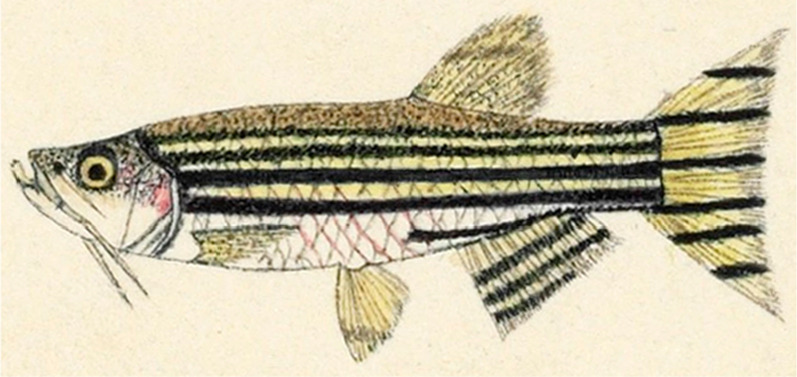
Since its debut in the biomedical research fields in 1981, zebrafish have been used as a vertebrate model organism in more than 40,000 biomedical research studies. Especially useful are zebrafish lines expressing fluorescent proteins in a molecule, intracellular organelle, cell or tissue specific manner because they allow the visualization and tracking of molecules, intracellular organelles, cells or tissues of interest in real time and in vivo. In this review, we summarize representative transgenic fluorescent zebrafish lines that have revolutionized biomedical research on signal transduction, the craniofacial skeletal system, the hematopoietic system, the nervous system, the urogenital system, the digestive system and intracellular organelles.
自1981年斑马鱼首次亮相生物医学研究领域以来,它们已在40000多项生物医学研究中被用作脊椎动物模式生物。以分子、细胞内细胞器、细胞或组织特异性方式表达荧光蛋白的斑马鱼品系尤其有用,因为它们能够实时、在体内可视化和追踪感兴趣的分子、细胞内细胞器、细胞或组织。在本综述中,我们总结了具有代表性的转基因荧光斑马鱼品系,这些品系彻底改变了关于信号转导、颅面骨骼系统、造血系统、神经系统、泌尿生殖系统、消化系统和细胞内细胞器的生物医学研究。