Cell Biology Division, Medical Research Council Laboratory of Molecular Biology, Cambridge, United Kingdom.
Institute of Science and Technology Austria (IST Austria), Klosterneuburg, Austria.
Elife. 2021 Sep 9;10:e68238. doi: 10.7554/eLife.68238.
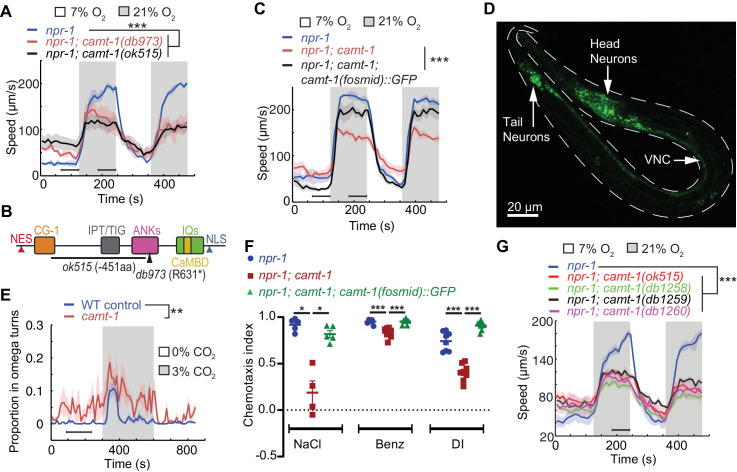
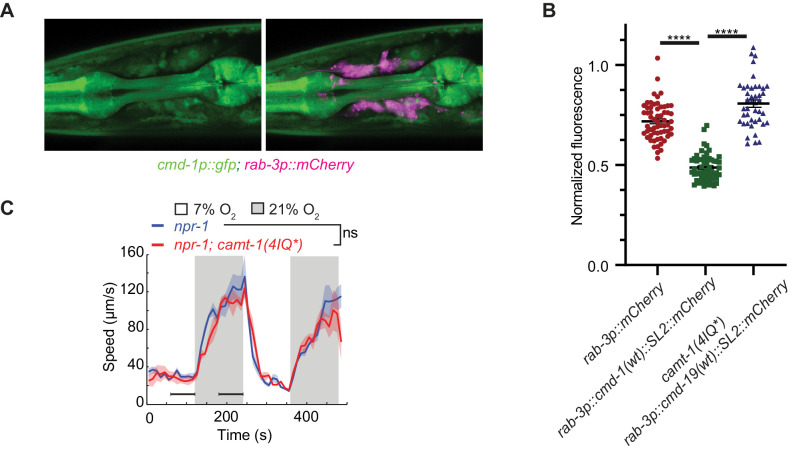
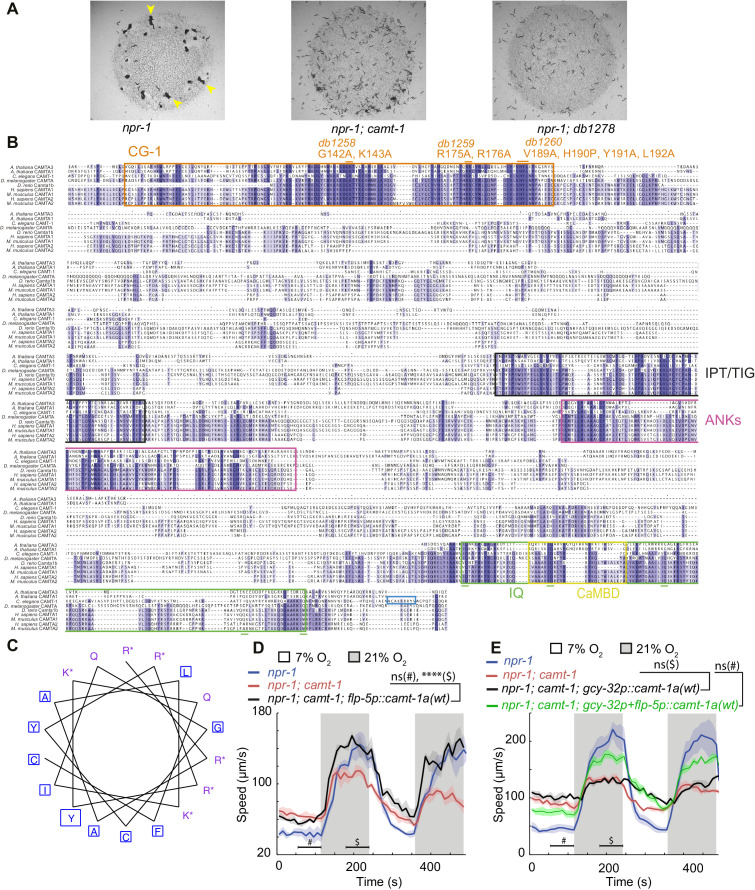
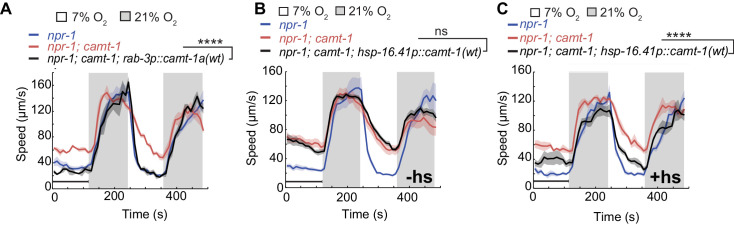
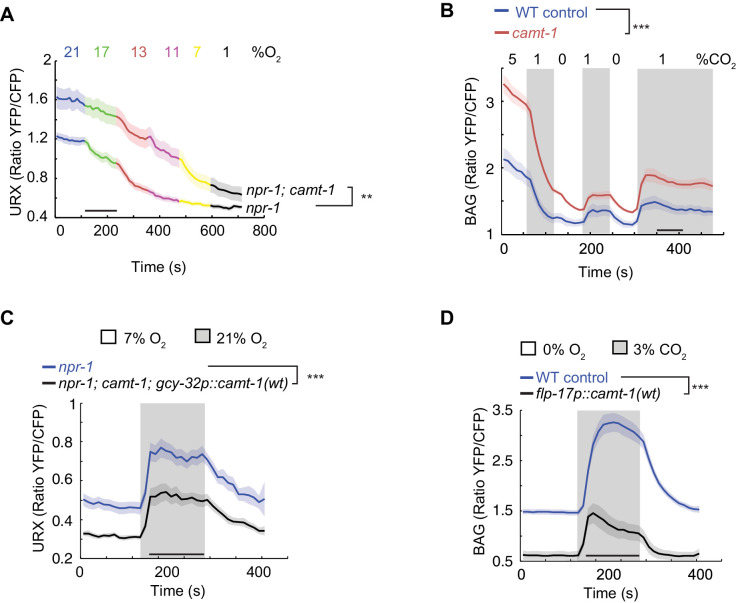
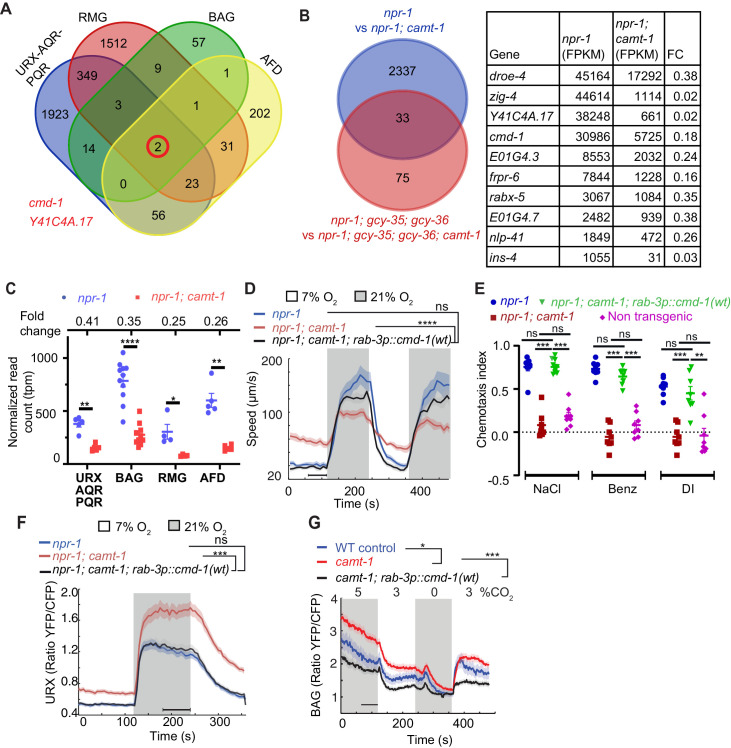
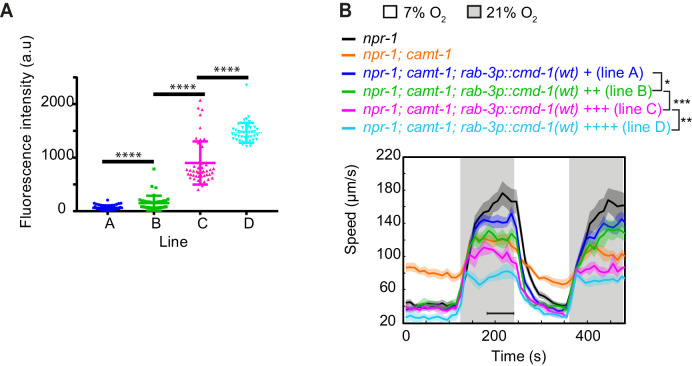
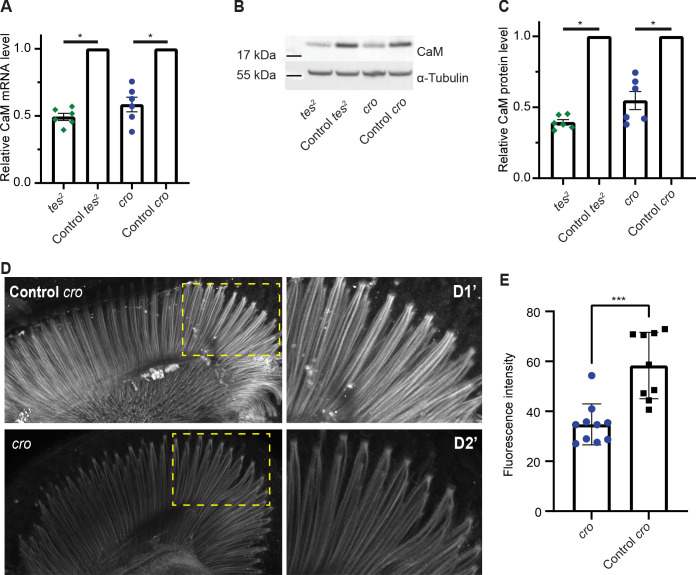
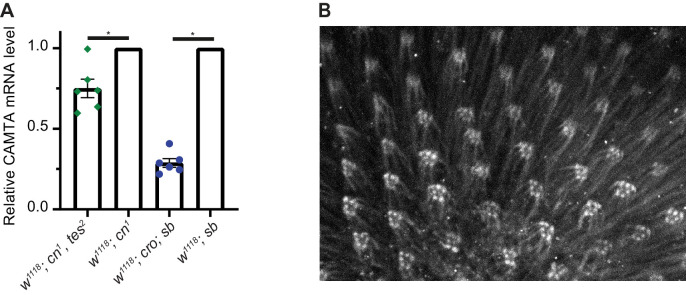
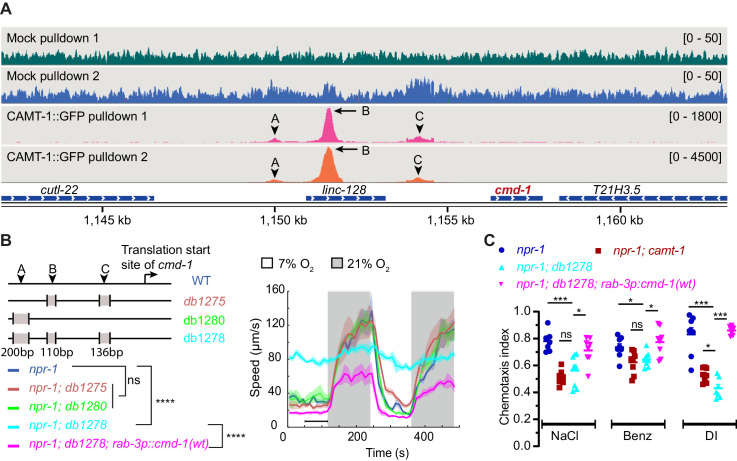
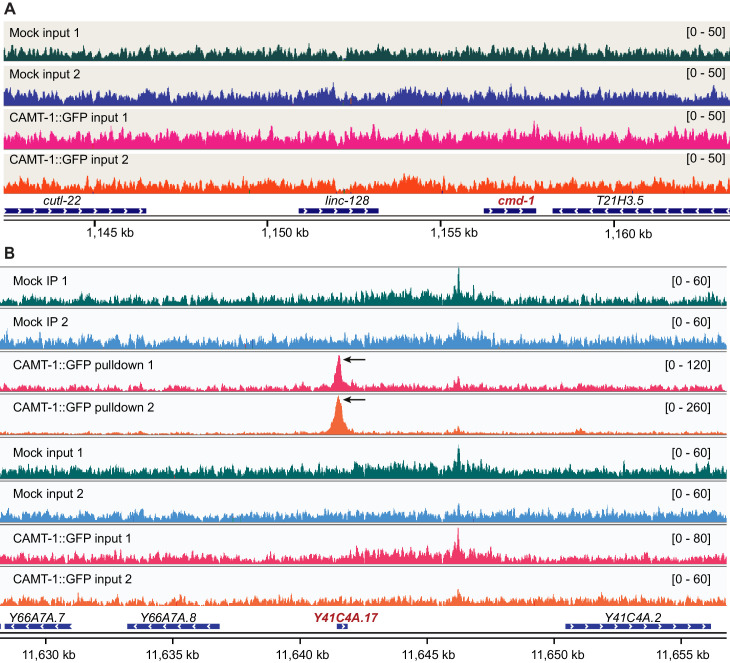
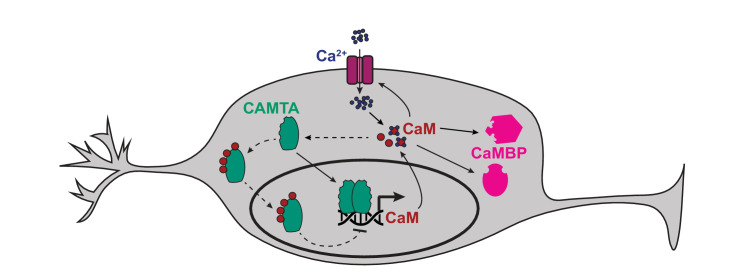
The ubiquitous Ca sensor calmodulin (CaM) binds and regulates many proteins, including ion channels, CaM kinases, and calcineurin, according to Ca-CaM levels. What regulates neuronal CaM levels, is, however, unclear. CaM-binding transcription activators (CAMTAs) are ancient proteins expressed broadly in nervous systems and whose loss confers pleiotropic behavioral defects in flies, mice, and humans. Using and , we show that CAMTAs control neuronal CaM levels. The behavioral and neuronal Ca signaling defects in mutants lacking the sole CAMTA, can be rescued by supplementing neuronal CaM. CAMT-1 binds multiple sites in the CaM promoter and deleting these sites phenocopies . Our data suggest CAMTAs mediate a conserved and general mechanism that controls neuronal CaM levels, thereby regulating Ca signaling, physiology, and behavior.
普遍存在的钙传感器钙调蛋白 (CaM) 根据 Ca-CaM 水平结合并调节许多蛋白质,包括离子通道、CaM 激酶和钙调神经磷酸酶。然而,调节神经元 CaM 水平的机制尚不清楚。CaM 结合转录激活因子 (CAMTAs) 是在神经系统中广泛表达的古老蛋白质,其缺失会导致果蝇、小鼠和人类出现多种行为缺陷。使用 和 ,我们表明 CAMTAs 控制神经元 CaM 水平。缺乏唯一的 CAMTA 的突变体的行为和神经元 Ca 信号缺陷可以通过补充神经元 CaM 来挽救。CAMT-1 结合 CaM 启动子中的多个位点,并且删除这些位点模拟 。我们的数据表明,CAMTAs 介导一种保守且普遍的机制,控制神经元 CaM 水平,从而调节 Ca 信号、生理学和行为。