Gzik-Zroska Bożena, Joszko Kamil, Wolański Wojciech, Suchoń Sławomir, Burkacki Michał, Ples Marek, Malachowski Jerzy, Tomaszewski Michał, Szarek Arkadiusz, Stradomski Grzegorz, Kitala Diana, Akbari Mohsen, Gzik Marek
Department of Biomaterials and Medical Devices Engineering, Faculty of Biomedical Engineering, Silesian University of Technology, Roosevelta 40 Str., 41-800 Zabrze, Poland.
Department of Biomechatronics, Faculty of Biomedical Engineering, Silesian University of Technology, Roosevelta 40 Str., 41-800 Zabrze, Poland.
Materials (Basel). 2021 Aug 24;14(17):4785. doi: 10.3390/ma14174785.
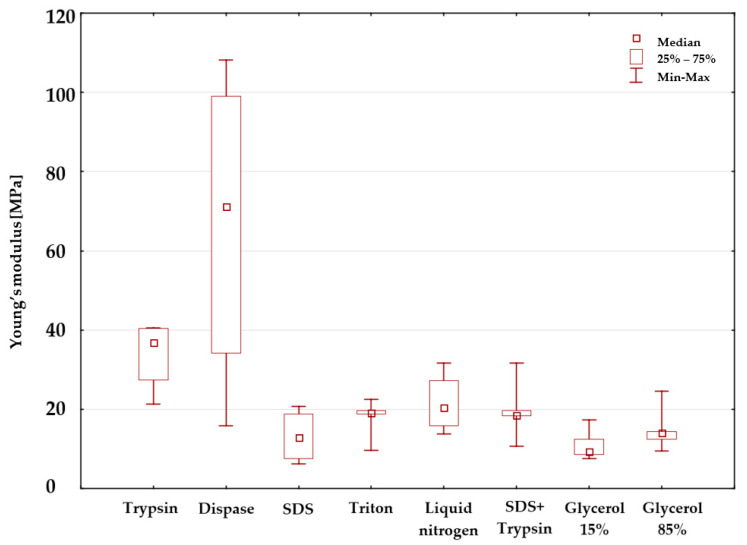
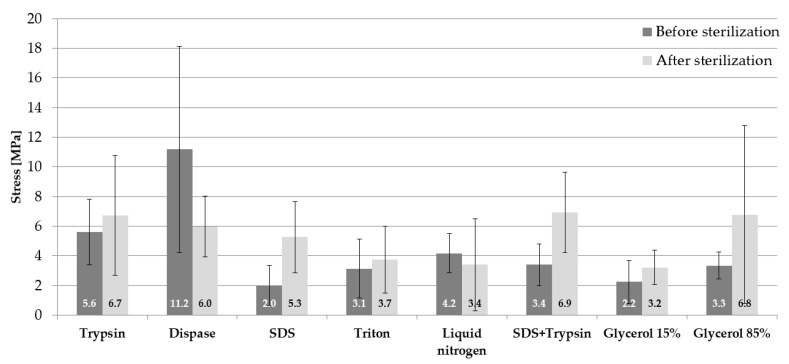
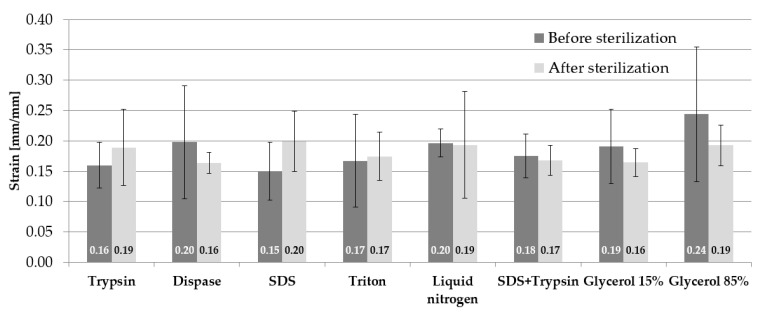
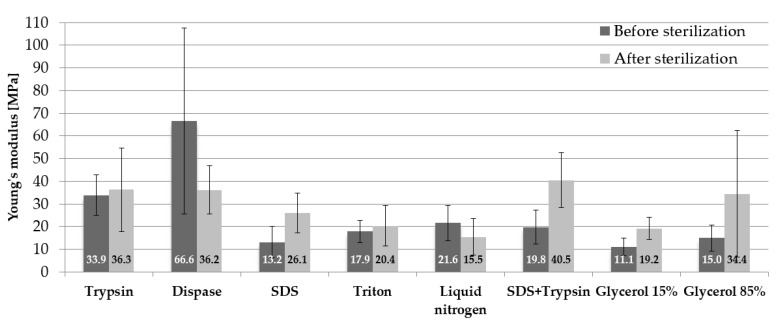
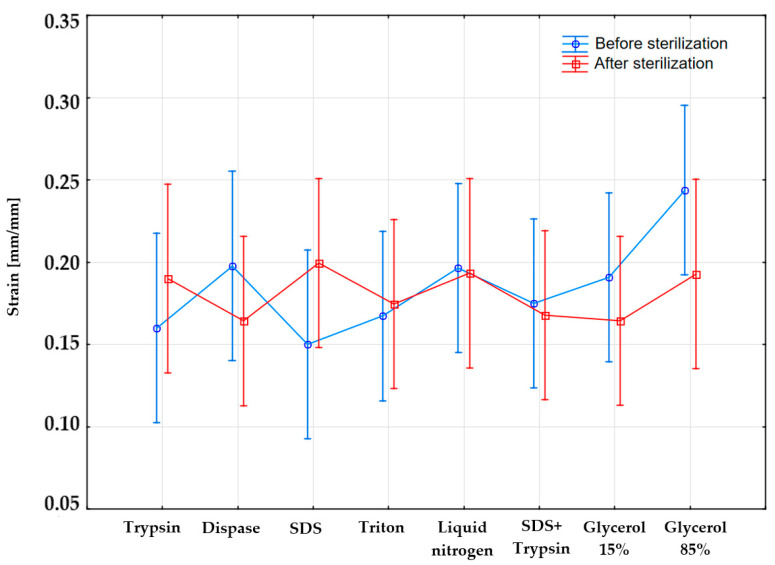
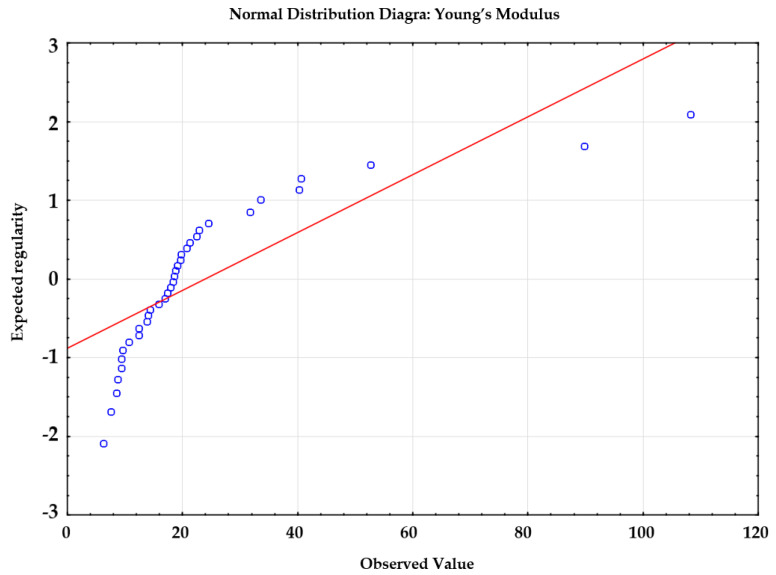
This work aimed to assess the impact of acellularization and sterilization methods on the mechanical properties of biocomposites used as a skin substitute. On the basis of the statistical analysis, it was ascertained that the values of the Young modulus for the samples before the sterilization process-only in the cases of substances such as: trypsin, 15% glycerol and dispase-changed in a statistically significant way. In the case of dispase, the Young modulus value before the sterilization process amounted to 66.6 MPa, for trypsin this value equalled 33.9 MPa, whereas for 15% glycerol it was 11 MPa. In the case of samples after the completion of the sterilization process, the analysis did not show any statistically significant differences between the obtained results of Young's modulus depending on the respective reagents applied. It was confirmed that different methods of acellularization and the process of sterilization effect the alteration of mechanical properties of allogeneic skins. In the case of the decellularization method using SDS (Sodium Dodecyl Sulfate), liquid nitrogen and 85% glycerol the highest values of strain were observed. In the authors' opinion, it is the above-mentioned methods that should be recommended in the process of preparation of skin substitutes.
这项工作旨在评估脱细胞和灭菌方法对用作皮肤替代物的生物复合材料力学性能的影响。基于统计分析,确定仅在诸如胰蛋白酶、15%甘油和中性蛋白酶等物质的情况下,灭菌过程前样品的杨氏模量值有统计学上的显著变化。对于中性蛋白酶,灭菌过程前的杨氏模量值为66.6MPa,胰蛋白酶为33.9MPa,而15%甘油为11MPa。在完成灭菌过程后的样品中,根据所应用的各自试剂,分析未显示杨氏模量的所得结果之间有任何统计学上的显著差异。证实了不同的脱细胞方法和灭菌过程会影响同种异体皮肤力学性能的改变。在使用十二烷基硫酸钠(SDS)、液氮和85%甘油的脱细胞方法中,观察到最高的应变值。在作者看来,在皮肤替代物的制备过程中应推荐上述方法。